Balanced Diet for Wellness: Healthy Eating Guide for 2026
Published: June 16, 2026 Last Updated: June 18, 2026 A balanced diet for wellness includes the right mix of
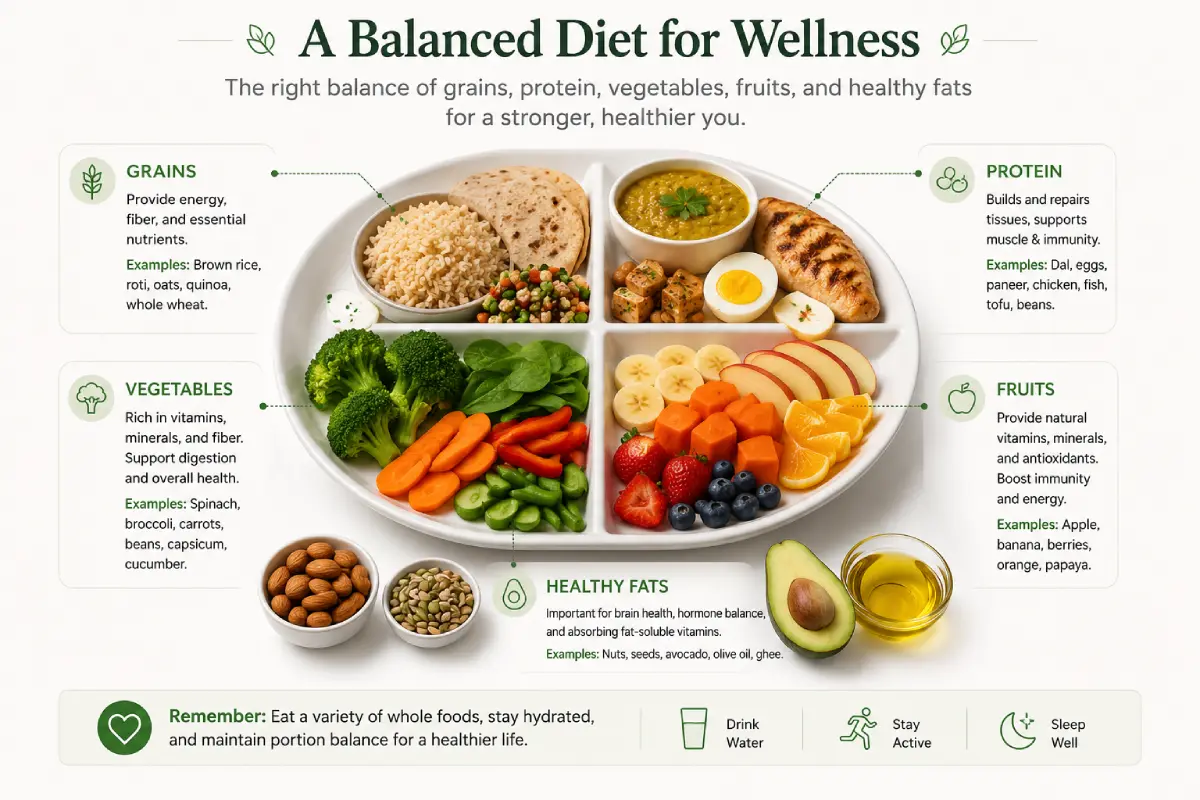
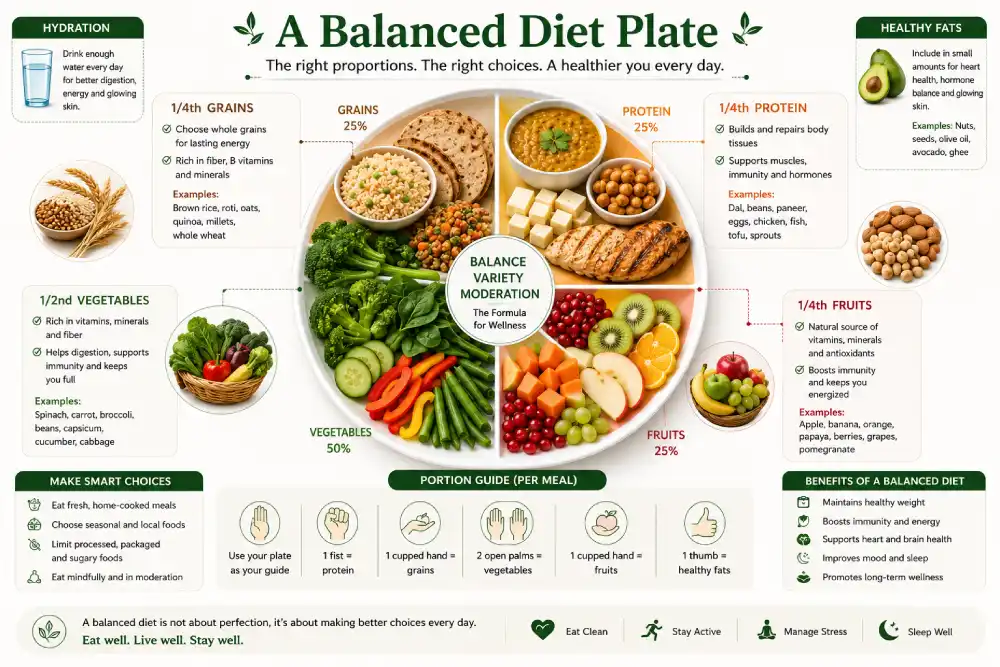
A balanced diet for wellness includes the right mix of carbohydrates (whole grains, fruits), proteins (legumes, eggs, dairy, lean meat), healthy fats (nuts, olive oil, ghee in moderation), fibre-rich vegetables, and essential micronutrients including iron, Vitamin D, B12, and omega-3 fatty acids. Eat a variety of colourful whole foods at each meal, limit ultra-processed foods and added sugars, and stay consistently hydrated. In India, a traditional dal-roti-sabzi-curd combination is nutritionally complete when varied daily. In the USA, building meals around lean proteins, whole grains, and vegetables delivers the same balance. Most nutritional deficiencies develop slowly — iron, Vitamin D, and B12 are the most common and most preventable through consistent whole-food eating.
How to Eat a Balanced Diet for wellness is not a one-month fad, a unbalanced diet, a list of no-no foods. Rather, it is a holistic way of eating you can maintain on a daily basis that provides your body with all the nutrition it needs to function, heal, and flourish.
And in 2026, with lifestyle-related diseases such as diabetes, PCOD, thyroid disorders on the rise in India, and consumption of ultra-processed products reaching all-time highs in the USA, never has the importance of nutrition been greater.
What Defines a Balanced Diet?
This is by far the most important message! It involves having in, a variety of the ‘right’ proportions of the right types of Carbohydrates, Proteins, Fats etc, as well as fibre, vitamins and minerals. No one food group can contain all the things the body needs, and therefore, it is the balance!
The carbohydrates serve to provide energy. Proteins serve to build muscle mass and also suppress hunger. The fats will aid hormone production, brain function and absorb vitamins A, D, E and K.
Important point most people overlook: if the diet is too low in either carbs, fats or calories in general you can expect to see effects such as fatigue, deficiency in nutrients, hormonal imbalances and muscle loss. This is the crux behind the failure of most fad diets limits things our bodies actually require.
Having a healthy diet does not mean you eat less. It means you eat the right foods.
Essential Nutrients for Health And Where to Find Them
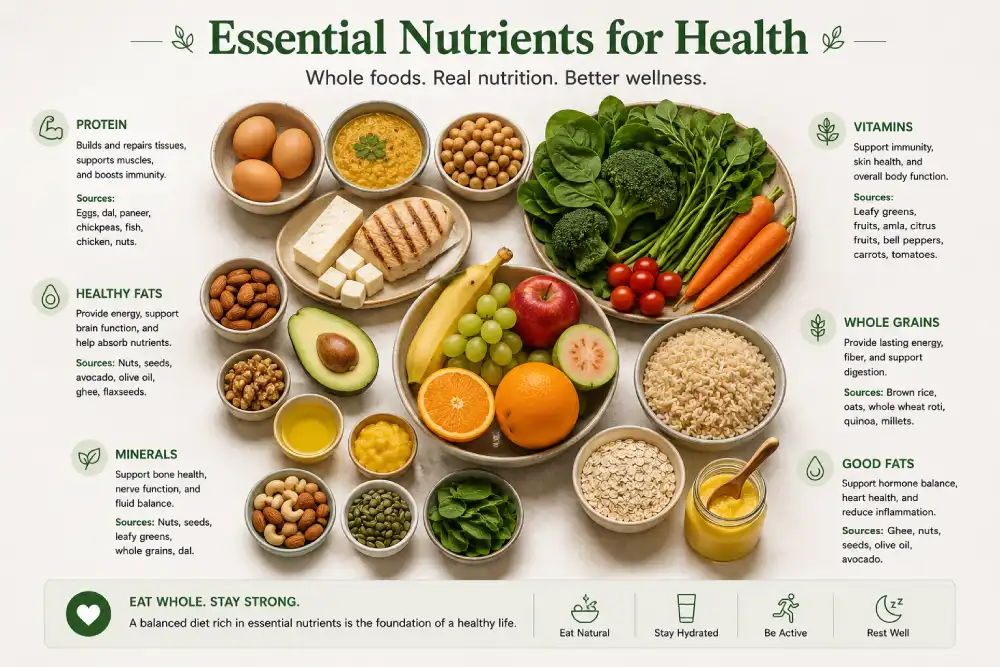
Having a good balance and a sufficient intake of proteins, carbs, and fats in your daily diet is extremely important. Here is what it all does:
Carbohydrates your main source of energy Carbohydrates also gives instant energy. For the brain to work, carbohydrate takes an important part. Best sources are whole grains– brown rice, oats, millets (ragi, jowar), fruits and vegetables. It would be natural and balanced by eating roti and rice with their side vegetables and pulses in India.
Proteins For Muscle, Immunity and Repair All high protein foods lean meat, chicken, fish, eggs, dairy, pulses, nutsand seeds are included in the muscle section. The vegetarian section dal, rajma, chana, paneer, tofu, curd etc are a good source of protein variety when rotated daily.
Healthy Fats Not the Enemy Essential for helping your body utilize fat-soluble vitamins (A, D, E, K), and necessary for hormone balance and brain function. Best sources: various nuts and seeds, Avocado, Olive oil and what I prefer to use in our traditional Indian food, Ghee. Ghee is also great for your gut and helps in the absorption of fat-soluble vitamins.
Fibre For Gut Health and Satiety digestion, maintains blood sugar levels, and will provide you with longer satiety. Including wholegrain earlier such as millet and amaranth in your diet will provide you with the fibre you need. Also, sources of protein like yogurt and legumes will out allow your general condition to flourish.
Micronutrients most Overlooked by Majority What are some of the most important kind of food materials such as B, and, omega-3 fatty acids, B vitamins, iron and Magnesium all of the kinds are first-rate for mental health and head function. One should be vigilant in not consuming the kinds of food in an impartial and improper manner, as this may simply lead to unfriendly irritability and bad concentration.
📖 Read More: Nutrition and Healthy Eating — The Complete Guide
Foods to Include Every Day
Nutrition doesn‘t have to call for odd or expensive foods. Eating healthy means starting with whole, nutrient-dense food sand[.]highlighting protein, dairy, vegetables, fruits, healthy oils/fats, and whole grains.
Here‘s a practical daily food framework for both Indian and USA contexts:
| Food Group | Indian Examples | USA Examples |
|---|---|---|
| Whole grains | Roti, brown rice, ragi, oats | Oats, Whole wheat bread, Quinoa |
| Protein | Dal, paneer, eggs, curd and fish | Eggs chicken, beans. Greek yoghurt |
| Vegetables | Palak, methi, lauki, tamater, brinjal | Broccoli, peppers, spinach, carrots |
| Fruits | Amla, papaya, banana, guava, pomegranate | Berries, apples, oranges, bananas |
| Healthy fats | Ghee (small portions), and nuts, and seeds | To make up the baseline diet and provide the omega three. When food products were unavailable, alternative foods of similar composition were used. Eggs, olive oil, avocado, almonds, walnuts, cachucha, cream cheese, wholemeal wheat, POM, ham, bread roll, carrot, Mrs. Kirk,Lactokin, ghee, sheun, banana, dietary film |
| Hydration | Water, chaas, coconut water | A wide range of fluids, including water, herbal teas and low sugar drinks2 |
Achieve variety and colour and different meal options throughout the week not perfection in every meal. You need a variety of wholesome foods across the range of Indian foods you consume to be healthy. Fill your diet with lots of colourful vegetables and fruits to obtain the fullest range of vitamins and minerals.
The greater majority of Americans need to increase their intake of nutrient-rich foods, while at the same time reducing their intake of highly-processed foods, added sugars, added sodium and refined carbohydrates. The same message is very relevant for urban Indian diets that are increasingly moving toward packaged snacks and take out foods.
How to Avoid Nutritional Deficiencies
The most common deficiencies in both India and the USA follow a pattern: they are slow to develop, present first as tiredness and unhealthy skin, and are almost entirely preventable with sustained whole-food consumption.
Iron deficiency Iron deficiency is the most common nutritional deficiency worldwide and the largest number of iron deficient women are from India. Since vitamin C helps for the absorption of iron, consuming iron rich foods (aspirated, red kidney beans, lentils) along with vitamin C rich foods (lemon, amla, tomato) increases the absorption substantially.
Vitamin D deficiency in huge proportion of both Indian & American adults despite enormous amount of sun in India due to poor outdoor activity, SPF usage, low intake of fortified foods. Best sources are egg, fatty fish, fortified milk, proper exposure to sun (10-15 min).
Vitamin B12 is the most critical deficiency risk for vegetarians and vegans. Unlike other nutrients, B12 is found almost exclusively in animal products. Supplementation or fortified foods (certain plant milks, nutritional yeast) are necessary for long-term vegetarian diets.
Protein is consistently under-consumed by Indian vegetarians — not because plant proteins are inadequate, but because variety is limited. Rotating across dal, rajma, chana, soy, paneer, and curd daily provides a complete amino acid profile without meat.
Creating a Balanced Meal Plan That Actually Works
When it comes to meal plans, most of them break down within two weeks. There‘s a crucial flaw. Meal plans are always made for the lifestyle we want to live, not the lifestyle we already live.
A practical balanced meal plan has three qualities:
It uses the foods you already eat. Instead, the optimal diet for an Indian home relies on the daily staples of dal-chawal-sabzi-curd not exotic superfoods from the other side of the world. And the optimal plan for a busy American home is based on what works in a 30-minute dinner window.
It is organized yet adaptable. Don’t plan for particular recipes, just categories. For each large meal have a protein, a complex carbohydrate, a vegetable and a healthy fat. (can vary daily)
It reflects life. For example indulging in takeout, missing a meal or eating convenience food now and again won‘t ‘ruin’ an otherwise balanced diet. It‘s the overall pattern of eating over weeks and months that affects health benefits not the odd day.
What you eat makes a huge difference to your health, not just by eliminating the risks of chronic disease but by providing your body with the nutrients it needs. The visible effects on the skin – clearer skin, less inflammation, improved glow – are the earliest clues that your nutrition is going in the right direction. For those trying to lead a healthy lifestyle, these effects are some of the best reasons to pay attention to a balanced diet.
📖 Read More: Health and Wellness — The Full Pillar Guide
Conclusion
A proper healthful diet is the basis of everything else you will do. Your energy, your skin, your hormones, your immune response, your mood. All of it.
You don‘t need to change every aspect of your diet immediately. Begin with one thing; add a vegetable to dinner, replace a refined grain with a whole grain, drink an additional glass of water. And expand on it. One meal doesn‘t make a balanced diet for health a reality; one meal can do just the opposite. It‘s a daily way of life.