Mental Health and Wellness Tips for a Balanced Life
Published: May 27, 2026 Last Updated: June 16, 2026 Managing your mental health and wellness is not a luxury
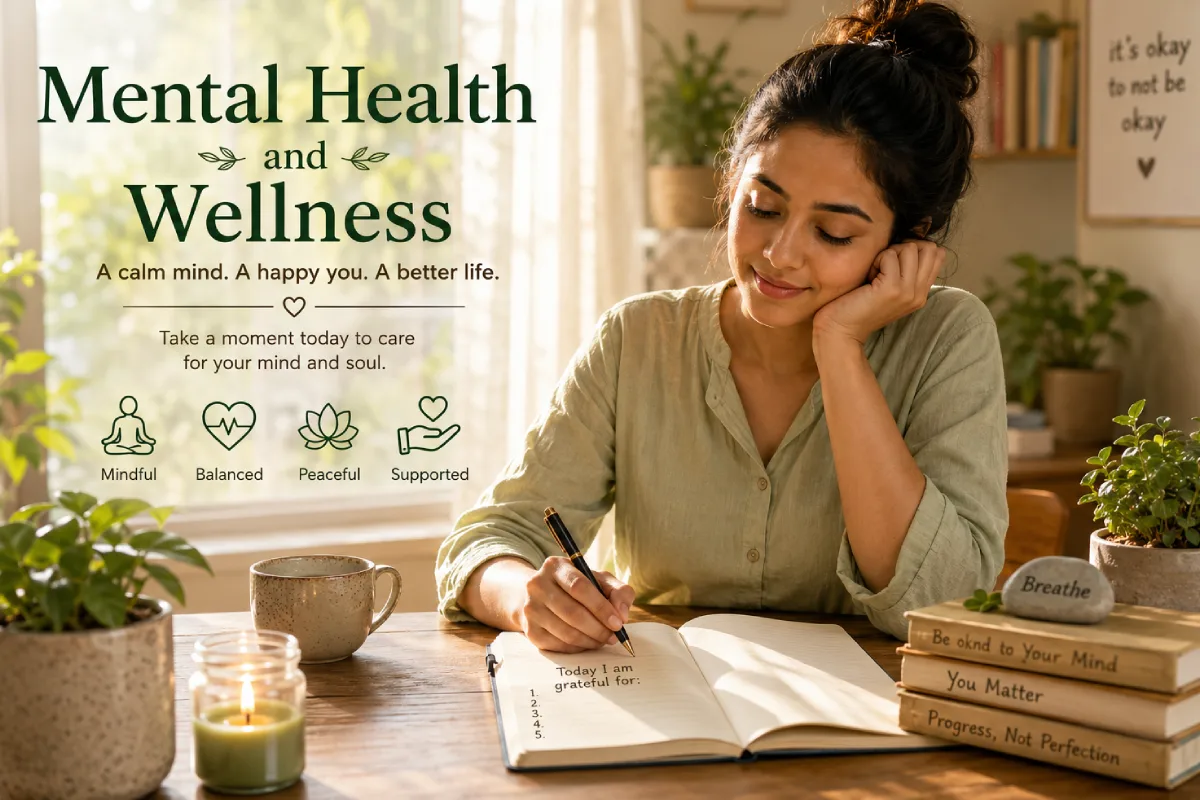
Managing your mental health and wellness is not a luxury it‘s a daily requirement. Whether you‘re juggling the hustle bustle of Mumbai or feeling overwhelmed on a corporate job in New York, the force to stay up with the pace is daunting. And, to be honest, not many tend to keep mental wellness in the list of things to do.
That changes today.
This cheat sheet deconstructs the series of simple, proven habits you can begin doing right now no therapist‘s couch needed (though that does help).
What does “Mental health and Wellness” Actually Means?
Before the tips, it‘s helpful to go over the word itself.
The WHO, defines mental health as a state of wellbeing in which an individual is able to cope with the normal stresses of life, is able to work productively and fruitfully and is able to make a contribution to his or her community. It is not simply the absence of mental illness but the presence of a state of balance.
One of the components is emotional wellness which is “your capacity to understand, express and manage your feelings and cope effectively with emotional conflicts”. It‘s similar to an emotional immune system.
Both are true and matter. Both can be bettered.
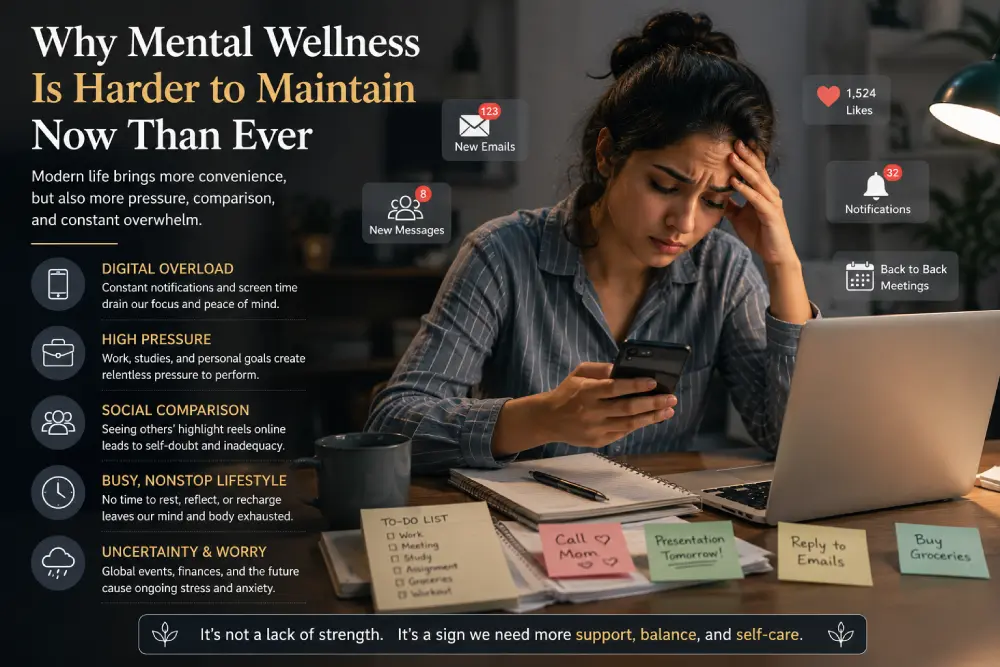
Why Mental Wellness Is Harder to Maintain Now Than Ever
Modern life is engineered to exhaust you.
- Constant alerts in every direction
- Social media….kicks off comparison spirals that erode confidence
- Work-from-home culture blurs the distinction between the “on” and the “off” time.
- In India alone, talking about mental health remains taboo in many homes and offices.
So what came of it? Anxiety, overwork, emotional drain and a strange feeling of alienation despite the fact that you‘re technically “fine.”
The good news: the blocks to your mental well-being are not rocket science. They‘re just not used enough.
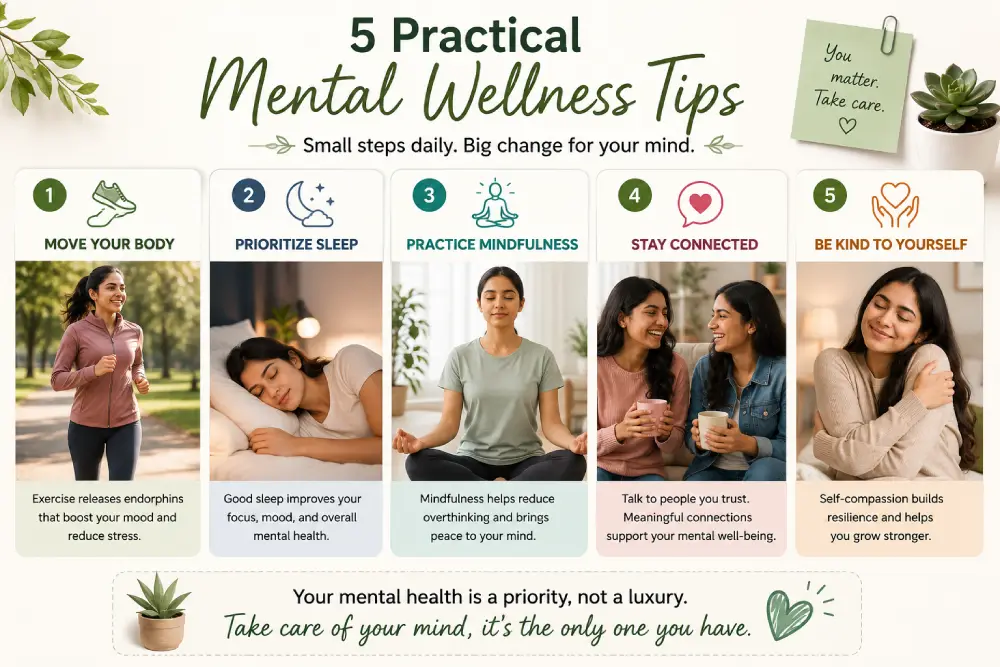
5 Practical Mental Wellness Tips That Actually Work
1. Move Your Body Even for 20 Minutes
Exercise is among the most proven methods of relieving anxiety and it‘s free.
A review of more than 1.2 million adults in The Lancet Psychiatry found that those who exercised regularly suffer from a lot less mental health trouble than those who didn‘t, peaking at 45 minutes, three to five times a week. Even a 20-minute walk is OK.
There‘s no gym membership required. Simply take a walk around the block, half an hour of yoga or dance around the living room.
Action step: book movement like a meeting. Block it. Attend it.
2. Get Serious About Sleep
Sleep deprivation and mental health indequacies are two-way trafficed.
When you‘re sleep-deprived, your brain‘s ability to handle emotions plummets which helps explain why stress feels so much worse, why you have a much more over-the-top response and why it‘s harder to come up with solutions to problems. Adults require 7–9 hours of sleep a night and that required amount of sleep should never be compromised.
Simple fixes that help:
- Try to go to bed at the same time and wake up at the same time every day (Yes! Even on weekends!)
- Keep your mobile phone out of the bedroom.
- No caffeine after 2 pm
If you are already following good self-care regimes and are still feeling tired and sluggish then your system might be screaming for good sleep.
3. Build a Stress Management Routine Not Just a Coping List
Most of us approach stress in the same way we approach the fire extinguisher just waiting until the house is already on fire before we use it.
Effective stress relief comes from building a stress management and self care routine before you reach a boiling point. The goal is to build a buffer that helps you handle challenges throughout the day.
Here‘s what the research supports:
- Diaphragmatic breathing: Slow, deep breaths stimulate the parasympathetic nervous system and bring cortisol level down within minutes. Try the 4-7-8 breathes: breathe in for 4 seconds; hold your breath for 7; breathe out for 8.
- Journaling: Writing your worries down and vice versa, deserves to be a part of your routine, as it helps your brain to process and unfogle emotional buildup.
- Digital detox periods: dedicated screens free period of 30 minutes a day can lower your anxiety levels noticeably.
4. Practise Self-Compassion Not Just Self-Care
Self-care gets all the hype as it‘s all bubbles and face masks and tiresome routine. Self-compassion on the other hand, gets absolutely no hype and it is arguably a lot more effective.
Self-compassion really is about talking to yourself the same way you‘d talk to that friend who is really having a tough time. Not minimizing your problems, or criticizing yourself about them.
According to UCLA Health, “Focusing on being kind and understanding to oneself when one experiences a setback rather than critical and harsh, helps people persevere through failure rather than giving up because of shame.”
Next time your inner critic is in the driver and is telling you that you are terrible at this, respond with: “This is hard, and that is all right. I will find a way.”
Appears little. Is little.
5. Stay Connected Intentionally
What we also know is that loneliness remains one of the most significant risk factors for poor mental health. And in a World of 2,000 Instagram followers, true human connection is rarer than ever.
You don‘t need a large social network. There is a wealth of evidence demonstrating that a handful of meaningful, reciprocal ties mean more than extensive but superficial network connections.
What this looks like practically:
- Call (not text) one person a week you really care about
- Make commitments and Follow through. While on vacation in the U.S., I agreed to a dinner date with a friend. Since then, it took me two months to go out with another person.
- Lean on community spaces family get-togethers, neighborhood groups, cultural events that are natural nodes many underutilize.
Common Self-Care Mistakes That Undermine Mental Wellness
Even with good intentions, a few patterns tend to sabotage progress:
Treating self-care as a reward, not a routine. You shouldn’t have to “earn” rest. Recovery is part of the work.
Ignoring the body-mind connection. Poor nutrition, dehydration, and inactivity affect mood just as directly as negative thoughts do. Eat whole foods, drink water, move.
Comparing your healing to someone else’s. Mental wellness isn’t linear. Setbacks aren’t failures.
Refusing to ask for help. Seeking support — whether from a friend, a counsellor, or a mental health platform — is a strength. In India and the USA alike, this stigma is slowly breaking. Be part of the shift.
Building a Daily Mental Wellness Routine: A Simple Framework
You don‘t need a complicated system. You need a consistent one.
| Time of Day | Habit | Time Required |
|---|---|---|
| Morning | Figure 3• 5 minutes of breathing OR journaling of things I am grateful for. | 5 min |
| Midday | A 10 minute walk without your phone. | 10 min |
| Evening | Unplug an hour before bed. | 30 min |
| Weekly | A true social contact (phone call, a social meeting) | 30–60 min |
Begin with one. Add to it.
When to Seek Professional Help
Self-help is powerful. But it is not everything.
If you are feeling persistently sad, anxious or worried in ways that interfere with everyday activities, hopeless and have some thoughts of trying to hurt yourself, please contact a mental health professional. In India, iCall, and Vandrevala Foundation are confidential services available. In the USA, there is a good resource directory of mental health groups at nimh.nih.gov.
Professional help is not a last ditch effort. It‘s a wise, proactive step in addressing an issue.
Conclusion
Your mental health and wellness shapes every part of your life — your relationships, your work, your energy, and your sense of self. The good news is that you don’t have to overhaul everything overnight.
Choose one habit and complete it in this guide. Complete it for two weeks. Then add another.
Bit by bit, small and simple habits add up. That‘s what emotional health is made of not perfect days, just better habits.
Learn more about Cultones’ complete wellness hub with all things related to creating a well-rounded life inside and out. Covering everything beauty, self-care and mind health, check out Cultones’ wellness hub.