Yoga for Fitness & Flexibility: 2026 Beginner’s Roadmap
Published: September 2, 2026 Last Updated: September 7, 2026 Yoga is frequently written off as the “gentle” second half
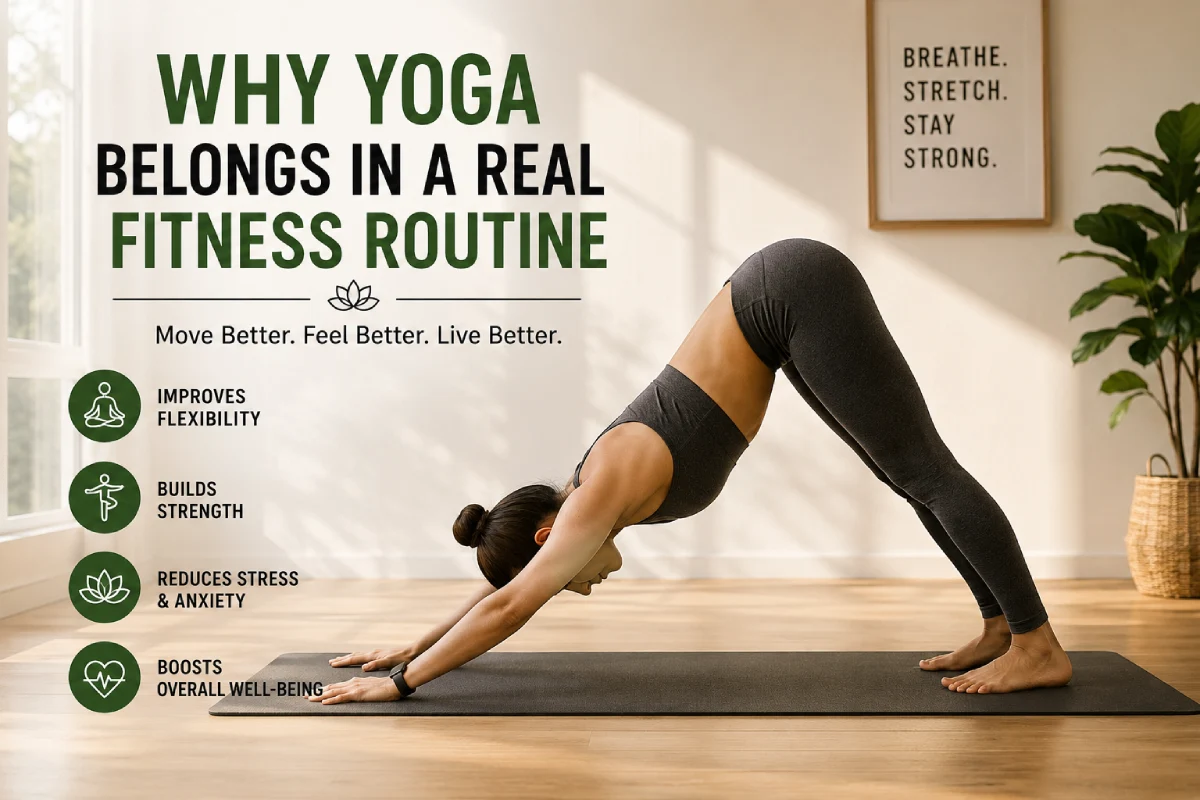
Yoga is frequently written off as the “gentle” second half of a workout, something to do in-between the hours you‘re really working out. However, Yoga for Fitness needs to be reconsidered; when practiced regularly, it develops true strength, flexibility and balance, while protecting the body from the cumulative effects of strength training and cardio.
Whether you need a shot of energy before work, or a good flexing session after training, this book will provide you with a practical beginning.
Why Yoga Belongs in a Real Fitness Routine
Yoga is not a substitution for weight lifting or cardio; it‘s the link that can help keep both sustainable. Your tight hips, frozen shoulders, and sore lower back from sitting and lifting can all benefit from regular yoga practice. To understand how yoga fits alongside other types of exercise, explore our complete guide to fitness.
What yoga adds to a fitness routine:
- Enhances joint movement which minimizes injury during strength and cardio training
- Improves core and full-body strength with long holds and deliberate movement
- Reduces secretion of stress hormones by practicing control of your breath. This helps you through recovery.
- Good for posture, particularly beneficial for individuals who are seated for large portions of the day
Myth vs. Fact: Yoga as Exercise
| Myth | Fact |
|---|---|
| “yoga is not a real exercise” | Yoga develops authentic strength, flexibility and balance, with reducing injury risk for other training. |
| Here you need to be flexible already.” | Flexible muscle is the result of training, not of being flexible. |
| “Yoga is an option to replace the use of strength exercises” | Yoga is an excellent “add-on” to strength and cardio but it doesn‘t quite match the muscles results that resistance training will give you, |
| Yoga is meant for relaxation. It is not for achieving fitness. | Some styles power yoga, for example are truly challenging and develop actual strength and stamina. |
Yoga Poses for Beginners
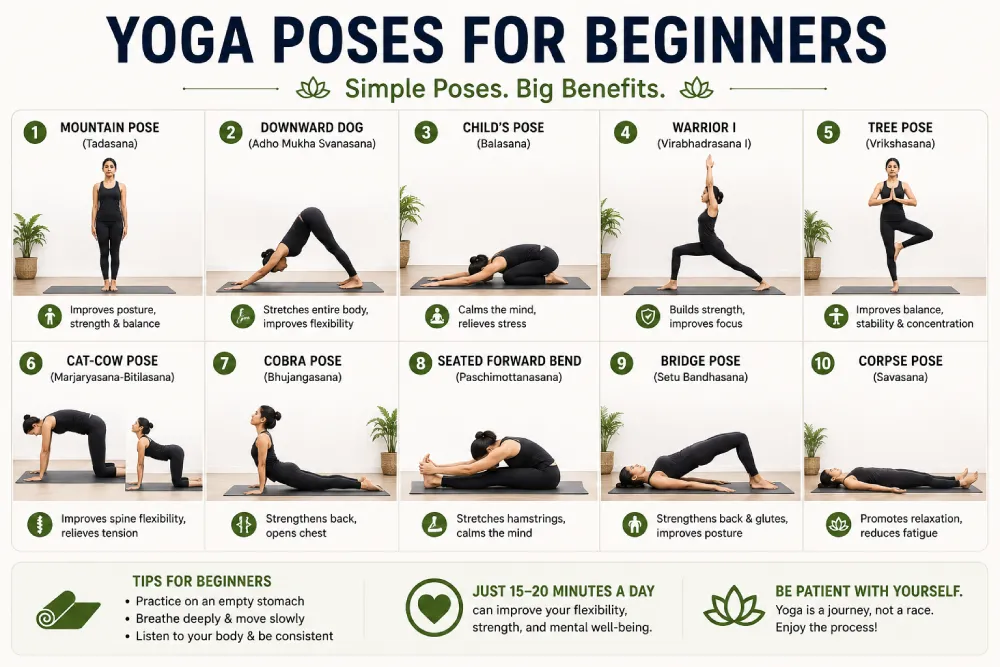
These yoga poses for newbies offer a simple, no barriers to entry introductory series- no experience or flexibility necessary:
- Child‘s Pose A restful, comforting pose that can open up the lower back and hips.
- Cat-Cow-gets the spine moving, good for morning stiffness
- Flattens his hands and puches his heels toward the ground: elongates the floor for hamstrings, shoulders, and calves.
- Forward fold – breaks down the tension in the lower back and thigh hammies.
- Warrior I or II strengthens the legs and improves balance.
- Seated forward bend–a good stretch for the hamstrings and lower back.
Make sure to hold each pose for a minimum of seconds or longer if you prefer while maintaining steady breathing instead of rushing through them.
A Simple Morning Yoga Routine
One recommended quick morning yoga routine before the day gets hectic – no space on mats larger than a towel needed.
10-minute morning sequence:
- Ocat-cow 8-10 slow repetitions
- Downward Dog 20–30 seconds.
- Forward Fold hold for 20–30 seconds
- Lunge (each side) hold 20 seconds
- Seated Forward Bend hold for 30 seconds
- Child‘s Pose hold 30 seconds, emphasis on breath
These are just relaxing to do any time of day and are done faster than brewing a cup of coffee.
A Flexibility Yoga Sequence for After Workouts
A flexibility yoga practice without doing strength training or cardio is just a general practice that isn‘t going to focus on tight areas. After strength training or cardio, a flexibility yoga practice will compensate by hitting those areas you tightened through strength training or cardio.
Post-workout sequence (10–15 minutes):
- Hamstrings: Forward Fold, held 30 seconds
- Hip flexors:. Low Lunge, each side, 20–30 seconds hold
- Shoulders: Thread the Needle (hold for both sides20 seconds)
- Lower back: Child‘s Pose. Maintained for 30–40 seconds.
- Full body: StandingForward Fold to Mountain Pose, 5 slow motions.
Mix it up with your weight or cardio workout two to three times a week and you can significantly diminish the stiffness and chances of injury your trainers can cause.
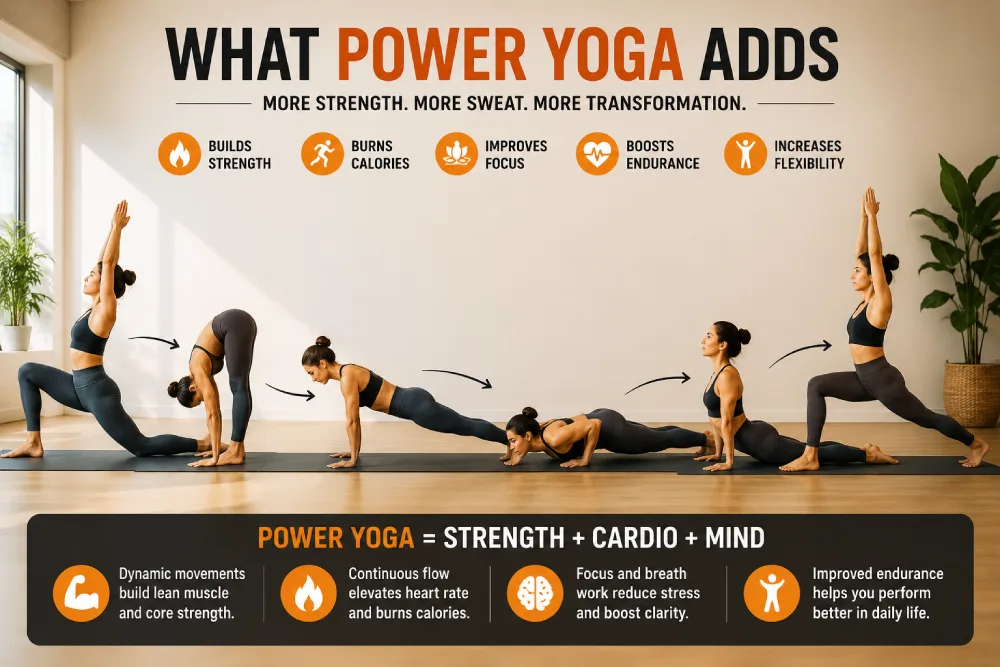
What Power Yoga Adds
Power yoga is a much quicker, more intense style of yoga than typical new student classes, more like a workout than a stretch. It transitions quickly from pose to pose, takes strength-based postures into deep holds, and gets the heart pumping.
When power yoga makes sense:
- You are familiar with the fundamental poses and seek a more challenging experience.
- You want a workout that packs in strength, balance and cardio into one.
- And in search of a pacek more moderate‑ in order to provide the same body‑squeezing action as the classic we all love to hate, which is high intensity interval training?
A brand-new beginner in the studio can find her shoulders and hamstrings so tight that she does not want to hesitate until she has built up some strength and flexibility in her body in the standard asanas first.
The Truth About Yoga for Weight Loss
Yoga for weight reduction is a common inquiry, but the reality is somewhat complex. Restorative, gentle yoga will eat a limited number of calories relative to high-impact exercise or weightlifting. High-impact styles such as power yoga will burn appreciably more calories and could facilitate a calorific shortfall.
Where yoga genuinely helps with weight loss:
- Lowers allostatic load so has a reduced effect on the biological mechanisms that lead to overeating and sleep loss if those mechanisms were activated.
- Enhances sleep which affects appetite regulation
- Takes care of the body, sometimes leading to improved eating behaviors involving less dieting.
- Power yoga on a day to day basis can help with the burning of calories.
Yoga is most effective as a complement to a weight loss regimen, included with strength training, cardiovascular workouts, and nutritional management – not as the main catalyst for losing fat.
How Often Should You Practice Yoga
For the majority of people adding yoga for fitness into an existing routine 3–4 times a week is best some quick morning practice combined with longer post-workout stretches.
| Day | Focus |
|---|---|
| Monday | Morning yoga (10 minutes) |
| Tuesday | After finishing the workout, the individual completed the following flexibility sequence: |
| Wednesday | Morning yoga (10 min) |
| Thursday | Sequence of post-exercise stretches |
| Friday | Optional power yoga class |
| Saturday | Rest or gentle stretching |
| Sunday | Extended flexibility sequence (20 min) |
Common Mistakes to Avoid
- Deceptive flexibility. Though you feel like you‘re stretching further by over-pressing into the pain, it‘s not effective and is more likely to cause injury.
- Rapidly skipping past breath work. Breath work is a form of practice intrinsic to yoga‘s restorative effects, and should never be an afterthought.
- Once you move on to do advanced sequences too quickly. Starting a base with beginner poses makes sure your body is strong and prevents injury. Builds the right foundation in the beginning for when the intensity increases.
- Relegating yoga solely to a form of relaxation. For the (majority of) people who also are in search of fitness benefits as well, there are much more technically challenging versions (Power yoga).
- Irregular practice can make it harder to improve flexibility over time. A short daily, or close to daily, series of practice sessions can be more effective than occasional long sessions. Building workout consistency can help you maintain healthy exercise habits and make steady progress toward your fitness goals.
The yoga for fitness is one part of a real routine, not merely a decoration. It is the part that protects your joints, aids recovery, and establishes true strength and flexibility. Begin with the beginner postures and morning routine above, and develop intensity naturally from this starting point.
FAQs
Is yoga real exercise or flexible work? Yoga does improve genuine strength, flexibility and balance, and helps to prevent injury in other training – it‘s more than just flexibility, particularly in more active types like power yoga.
What yoga poses should a beginner learn first? Thanks to the wide range of poses, beginners should learn the basics first such as Child‘s pose, Cat-Cow, Downward dog, Forward fold and Warrior I or II.
Is yoga good for weight loss?While gentle forms of yoga (such as restorative yoga) may burn relatively few calories, more active forms such as power yoga can help you to create a calorie deficit, and the general stress- and sleep-modulating benefits of yoga have a positive effect.
What should be the duration of your morning yoga practice? For beginners, about 10 mins of few important poses are good enough to relax the stiffness and wake up your body.
What is power yoga? How does it differ? Power yoga is a more invigorating and physically demanding form, which increases heart rate and strength compared to slower, more relaxed beginner yoga.
What is the recommended frequency to practice yoga if I want to see a clear effect? Usually, 3 to 4 sessions per week, with a combination of short practices and longer flexibility routines, is sufficient.
Final Conclusion
Yoga for fitness is not a side show. It is your starting point, the foundation of all you do in regards to joints, good health and stress management. Build from the beginner poses and morning practice listed above to include post work-out, flexibility flows and power yoga; once the foundational poses become second nature.