Best Clay Face Masks for Acne and Oily Skin
Published: June 30, 2026 Last Updated: June 30, 2026 If your T-zone is shiny by noon, and breakouts are
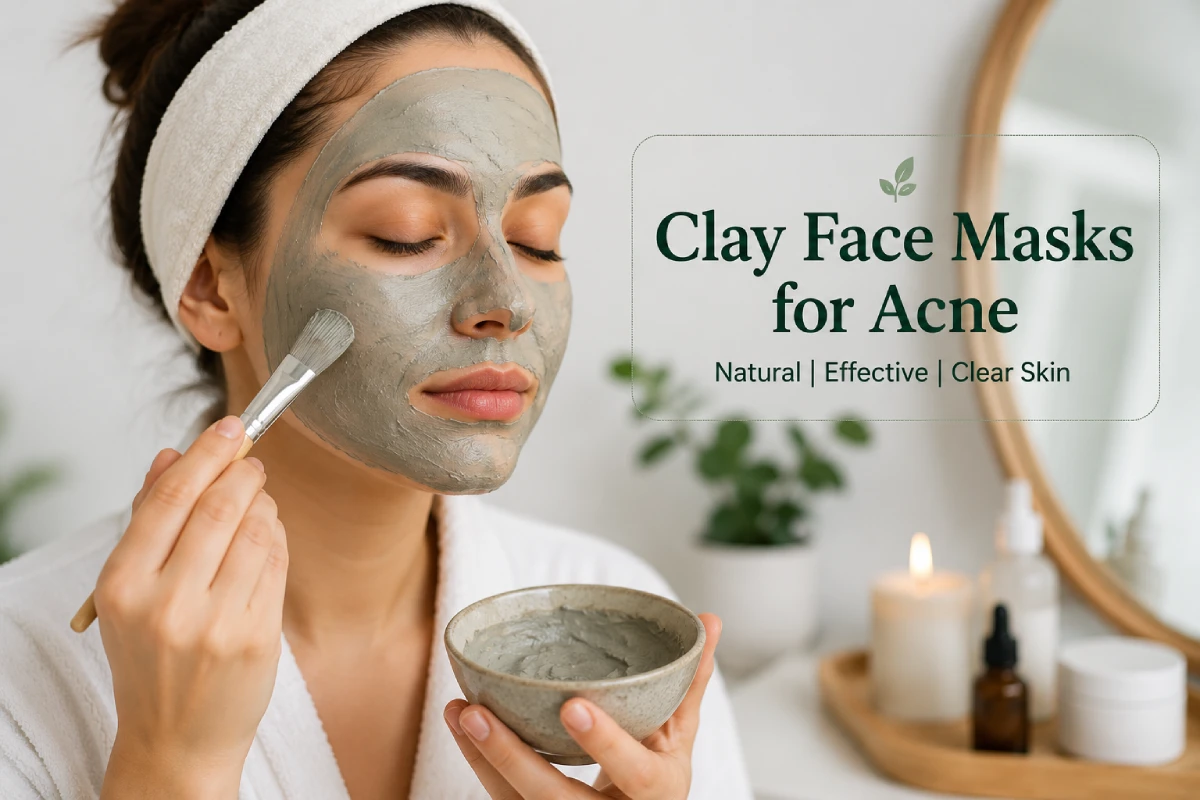
If your T-zone is shiny by noon, and breakouts are cropping up down the length of your jaw, a clay face masks for acne might be the easiest solution you haven‘t been using right. Clay has been used for centuries to pull the dirt and oil out of our skin; formulations today have just made it more suited for oily, acne-prone skin (especially in India!)
This article will explain why clay is so effective, the difference between bentonite and kaolin clay, and how to apply your clay mask to help soothe your skin rather than inflame it.
Why Clay Masks Work for Acne-Prone Skin
The excess oil combines with dead skin cells to block your pores, causing acne. Clay masks deal with it at the root.
The Clay particles in Tea Tree Mask are negatively charged. When used in a paste and left on the skin, they attach and adhere to oil, dirt and debris that is present on the inside of your pores (much like a magnet). As the mask dries, it will physically draw this debris away from the surface.
This is more of an issue in India than anywhere else for the best of reasons.Those high heat and humidity levels cause your sebaceous glands to produce extra oil,and everything in the city pollution loads your skin with grime.Using a weekly clay mask can counter both without resorting to power-draining chemical acids:
Clay masks even have a little antibacterial action, which may help to take down surface bacteria on the skin that can lead to breakouts, but only if used in conjunction with a good cleanser and treatment routine.
Bentonite Clay vs Kaolin Clay for Acne
Not all clays are the same. Choosing the incorrect clay is one of the main reasons people think clay masks aren‘t suitable for their skin.
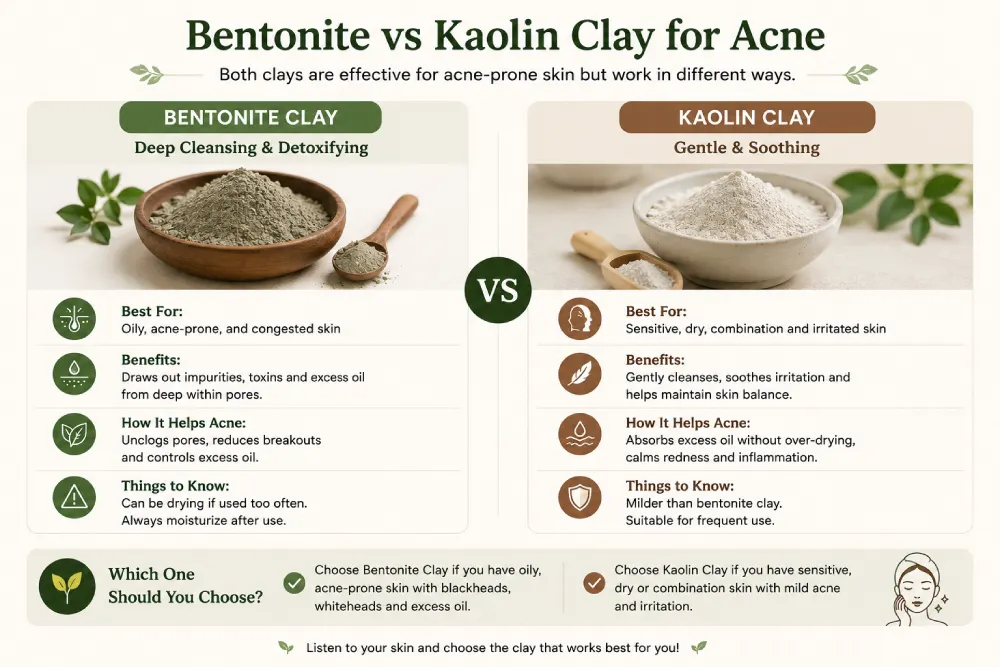
Bentonite clay: This is from volcanic ash and has the most powerful oil absorption ability of any cosmetic clay. It has a more powerful attraction to oils and pulls more significantly from pores. It is brilliant at fighting particularly oily skin and persistent blackheads but can dry the skin out if left for too long or it is sensitive skin.
Kaolin clay is less harsh and has a lighter feel. It still absorbs oil and helps to keep the pores clear; it doesn‘t rob the skin of so much moisture however. It is the more suitable clay to begin with if you suffer from combination, sensitive or sensitive skin or if you are new to clay masks.
| Factor | Bentonite Clay | Kaolin Clay |
|---|---|---|
| Oil absorption | Very high | Moderate |
| Best for | Very oily, congested skin | Sensitive, combination skin |
| Drying effect | Strong | Mild |
| Frequency | 1–2x/week | 2–3x/week |
The easy guideline: if the skin is oily in 2–3 hours after wash then bentonite is better. If the skin becomes already dry and flaky then it is kaolin.
Benefits of Clay Masks for Oily Skin
Beyond acne control, clay masks offer a few specific advantages for oily, Indian skin types:
- They mattify the face temporarily, cut down midday shine without clogging up pores further.
- They enhance the look of the enlarged pores. This is especially true for oily skin as enlarged pores can be very prominent.
- And they also help to peel off that layer of pollution and trapped-grit-sweat grime that all metropolitan India is comprised of (especially in Delhi, Mumbai or Bengaluru)
- They prep the skin so that other actives, like niacinamide or salycic acid serums, are absorbed more effectively
If used daily, the synergy of pore clearing and oil control can visibly diminish blackheads as well as the frequency of smaller, oil-related breakouts over several weeks.
How to Use Clay Masks Correctly
Getting the technique right is just as important as choosing the right clay.
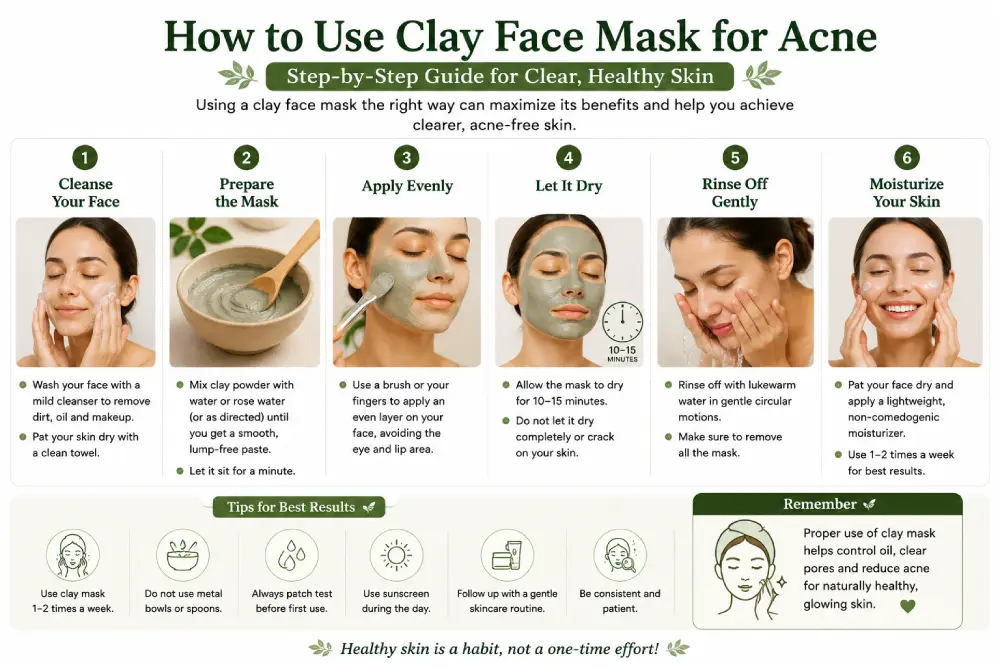
- Always cleanse first. Never apply any clay over sun cream, powder or sweat. Use only on freshly cleansed, dry skin.
-
Apply an even layer, avoiding the eye area and any active, inflamed pimples.
- Leave it on until still damp 10 to 15 minutes will do. Never leave to dry and crack totally.
- Using warm water rinse the clay evenly and apply a gentle circular motion to help to remove the previously dried clay.
- Use a moisturizer straight away. Clay removes natural oils too so failure to use a moisturiser after is one of the quickest ways to bring on the rebound excess oil.
Ideally, 2-3 times per week is the maximum for heavy, oily and/acne-prone skins. Sensitive or combination skins should use once weekly and then increase frequency according to tolerance.
Common Clay Mask Mistakes to Avoid
Even a good clay mask can backfire if used incorrectly. Watch out for these:
- Letting it dry completely — once clay cracks, it starts pulling moisture from your skin instead of oil
- Skipping moisturiser — clay doesn’t distinguish between “bad” oil and the oil your skin barrier needs
- Masking daily — overuse strips the barrier and causes skin to overproduce oil in response
- Applying on active, inflamed breakouts — this can worsen irritation; mask around them instead
- Using bentonite clay on sensitive skin without a patch test — always test on your inner arm for 24 hours first
Clay masks reward consistency over intensity. A steady twice-weekly routine for 4–6 weeks will do far more for acne-prone, oily skin than masking every day for a week.
Final Conclusion
Clay face masks for acne remain one of the most reliable, budget-friendly tools for managing oily, congested, breakout-prone skin — provided you pick the right clay and use it correctly. Bentonite suits very oily skin needing strong oil control, while kaolin works better for sensitive or combination skin types. Keep sessions to 10–15 minutes, moisturise right after, and stick to 2–3 uses a week for results that build steadily over time.
For a complete breakdown of every acne mask type, ingredient, and routine, head back to our full guide on the best face masks for acne.
FAQs
Q1. Is bentonite or kaolin clay better for acne? Bentonite is stronger and better suited to very oily, acne-prone skin, while kaolin is gentler and more suitable for sensitive or combination skin types.
Q2. How often should I use a clay mask for acne? Most oily, acne-prone skin types can use a clay mask 2–3 times a week. Sensitive skin should start with once a week.
Q3. Can clay masks make acne worse? Used correctly, no. But overuse, leaving the mask on until fully dry, or applying it directly on active inflamed breakouts can irritate skin and worsen redness.
Q4. Should I moisturise after a clay mask? Yes, always. Clay masks absorb both excess oil and some of the skin’s natural moisture, so a non-comedogenic moisturiser afterward is essential.
Q5. Are clay masks good for Indian weather? Yes. India’s heat and humidity increase oil production, and clay masks are particularly effective at controlling this excess oil and pollution buildup on the skin.