Mindfulness Practices for Better Mental Health and Wellness
Published: June 16, 2026 Last Updated: June 16, 2026 Mindfulness practices involve paying attention to the present moment without
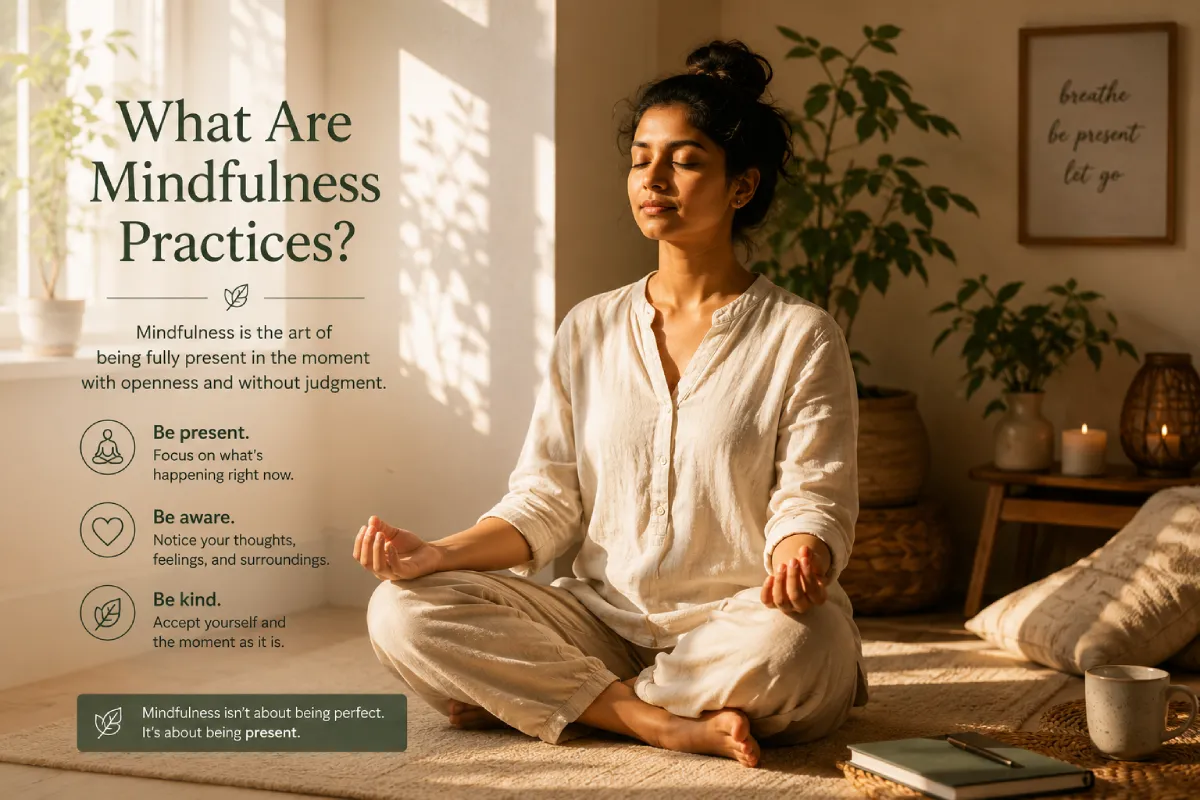
Mindfulness practices involve paying attention to the present moment without judgment. Simple daily exercises include 5 minutes of breath awareness after waking, a body scan before sleep, mindful eating during meals, and pranayama (breathing techniques like box breathing or alternate nostril breathing). Research shows regular mindfulness practice reduces cortisol and perceived stress, improves sleep quality, eases anxiety, and supports emotional regulation. For Indian practitioners, traditional practices like pranayama, yoga nidra, and mantra repetition are scientifically validated mindfulness tools. Start with 2–5 minutes daily, attach the practice to an existing habit, and build consistency over 4–8 weeks for measurable mental health benefits.
In a country where stress is commonly just a sign that you‘re busy enough to be important, and mental health is still gaining a foothold in mainstream culture, mindfulness practices provides something we haven‘t had before: its simple, discreet, science-proven ability to make you feel better without anything more than your time.
Mindfulness doesn‘t require any spiritual beliefs. It isn‘t necessary to sit cross-legged in silence for an hour. And there‘s no need for an app subscription to begin.
Here is the breakdown of what you actually need to know.
What Are Mindfulness Practices?
‘Mindfulness is that moment to moment awareness of one‘s experience without judgment. It is paying attention to the here and now with openness, curiosity, and acceptance.’
Mindfulness is the art of being present in each moment of our lives with acceptance and curiosity. It is not about battles with your thoughts or suppression of feelings. Being mindful simply means observing yourself and what occurs within you non-judgmentally.
Although inspired by Buddhist belief systems, Mindfulness has now been empirically researched, propagated and adapted by modern psychologists and practitioners. MBCT, MBSR and even corporate mindfulness courses all share the common foundation of present-moment awareness, and when used continuously, alter the way the mind interprets experiences, emotions and stress.
This isn‘t an experience that is foreign to India, by the way. Those are all traditional Indian techniques of mindfulness the only difference being the word ‘mindfulness’. What the year 2026 ushers in is scientific proof that merely reaffirms what Ayurveda and yoga philosophy already knew thousands of years ago;
📖 Read More: Mental Wellness and Self-Care — The Complete Guide
Benefits of Mindfulness for Mental and Physical Health
Studies indicate that regular mindfulness work can have measurable benefits, both physically and mentally.
Stress reduction. Mindfulness reduces stress by calming the nervous system and lowering cortisol, the body‘s stress hormone. This is highly relevant for Indian working adults in urban settings where demands from careers, families and finances require them to manage all three at the same time. A randomised controlled study in Indian adults found a significant reduction in perceived stress scores following the completion of an internet-based mindfulness programme.
Eases anxiety. When you‘re feeling anxious,Mindfulness can keep you grounded in the present instead of spiraling into rumination – when your thoughts loop over and over on the same subject. It doesn‘t reduce your anxious feelings; it modifies how you relate to them.
Better sleep. Daily mindfulness exercises may reduce sleep troubles by enabling the mind & body to relax at bedtime. This is especially relevant in India, where hustle culture & screen reliance have implicitly condoned a bad staving for years amongst millions of working Indians.
Improved mood and emotional regulation. Mindfulness can help individuals to increase their ability to regulate their emotions, and manage them more effectively, by engendering these qualities over time. For example a person may become calmer, more patient and more compassionate by practicing mindfulness. Examples of how mindfulness may manage depression are raised awareness of and reduction of emotional reactions to negative thought processes. Loss of emotional reactivity.
Skin and beauty effects. What feedback other women report from using practice: Cortisol, the stress hormone that mindfulness has been shown to directly decrease, is also the hormone responsible for excess production of oil, inflammation, and acne. Long-term use of mindfulness makes reducing stress an everyday practice and has a significant long-term effect on a lower-maintenance complexion.
Daily Mindfulness Exercises to Start Today
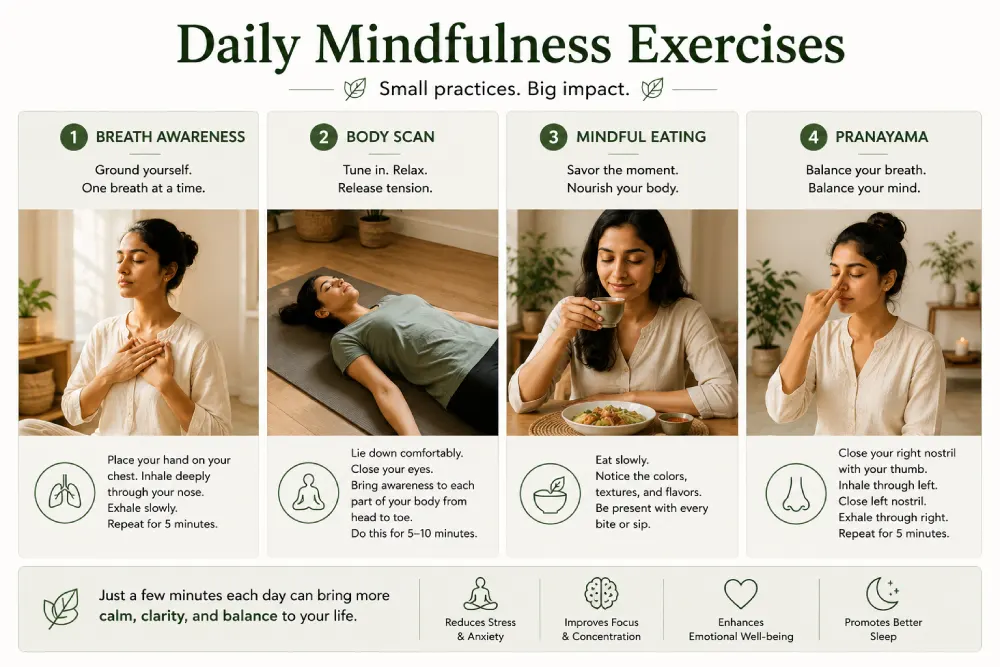
There is no need for intensive meditation practice. Short daily sessions really work.
Breath Awareness (5 Minutes)
This is anyone‘s easiest place to begin. Find a comfortable seat, rest your eyes closed and drop your whole attention into the process of breathing the growth of the chest, the odour of the air, and the rhythm of the inhale and the exhale.
When your mind drifts (and it will), guide your attention back to your breath with kindness and patience. Don‘t get exasperated or criticize yourself. Simply practice noticing and redirecting.. Harness the power of breath awareness to soothe the nervous system and interrupt the pattern of nagging, looping thoughts.
The ideal time: just after you wake up (nothing else in the world to do, first thing in the morning). Fresh out of the shower, even just 5 minutes makes for a completely different day.
Body Scan (10–15 Minutes)
Lie or sit comfortably. With your eyes closed, scan your awareness gently down through your body, in. Sense what you notice, heaviness, tightness, warmth, numbness, without wishing or trying to feel different. Just notice.
This is also very good practice right before bed. It quiets the mind by putting focus in the body that is already living here and now.
Mindful Eating
Bring your whole attention to the sensations of eating hunger, flavor, texture, smell, the act of chewing, the feeling of satisfaction. No phone, no T.V., no multi-tasking.
In India food has held a very cultural/religious significance, where sharing a meal and eating was considered as an act of understanding and gratitude itself – mindful eating takes us back to that part of the Indian culture.
Pranayama (Indian Breath Practice)
Box breathing (4 2 4 2), where you breathe in 4 counts, hold 4 counts, breathe out 4 counts, hold 4 counts, and alternate nostril breathing (Nadi Shodhana) supported by clinic evidence for firing up our intrepid parasympathetic nervous system, our bodies rest & digest mode. They are equanimity in the (most traditional Indian of) forms.
Yoga and meditation have been shown to enhance health-related quality of life in various areas such as managing stress and staying productive.
Mindfulness for Better Sleep
Maybe your mind is like this every night. Maybe you lie in bed and think about everything you have to do the next day, or every argument you‘ve ever had. It is a normal stress response, not some mental defect.
Mindfulness for sleep functions by breaking that mental loop. A routine of mindful winding down, with devices turned off 30 minutes before bedtime, 5 minutes of breathing awareness, and a quick body scan, communicates to the nervous system that the day has ended and Restoration can commence.
Sleep is important for mental health as well as physical health; a lack of sufficient sleep increases the risk for mental health issues such as anxiety and depression. When it comes to skin health – which at present is the heart of the Cultones content – the association is just as straightforward: during the deep sleep stage all types of skin regeneration take place; so, anywhere you can improve your sleep quality, you can also improve your skin quality.
Building a Daily Mindfulness Practice That Sticks
Where most mindfulness attempts go wrong is nothing to do with lack of discipline. It‘s the impossible expectations they set that cause failure.
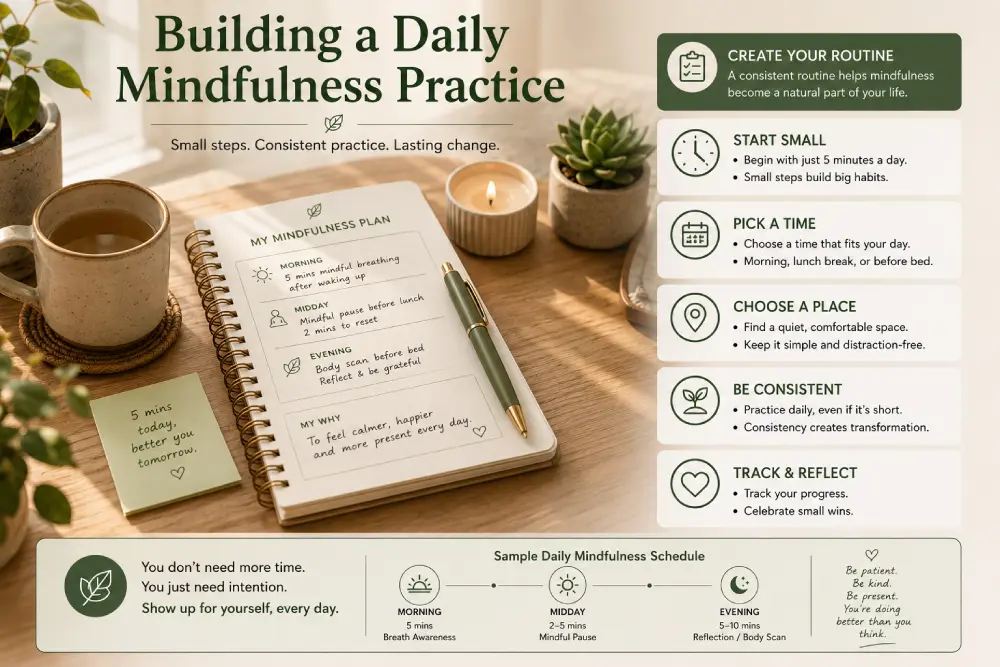
Start with two minutes. Seriously. Two minutes of breath awareness each dayfor a week is better than thirty minutes once and then never again.
We‘ll add it to an existing habit. Mindful breathing after your morning chai. A body scan after you lie down at night. Mindful eating at lunch. Habit stacking removes the decision of when and makes it automatic.
Don’t abandon the concept of doing it perfectly. A wandering mind isn’t a bad meditation. The point of meditation isn‘t meditation at all: its benefits are supposed to be enjoyed by those who practice it, imperfectly, every day.
Use the cultural tools of India. Chanting, mantra repetition, prayer, pranayama they‘re all valid mindfulness practices, hundreds and hundreds of years old. If they‘re easier than a guided app, go there.
📖 Read More: Beauty and Wellness — The Full Pillar Guide
Conclusion
Mindfulness isn‘t something we indulge in if we have spare time to meditate. It is simply another means of keeping a tough mind functioning at its best five minutes of proper present-moment awareness every day.
Begin modestly. Begin today. The way you practice mindfulness doesn‘t have to resemble anyone else‘s… it only has to be your own.