Mental Wellness and Self Care: Simple Practices for Everyday Life
Published: June 2, 2026 Last Updated: September 8, 2026 People don‘t tend to consider their mental health until they
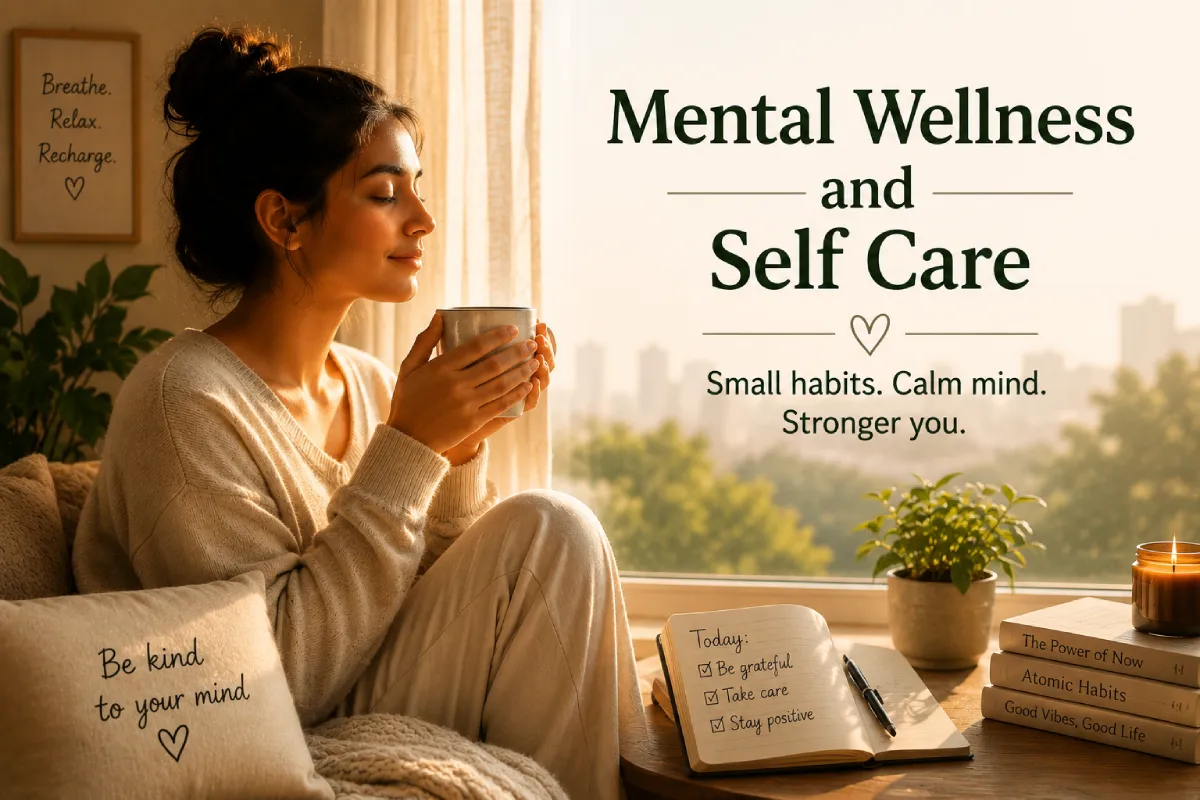
People don‘t tend to consider their mental health until they feel something is wrong. However, mental wellness and self care work a little differently you get the most benefit when they are integrated into your lives before reaching a crisis.
It‘s like brushing your teeth. You don‘t wait to develop a cavity. That‘s too late. You develop a daily habit that keeps the problem from occurring.
This guide cuts through the noise and gives you real, culturally resonant self-care practices that work whether you‘re struggling with the load of a US corporate career or the heaviness of familial responsibilities in India.
What Is Mental Wellness — and Why Does It Matter?
Mental health describes an ongoing state of feeling satisfied with your life, solving problems and coping with difficulties; not feeling worried or guilty; and feeling comfortable with yourself, your family and your friends.
The World Health Organization defines self-care as “the ability of individuals, families and communities to promote health, prevent disease, and cope with illness without a healthcare provider”. This is significant as it puts you in control of your health on a day-to-day basis rather than outsource it to a healthcare practitioner.
Mental health exists on a continuum. At one end is thriving – a feeling of stability, meaning and connection. At the other end is crisis. Most of us sit somewhere in the middle, where consistent behaviors for mental wellness really matter.
The 5 Pillars of Daily Self Care
1. Sleep: The Most Underrated Mental Health Tool
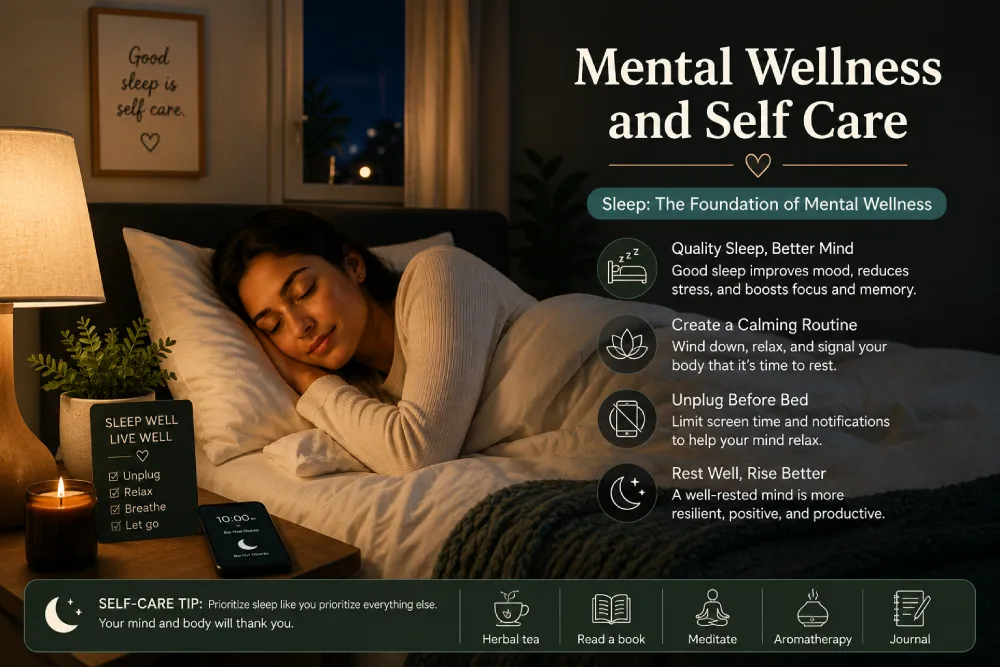
All other parts of your wellness program are based on healthy sleep. The longer you are chronically sleep deprived, the higher your cortisol levels will be, the less emotional control you will have, the more anxious you will become, and the more impaired your decision making will be. All without you realizing it!
What actually helps:
- Maintain a regular, wake time weekends included, every day
- Cut-screen time 30–45 minutes before bed, BASK15
- Don‘t keep the room too warm and bright
- Do not consume caffeine after 2pm
In India, staying up into the wee hours and having late nights because of erratic work schedules are increasing. In the US, the lack of sleep is often seen as a person ‘proud’, as a reflection of how busy he is. Both cultures must treat sleep the way it has to be- a scheduled appointment.
2. Movement: You Don‘t Need a Gym
Cise is one of the most researcher supported techniques for controlling stress. It releases endorphins and alleviates cortisol. It doesn‘t even need to be vigorous.
Other USA options: Walk 20–30 min per day, yoga, biking, dancing Others India options: Sair, morning walk, yoga, surya namaskar, biking, climbing stairs
What it isn‘t is fitness. It is simply about how to take off the stress that‘s built up in your body. Even a short fifteen-minute walk after dinner can have visible effects. on your mood and on the quality of your sleep.
3. Mindfulness: The Skill Most People Misunderstand
Mindfulness isn‘t about clearing your mind. It‘s about observing what‘s in your mind without reacting to it. That switch moving from the habitual to the aware is what relieves anxiety and fosters emotional strength.
Simple daily mindfulness habits:
- 5 minutes of mindful breathing in the morning (not a full meditation session, just five minutes)
- One mindful sessionper day: no screen, no multitasking.
- A 2-minute pause before reacting to a stressful message or circumstance.
- Body scan in the evening: Observe where you are carrying tension.
Look at how mindfulness and wellness treatments can be incorporated into your daily skincare and wellness routine, starting with your morning skincare routine and ending before you go to bed.
4. Emotional Boundaries: The Self Care Habit Nobody Talks About
Saying yes to everything isn‘t generous it‘s a quick way to resentment and burnout. Define your emotional boundaries what you can give and where you need to safeguard your limits.
Signs you need better boundaries:
- Drained after most social encounters
- Saying yes but screaming no inside
- Always prioritising others’ comfort at the expense of your wellbeing
- Feel guilty after taking time for yourself,
Practical boundary-setting:
- Instead of fabricating excuses, say “I can‘t commit to that right now”
- Schedule personal time in the same way that you would a work meeting blocked and protected
- Cut down on meeting with the people who regularly leave you feeling worse off.
In both Indian and American settings, guilt about boundaries is cultural. But boundaries are not walls. They are structure that allow us to be our best selves for people we love.
5. Social Connection: Quality Over Frequency
Loneliness is strongly predictive of anxiety and depression. The cure is not imparting social interaction but rewarding connection. Even a small shot of it can help.
According to a study from UCLA Health, even quick moments of warmth with your friendly acquaintance can bring down your loneliness and boost your everyday mood. You just don‘t require a crowded social schedule; you require a few relationships where you feel truly visible.
For USA readers: Touch base with one person a week, not a text thread, but a phone call. For India readers: Don‘t succumb to the cultural show of wellness among those you live with. Real connectedness is authentic, not performative.
Common Self Care Mistakes to Stop Making Right Now
Even people who try to practice self-care often get these wrong:
- Self-care as a reward the maintenance not a treat for when everything else is good
- Using the false equivalency of self-care and self-indulgence – a facial is great, but sleep and boundaries are necessary
- Only begins when burned out when in reality it takes far longer to recover than it does to prevent.
- Going too fast, too early effadding 5 new habits in one week results in 0 by week 2.
- Skipping professional treatment when necessary self-care supports mental health, but should not replace therapy for mental illnesses.
Myth vs. Fact: Mental Wellness Edition
| Myth | Fact |
|---|---|
| Self-care is selfish | You cannot pour from an empty cup. Looking after yourself benefits everyone else. |
| Mental health only for people with mental illness | It‘s an active daily exercise , like training for your mind. |
| Meditation needs many hours of your day to give benefit. | Five targeted minutes a day makes a difference. More precisely than that, you must practice regularly. Five minutes a day can keep you more motivated than simply doing forty-five and a half. |
| His gonna say he‘s stressed | Labeling emotions diminishes their control andthis is backed by neuroscience |
| Suffering from mental health issues is a weakness6. | To ask for support takes more courage than not to ask! The weak point is the negative labels itself. |
A Note on Mental Wellness in India
80-90% of care for mental health issues in India is missing. There is a gap for support for the majority of the people who need it. Reasons for this are stigma, access to care and cultural silence but people are starting to talk about it –particularly younger generations.
If you are in India and overwhelmed by stress, worry, or burnout here is a simple fact: Caring for your mind is not weakness. It might just be the smartest thing you can do. Use the habits in this guide to get started. All of them require no trip to a Clinic and no money and no explanation to anyone.
Developing a full beauty and wellness routine (covering your mental, emotional and physical wellbeing) is the basis of everything else.: your Energy, your Relationships, your Productivity, your Skin, your Confidence.
Your 7-Day Mental Wellness Starter Plan
One habit. One day. No overwhelm.
- Day 1: Sleep 30 minutes earlier than usual
- Day 2: Take a 20-minute walk without your phone
- Day 3: Practice 5 minutes of focused breathing after waking
- Day 4: Say no to one non-essential commitment
- Day 5: Have one meal with no screens
- Day 6: Text or call one person you’ve been meaning to connect with
- Day 7: Write down three things that went well this week (no matter how small)
Mental wellness and self care are an important part of a natural beauty and wellness lifestyle rather than achieving a perfect routine. They’re about returning, again and again, to the habits that help you feel like yourself.