How to Style Oversized Clothes: Balance and Outfit Ideas
Published: September 26, 2026 Last Updated: September 26, 2026 Styling oversized clothes comes down to one rule: balance volume
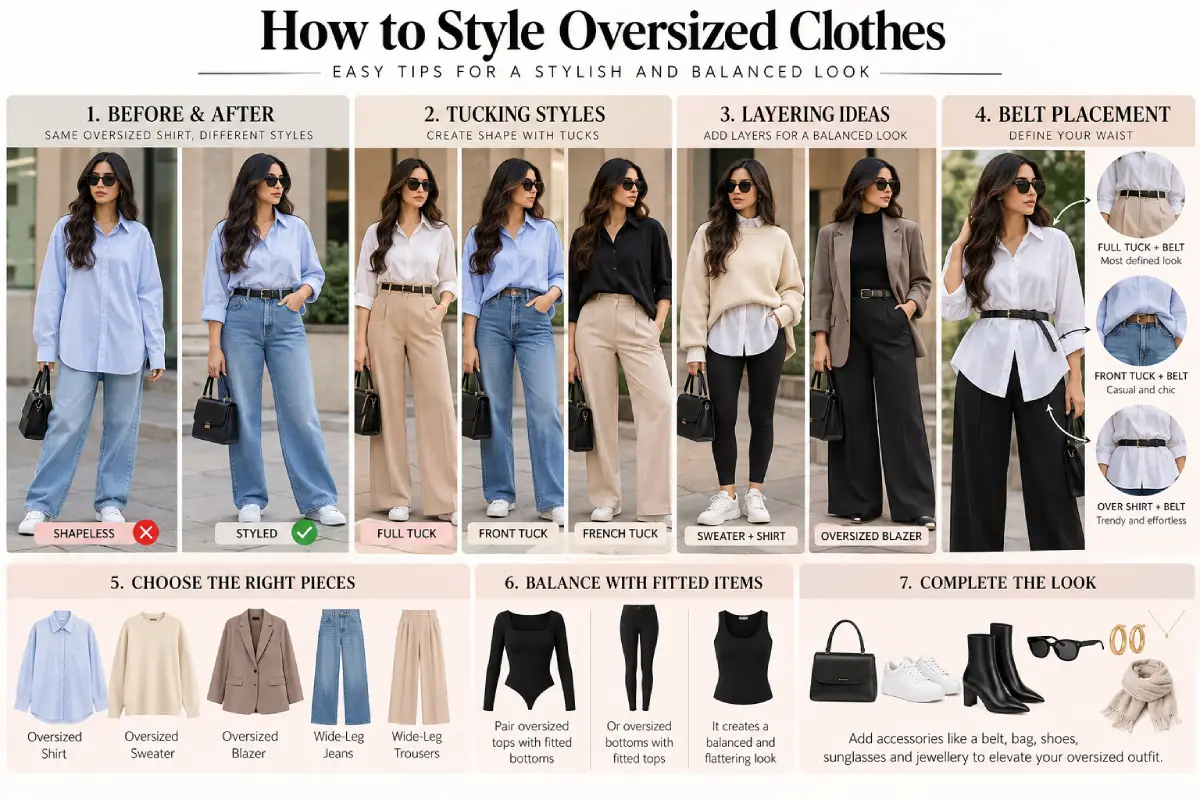
Styling oversized clothes comes down to one rule: balance volume with a point of definition. Pair loose tops with fitted bottoms (or vice versa), use tucks, rolls or belts to create shape, and choose fabrics with clean drape rather than pure bulk. Done right, an oversized fit looks intentional and polished — not like you borrowed something too big.
Oversized clothing looks effortless when it’s done right and sloppy when it isn’t — and the difference almost always comes down to one thing: proportion. Learning how to style oversized clothes isn’t about following a list of outfit combinations. It’s about understanding a single rule and applying it consistently: when one part of your outfit is loose, another part needs to define your shape.
Once that idea clicks, oversized shirts, sweaters, blazers and t-shirts all become easier to work with — because you’re no longer guessing, you’re applying the same logic to a new garment.
1. Understand Intentional Oversizing and Garment Fit
Oversized dressing works when it looks deliberate, not accidental. The distinction usually comes down to three things: shoulder placement, fabric weight and where the garment falls on your body.
A genuinely oversized piece should still fit you in the shoulders — even if the seam sits slightly past your natural shoulder line, it shouldn’t droop halfway down your arm. If the shoulder seam is falling near your elbow, the piece isn’t oversized, it’s simply too big, and no styling trick fully fixes that. This is the most common mistake people make when shopping for oversized pieces: sizing up without checking whether the shoulder still holds its shape.
Fabric matters just as much as size. A boxy cotton shirt in a crisp weave holds its silhouette and looks intentional. The same cut in a thin, clingy fabric collapses against the body and can look unfinished. When buying oversized pieces, favor fabrics with some structure or drape — cotton poplin, denim, wool blends, or heavier knits — over flimsy, static-prone materials.
The core proportion principle carries through every section below: if the top half of your outfit is loose, balance it with a more fitted bottom half, and vice versa. If you want the full reasoning behind why proportion is often the real cause of an outfit looking “off,” the outfit styling guide breaks that down at a general level before this article goes deeper into oversized-specific fixes.
2. Style Oversized Shirts and T-Shirts
An oversized shirt is one of the most versatile pieces to work with, but it’s also the easiest to get wrong by leaving it completely unstructured.
Roll the sleeves. Pushing or rolling sleeves up to the forearm exposes a narrower part of your body — your wrist — which visually breaks up the boxy shape of the shirt. This is a small adjustment, but it does a lot of the balancing work on its own.
Tuck or knot the hem. A full tuck into high-waisted trousers or a denim skirt creates a defined waistline and stops the shirt from reading as a single shapeless block. A front knot works the same way for a more casual look, and it also shortens the length of an oversized t-shirt so it doesn’t overwhelm shorter frames.
Pair with fitted or high-waisted bottoms. High-waisted jeans, tailored trousers, or a slim skirt worn under an oversized shirt or t-shirt gives the eye a clear line to follow. This pairing is the most reliable formula in this entire guide — it works for oversized shirt outfits and oversized t-shirt outfits equally well.
For humid or warm climates, especially much of India for a large part of the year, choose lighter cotton or linen oversized shirts and skip heavy layering underneath — the shirt itself provides enough visual volume without adding another layer’s worth of heat.
3. Balance Oversized Knitwear and Jackets
Oversized sweater styling and oversized blazer outfits both rely on the same volume-balancing logic, applied slightly differently depending on the garment’s structure.
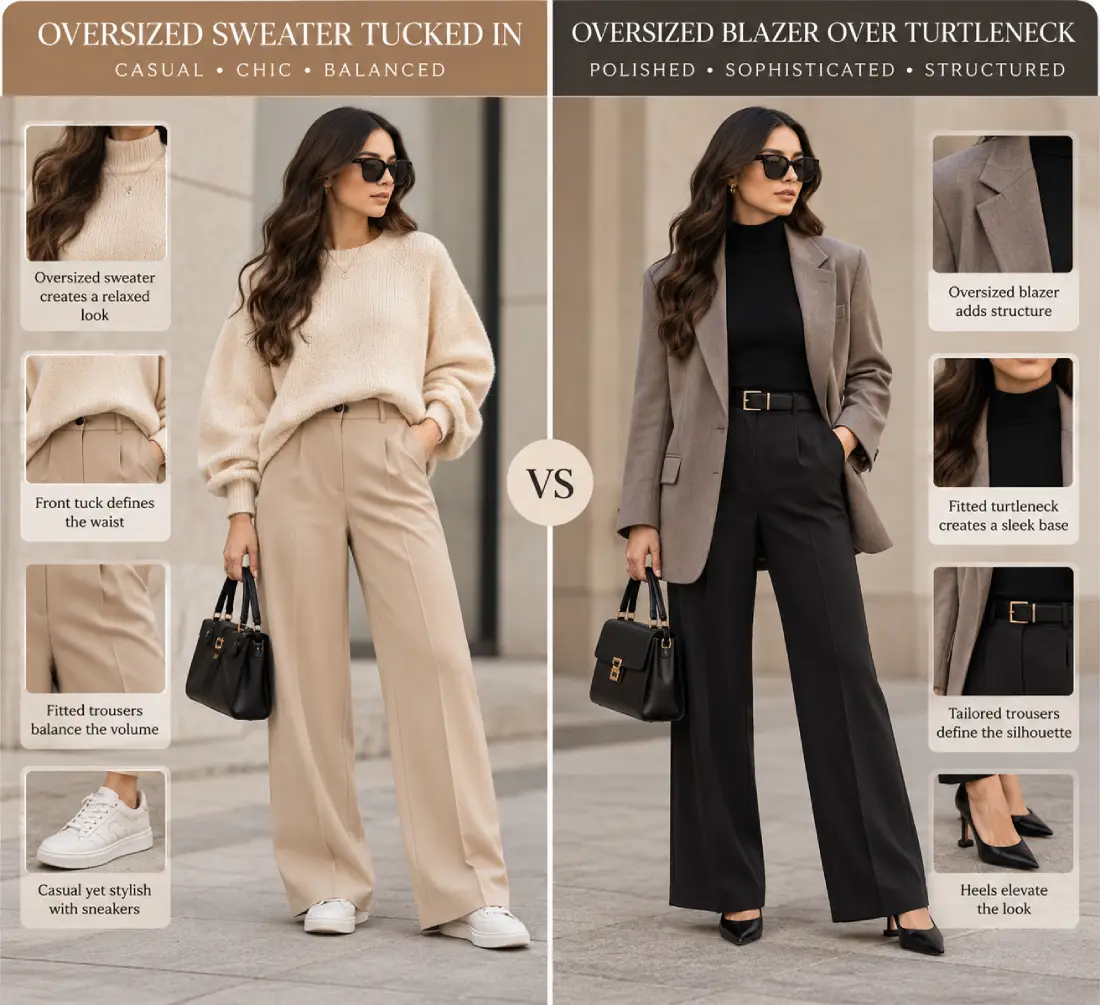
For an oversized sweater, tucking the front hem into slouchy jeans or trousers is the most dependable move — it creates a waist without losing the cozy, relaxed feel of the sweater itself. Sweaters that hit just below the hip tend to be easiest to work with, since they’re long enough to layer over leggings or a slip dress but not so long they swallow your frame.
For an oversized blazer, the fix is usually structural rather than about tucking. Because a blazer already has shoulder and lapel structure, it typically needs only one point of definition elsewhere — a slim-fit top underneath, tailored trousers, or a belt at the waist if you’re wearing it open over a dress. A boxy blazer worn over a fitted turtleneck and straight-leg trousers reads as polished; the same blazer over another loose layer usually reads as bulky.
| Garment | Best balancing move | Pair with |
|---|---|---|
| Oversized sweater | Tuck front hem | Slim jeans, leggings, slip dress |
| Oversized blazer | One fitted layer underneath | Turtleneck, tailored trousers |
| Oversized jacket/coat | Belt or open with structure | Fitted dress or slim trousers |
4. Use Hems, Tucks and Belts to Adjust Proportions
This section answers the question most readers actually have: what do I do with my hands when an outfit looks shapeless?
A belt is the fastest fix. Cinching a belt at your natural waistline — over an oversized shirt, dress, or open jacket — creates an hourglass reference point without changing the garment itself. The belt should sit where your body actually narrows, not at the widest point of the outfit, or it will fight against the silhouette instead of defining it.
A front or side tuck works when a full tuck feels too formal. Tucking just the front of a shirt or sweater into your waistband creates partial definition while keeping the rest of the garment loose and relaxed.
A French tuck — tucking in only a small section at the front center — is a lighter version of the same idea, and it works especially well with oversized t-shirt outfits worn with jeans.
If none of these feel right for a particular piece, a rolled hem or cuff achieves something similar for sleeves and pant legs: it shows a narrower point of the body (wrist or ankle) and stops volume from reading as shapeless from top to bottom.
5. Put Together Relaxed Outfits for Different Occasions
The same balancing principle adapts across settings — only the level of polish changes.
- Casual/weekend: Oversized t-shirt, tucked or knotted, with boyfriend jeans and sneakers. Minimal accessories, comfort-first.
- Smart-casual/office (where dress code allows): Oversized blazer over a fitted top, tailored straight-leg trousers, and a low heel or clean sneaker. The blazer’s structure keeps this look from tipping into “too casual.”
- Evening or dressier settings: Oversized shirt tucked into a slim skirt or trousers, one statement accessory, and heeled sandals or boots to add polish that balances the relaxed top half.
- Warm-weather/Indian summer dressing: Lightweight oversized cotton shirt or kurta-style top, tucked or knotted, over slim-fit palazzo pants or straight trousers — keeping fabric weight low while still applying the fitted-bottom rule.
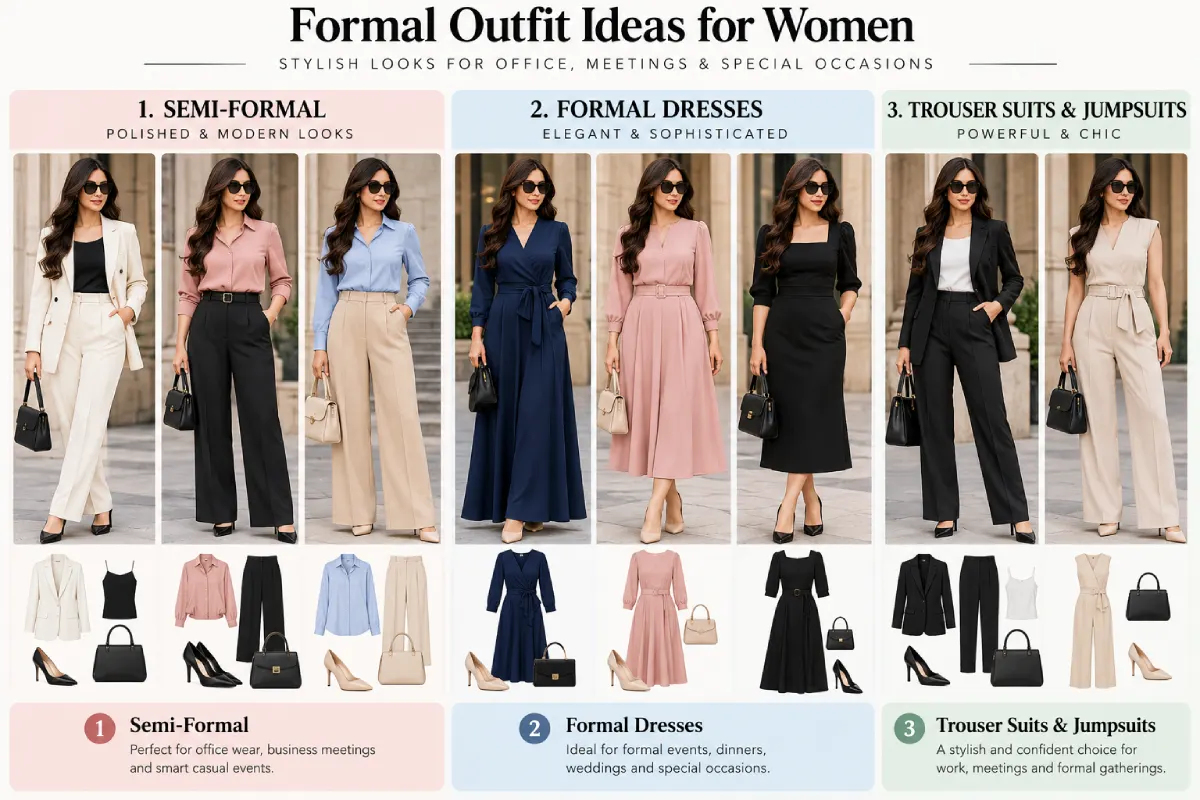
For guidance on matching any of these looks to a specific dress code or occasion, the formal outfit ideas guide covers what different formality levels actually expect, which is useful before deciding how far to push an oversized silhouette for work or events.
Common Mistakes to Avoid
- Going oversized on both halves at once. Loose top and loose bottom together usually reads as shapeless, not stylish.
- Buying “too big” instead of “oversized.” Oversized should still fit at the shoulder; anything beyond that is just the wrong size.
- Skipping fabric structure. Thin, clingy fabrics undercut the boxy silhouette that makes oversized pieces look intentional.
- Over-accessorizing on top of an already bold silhouette. One statement piece is usually enough; more competes with the outfit rather than completing it.
Final Thoughts
Learning how to style oversized clothes really comes down to recognizing volume and balancing it — tuck, belt, roll or pair with something fitted, and choose fabrics that hold their shape. Apply that same logic to any new oversized piece you buy, and you won’t need a separate rule for every garment. For the broader method this article builds on — choosing anchor pieces, balancing color and texture, and finishing an outfit properly — the complete outfit styling guide is the place to start.
FAQs
Is oversized clothing still in style?
Yes — oversized silhouettes have moved from a passing trend to a mainstream wardrobe category, particularly for shirts, blazers and knitwear. The key to keeping it current is pairing loose pieces with fitted counterparts rather than wearing volume head to toe.
How do I know if a piece is oversized versus just too big?
Check the shoulder seam. On a properly oversized garment, the shoulder still sits close to or just past your natural shoulder line. If the seam falls well down your upper arm, the piece is too big rather than intentionally oversized.
Can I wear oversized clothes if I’m petite?
Yes, with adjustments. Choose oversized pieces with shorter proportions (cropped jackets, shirts that hit at the hip rather than mid-thigh) and always pair them with a fitted or high-waisted bottom to avoid being visually overwhelmed by fabric.
What should I wear under an oversized blazer?
A slim-fitting top — a turtleneck, fitted t-shirt, or camisole — gives the blazer’s boxy shape something to contrast against, which keeps the outfit from looking bulky.
How do I style an oversized t-shirt for a casual day out?
Tuck or knot the front, pair with high-waisted jeans or bike shorts, and add sneakers. The tuck creates the one point of definition the outfit needs.
Do oversized clothes work in hot, humid weather?
Yes, if you choose lightweight fabrics like cotton or linen and avoid layering underneath. A single loose, breathable layer can be more comfortable in heat than a fitted outfit, as long as you still balance proportions with a fitted or high-waisted bottom.