Types of Shoes Explained: Styles and When to Wear Them
Published: September 25, 2026 Last Updated: September 25, 2026 Quick Summary: Shoe types generally split into four practical groups:
Quick Summary:
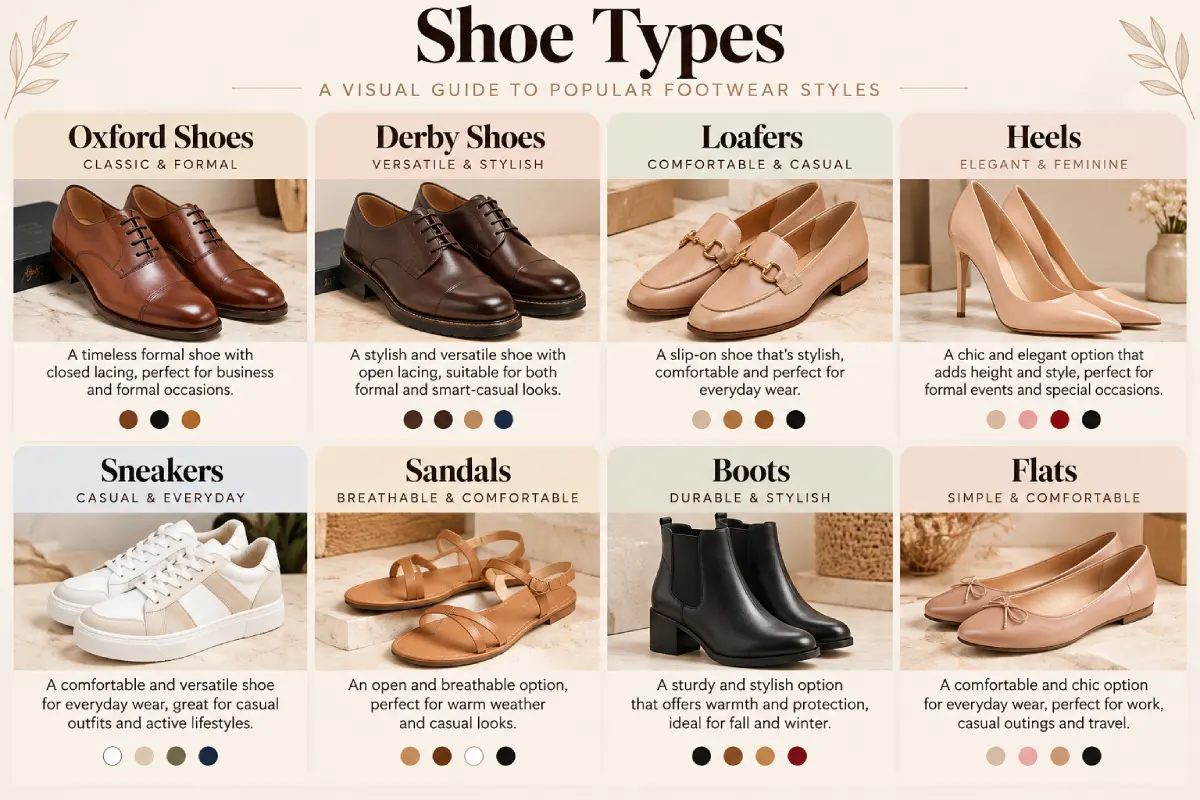
Shoe types generally split into four practical groups: formal dress shoes (Oxfords, Derbies, monk straps), everyday casual shoes (loafers, flats, trainers), boots, and sandals. The style names matter less than knowing the formality level each one carries — an Oxford reads more formal than a Derby, a loafer sits between formal and casual, and matching that formality level to your outfit and occasion is the real skill worth learning.
If you wander down to your local shoe department and look at all the labels, you will see dozens of different categories being used Oxford, Derby, loafer, Chelsea boot, etc. but with very little in the way of explanation as to what exactly distinguishes the categories. Knowing your shoes doesn‘t mean memorizing the terminology, it simply means understanding one word: shoes follow a hierarchy from formal to informal, and the position of a style in this hierarchy explains where you can use them.
Our guide divides the types of shoe into four useful groups: business shoes, everyday shoes, boots, and sandals. It goes into details about what makes each style different from the rest.
Shoe Types at a Glance: Names and Key Features
Before getting into formality and occasion, it helps to know what defines each major style at a glance.
| Shoe type | Key feature | General formality |
|---|---|---|
| Oxford | Closed lacing (laces stitched under the front panel) | Most formal |
| Derby | Open lacing (laces stitched on top of the front panel) | Formal to smart casual |
| Monk strap | Buckle closure instead of laces | Formal to smart casual |
| Loafer | Slip-on, no laces or buckle | Smart casual |
| Ballet flat / flat | Low, laceless, minimal structure | Casual to smart casual |
| Trainer / sneaker | Rubber sole, sporty construction | Casual |
| Chelsea boot | Ankle-height, elastic side panel, no laces | Smart casual |
| Ankle/combat boot | Ankle-height, laced or zipped | Casual |
| Heel/pump | Elevated heel, closed or open toe | Formal to evening |
| Sandal | Open construction, minimal upper | Casual |
The rest of this guide goes deeper into each category — what actually distinguishes the styles within it, and when each one earns its place in an outfit.
Everyday Shoes: Trainers, Loafers and Flats
This is the group that most people wear the majority of the time, and spans the broadest range of formality of any here.
Loafers: These slip on shoes have neither laces nor buckle, but fall right at the border of formal and casual while offering a good in-between look nice enough for a business-casual office and relaxed enough for a weekend. A smooth leather loafer wears more formal; a suede or lighter shade is more casual.
The Flats— ballet flats, pointy flats, plain slip-ons–are the everyday equivalent for a more feminine silhouette. Flats like loafers are “formal” or “casual” depending on the material, with a smooth leather pair being cool casual and a canvas or bejeweled pair being totally casual.
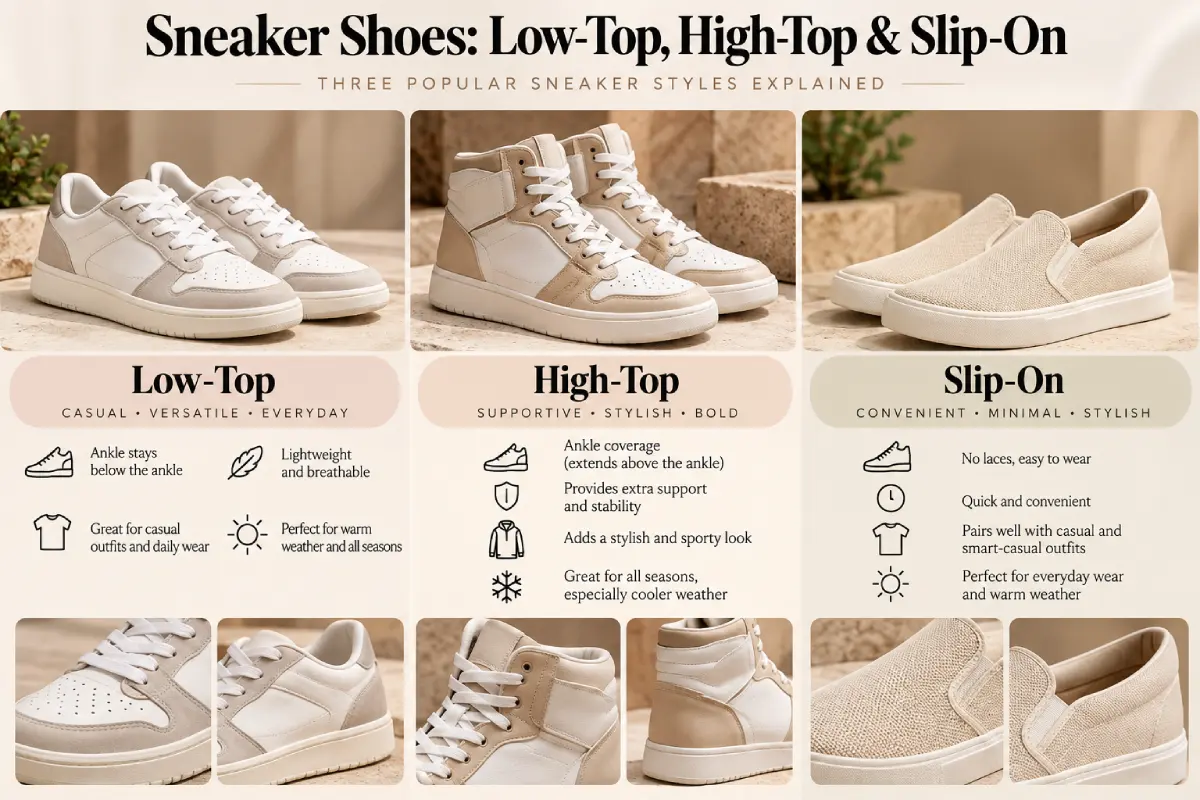
Trainers and sneakers are far more about comfort and movement than they are about formality and they‘ve been accepted into much wider worlds than they once were many workplaces now permit a sleek, minimal trainer to be worn with smart-casual wear. As the variety now encompasses so many different sub-styles from running, lifestyle and skate-influenced to the classics it‘s worth breaking them all down rather than that most-flattering of summaries, a list (see the full list of sneakers and styling guides for that).
Formal Shoes: Oxfords, Derbies and Heels
It is the small construction details of formal shoes that matter most they are what‘s truly revealing of a shoe‘s formality level.
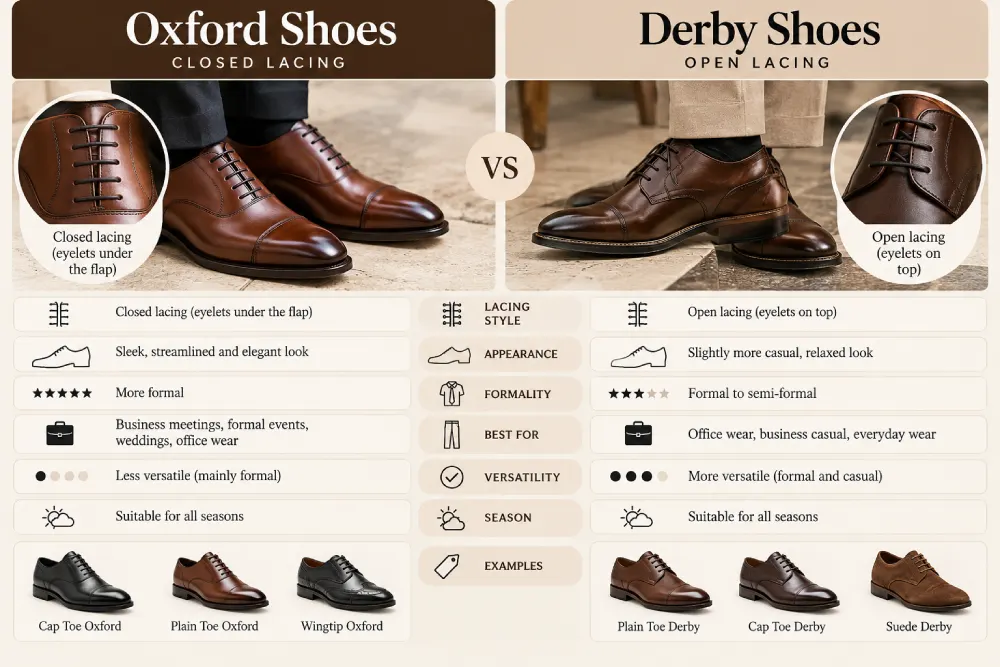
Oxfords feature a closed lacing system the eyelet panels are stitched underneath the front part of the shoe, resulting in a sleek, continuous line over the instep. That polished profile is precisely why the oxford is the most formal of lace-up shoes it is the go-to shoe for black tie, formal weddings and when serious, sartorial seriousness matters.
Derbies look similar at a glance but use open lacing instead — the eyelet panels sit on top of the front of the shoe rather than underneath it. That single difference makes the Derby noticeably more flexible: it accommodates a wider range of foot shapes comfortably and works across business, smart-casual, and many occasion settings, without demanding the strict formality an Oxford calls for.
The monk strap removes laces altogether in favor of one or two buckled straps. Monk straps fall in about the same department as a Derby, dressy enough for work but versatile enough to be paired with a casual or smart-casual wardrobe, and have a stand-out style for anyone who wants a formal shoe that isn‘t a plain Oxford or Derby.
Heels and pumps describe: the primary formal option in women’s footwear, ranging from a low kitten heel appropriate for office wear to a higher stiletto or block heel suited to formal or evening occasions. As a general rule, the lower and more closed the shoe, the more it can flex between office and semi-formal use; the higher and more open the design, the more it’s suited specifically to evening or occasion wear.
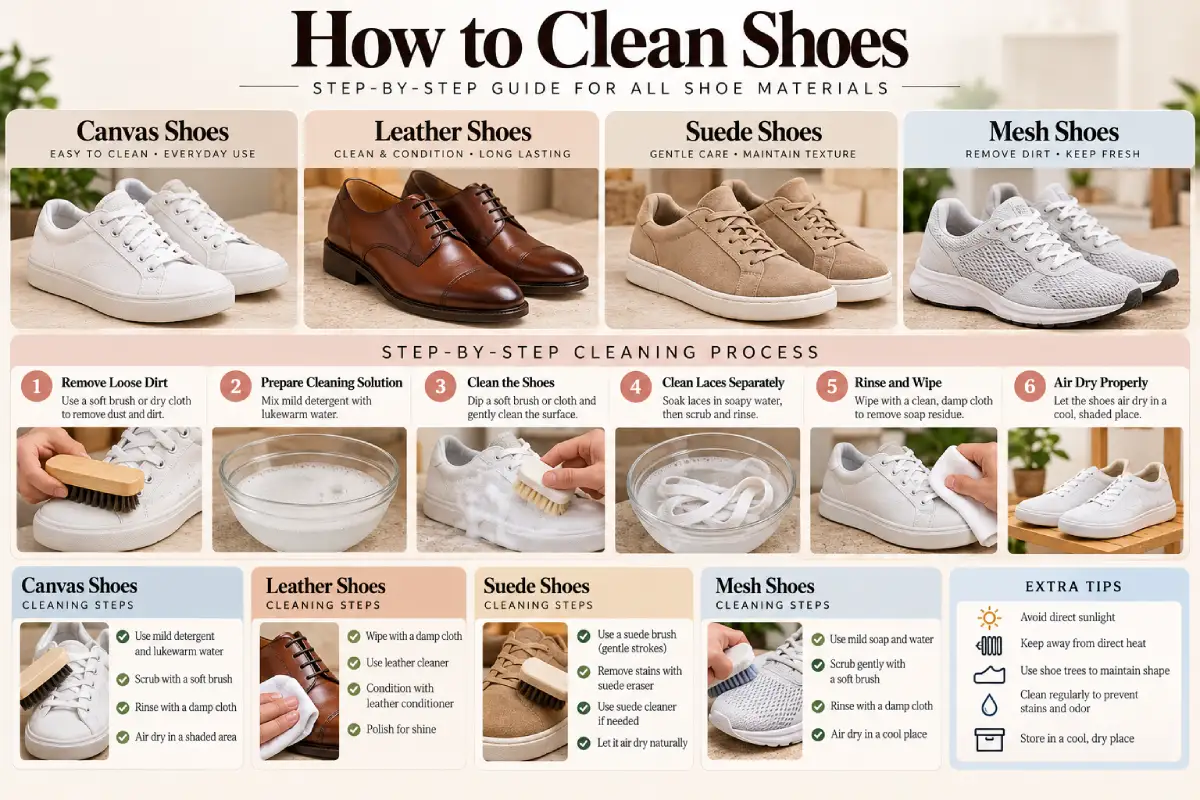
Check out the comprehensive cleaning tutorial for shoes covering leather, suede, canvas and mesh.
Boots, Sandals and Other Seasonal Styles
The scope of boots is broad and can encompass anything from the classic Chelsea boot an ankle-high, no-lace, elasticized boot that can be easily slipped on and off to ankle-high boots that lace up or zip across the ankle, all the way up to heavier, winter-appropriate styles. While all boots will incorporate the more fashionable Chelsea boot style at the subtle end of the spectrum, it is those with laces that lend themselves more to the casual side of things, and that will go well with both tailored trousers and casual denim. In India, boots are primarily used during winter evenings or in the cool north of the country.
Sandals are worn for maximum breathability and can be as basic as a flip-flop or as complicated as a strappy sandal or block-heeled sandal for anything from warm weather casual wear up to warmer weather more elegant occasions. In some hot humid climates sandals can be the most sensible daily shoe option for most of the year but most work environments will expect closed toed shoes.
Ethnic and occasion footwear juttis, mojaris, kolhapuris, along with bejeweled flats or spikes should also be included here since they don‘t quite fit into casual/formal Western categories. Such footwear is usually worn to complement special ethnic dress and occasion rather than referring to them as general formal/casual wear. scale, and they’re worth treating as their own category when planning festive or ceremonial footwear.
Choose a Shoe Type for Your Outfit and Occasion
Once you know roughly where a shoe type sits on the formal-to-casual scale, matching it to an outfit becomes far simpler. A useful rule: keep your shoe’s formality level within one step of your outfit’s formality level. An Oxford with jeans reads mismatched in the other direction — too formal for the outfit — the same way sneakers with a formal suit read too casual.
In office and business environments, Derbies or monk straps, loafers or low block heels will usually suffice for that from formal to smart casual dressing.
Your Oxfords or polished dress-appropriate ethnic shoes are appropriate shoes for formal events and weddings because they are dressy.
Since wore daily and weekend, loafers, flats, trainers, Chelsea boots look smart enough.
If you are outdoors in hot-weather environments or simply lounging about, the most suitable footwear is. If the occasion dictates. Otherwise, opt for my second suggestion.
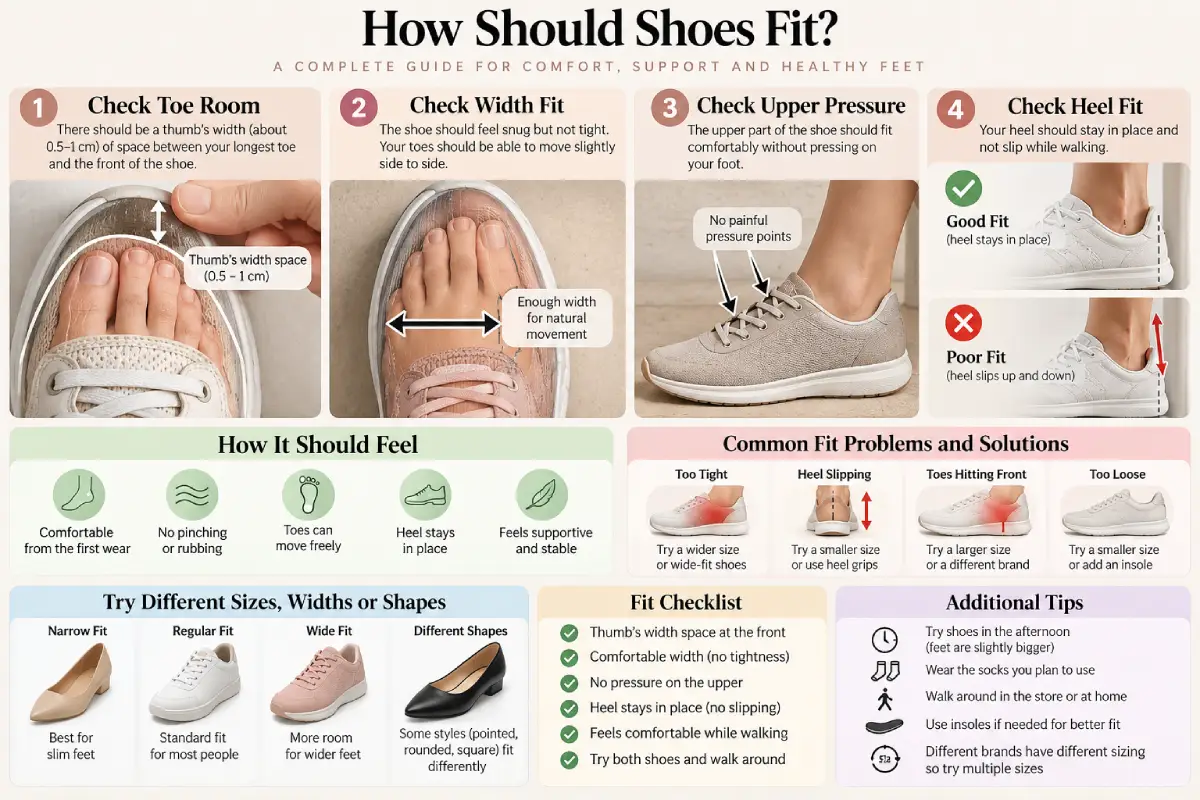
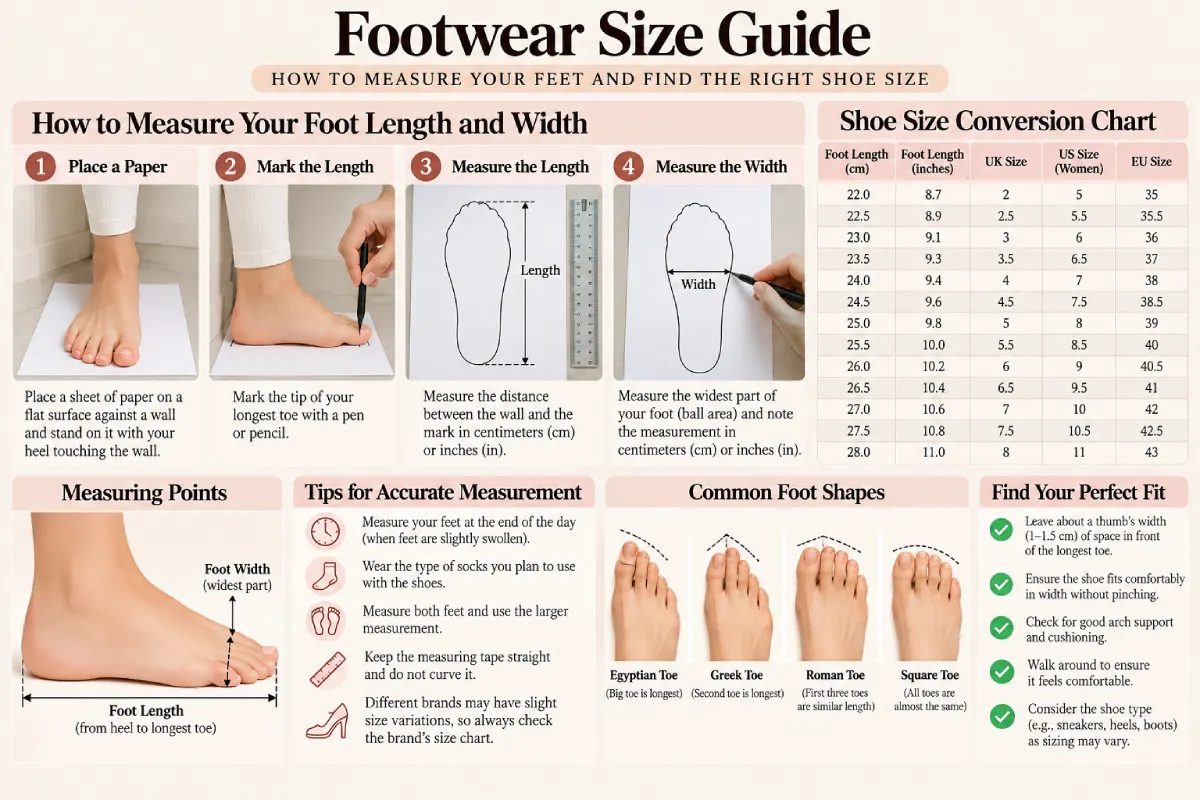
Recognising the different types of shoes is helpful, but making sure the style and formality is appropriate for the occasion is the aspect that determines whether a specific type of shoe is “right” or not and takes a bit of practice to develop an eye for. For the complete set of footwear categories that this guide covers, plus tips on sizing and footwear fit and care, the complete footwear guide makes a good starting point.
FAQs
What’s the difference between an Oxford and a Derby shoe?
The key difference is in the lacing construction. An Oxford has a closed lacing construction where the eyelet panels are stitched underneath the front, avoiding any unnecessary lines and resulting in a formal and smooth appearance. A Derby has an open lacing construction where the eyelet panels are stitched underneath the front, which gives a slightly more casual appearance enabling a greater variety of heel and foot shapes to be accommodated.
Are loafers considered formal or casual shoes?
Loafers sit in between — they’re generally classified as smart-casual. A clean leather loafer can work in a business-casual office, while a suede or more casual-styled loafer leans toward weekend wear.
Can sneakers be worn in a formal or office setting?
So more and more, yes but it depends on the sneaker and the office of course. A crisp, simple sneaker in some muted tone can work for smart-casual offices, but sneakers are still pretty much always too casual both in tone and style for classic formal or black-tie dressing.
What shoe types work best for hot, humid weather?
Open shoes (e.g. sandals), well-ventilated (e.g. loafers) and lightweight shoes are more suitable in tropical climates, as closed and heavy shoes retain more heat. With the exception of some offices, most places of work still require a closed shoe for all daily office wear. climate.
Do boots make sense for Indian weather?
Full boots are perfectly suitable for the cooler parts of India or winter evenings, but not for general wear throughout the year in most parts of India. A less heavy ankle length boot would be a reasonable compromise for cooler seasons in warmer regions.
Final Conclusion
Knowing your shoe types isn’t about memorizing every name in a shoe store — it’s about recognizing where each style sits between formal and casual, so you can match it to your outfit without overthinking it. Oxfords and heels for formal occasions, Derbies and loafers for the office, sandals and trainers for everyday comfort: once that scale clicks, choosing the right shoe type gets a lot easier. For sizing, fit and care guidance to go with it, head back to the complete footwear guide.