Hair Care Routine for Wavy Hair: Keep Waves Healthy & Defined
Published: September 14, 2026 Last Updated: September 14, 2026 If your hair refuses to cooperate (partly wanting straight, partly
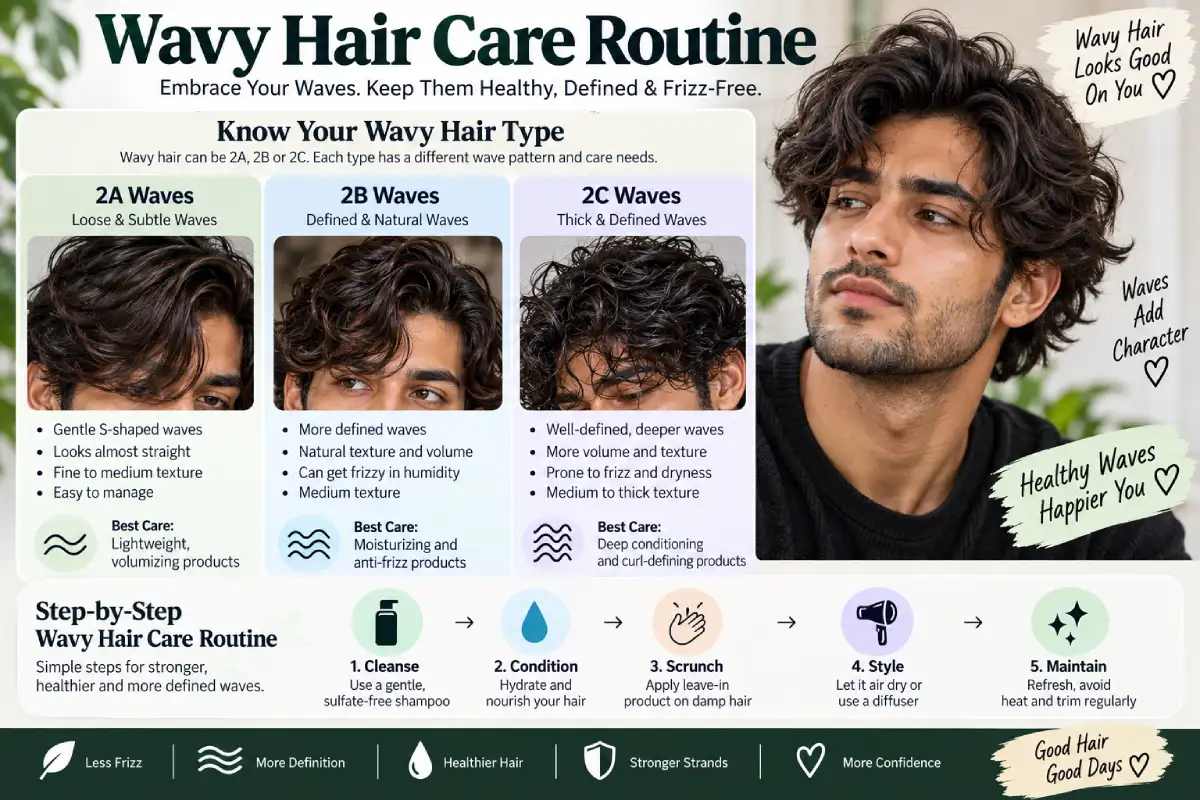
If your hair refuses to cooperate (partly wanting straight, partly wanting curl), then you‘ve got wavy hair, and I know you have an irritated eye roll over how hard it is to buy things for it. Straight-hair products feel too flat and straight in wavy hair. Curly-hair products contain heavier ingredients formulated for a tighter curl, and make your waves look greasy or crunchy.
A hair care routine for wavy hair works best when it’s built specifically for that in-between texture: light enough to avoid flattening the wave pattern, but structured enough to actually define it. Below is a step-by-step routine, along with the wash frequency and common mistakes that most generic hair guides skip over.
How to Identify Your Wavy Hair Type
Wavy hair tends to be divided into three sub-groups called 2A, 2B, and 2C. Once you figure out which sub-group your hair falls into you then can ascertain the amount of product weight your hair can bear.
- 2A The loosest of the wave pattern. Roots and mid-lengths are virtually straight with a slight S-shape and is found at the end of the hair. Usually gets weighed down by rich creams or oils and drops out of shape quickly.
- 2B A more precise S shaped wave is beginning around the mid-length,10.2 holds a style better than 2A but has a tendency to frizz at the crown and around the hairline in humid condition.
- 2C Perhaps the most well defined (and often thickest) of the three. The waves begin as they leave the scalp. 2C is more prone to frizz than the other “s” types and can usually handle more product as well.
For a quick idea of your type, examine damp hair by itself sans product. 2A will look fairly straight with a slight wave in it, 2B will have a definite S shape down the length and 2C will have S shapes that are firmer and begin higher up the hair strand. It‘s also not unusual to find different types on one head…finer waves on the top layer and thicker waves underneath…which is one reason a single rigid routine often doesn’t work for wavy hair long-term.
Step-by-Step Hair Care Routine for Wavy Hair
After getting a feel for the wave type, the routine always proceeds in the same order. The steps are not so important as they are performed in layers.
- Use a sulfate-free or low sulfate shampoo. Sulfates can remove the natural oils that enable waves to stay together and hold their shape. Then your waves are frizzy right after you‘ve washed.
- Wash condition every time. Use conditioner concentrating on mid-lengths and ends generally avoid the scalp as oily roots tend to be caused from the roots rather than the ends.
- Use a leave-in or light style on sopping wet hair. Wavy hair takes product best when it‘s still dripping; on damp but not wet hair you‘ll get less definition and more frizz.
- Scrunch Wet Hair, instead of brushing, cup sections of your hair in your hand and scrunch them gently toward the scalp. This will help clump the wave together rather than pulling them apart.
- Air dry or diffuse without touching the hair. Moving the hair while it is drying is one of the most common causes of frizzy wavy hair because it causes individual waves to come apart, as happened in step 4.
- Scrunch out the crunch, if needed, once fully dry. If you used a gel or mousse with strong hold, hair may feel stiff when dry. A gentle scrunch with dry hands softens it without undoing the wave definition.
How Often Should You Wash and Condition Wavy Hair?
For the majority of those with wavy hair, the optimal hair-washing frequency should be every 2 3 days. The roots of wavy hair will develop larger quantities of oil than manes of curly hair (due to the wave formation allowing the oil from the scalp to pass more rapidly down the shaft of hair) but not as much as straight hair, and so generally would not need to be washed daily, and hence washing every 2 3 days would be a good starting point that can then be adjusted according to the individual‘s needs. This approach washing according to oiliness of the scalp rather than according to a daily schedule complies with general dermatologist advice.
Use conditioner every single time you wash. There is no excuse not to, because most people who think they are not using hair conditioner every washing actually are doing so they are not using it on the mid-lengths and ends, but leaving out the conditioner because their hair feels “oily”.
A once-a-week heavy duty conditioner treatment will help when your ends need some moisture and your waves are starting to look lifeless by the end of the week; however, daily heavy duty conditioning or oiling usually doesn‘t work for wavy hair exactly because it‘s more prone to feeling weighed down than curly hair.
How to Keep Wavy Hair Defined Without Weighing It Down
Definition but with no flatness is regarding weight of the product to your wave type and gravity weighting the heavier products away from the roots.
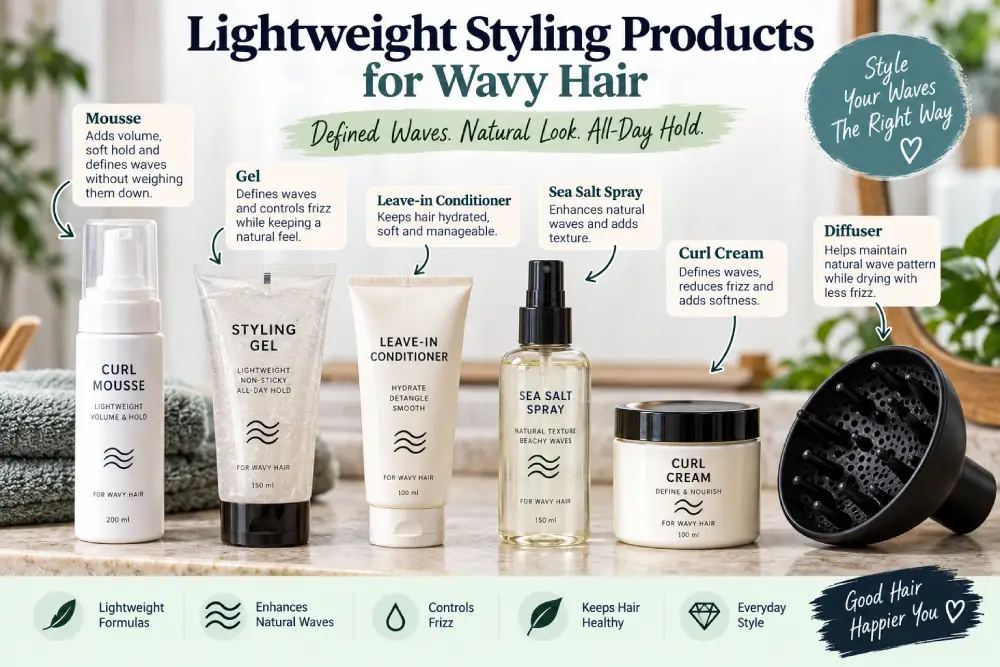
| Wave Type | Product Weight to Look For | Where to Focus Product |
|---|---|---|
| 2A | Light mousse, or light weight gel |
Mid-lengths to ends only |
| 2B | Medium-hold gel or lightweight cream | Mid-lengths, a small amount of conditioning product close to the scalp |
| 2C | Medium-firm gel or curl cream. |
Root to end, slightly more at ends |
A few habits make a noticeable difference regardless of wave type:
- Do not apply heavy oils and butters directly onto the roots. They are the quickest way to lose volume at the crown.
- Apply your “wet, not damp” rule from the routine above; product never seems to spread evenly if applied to pre-dried hair.
- If the waves appear to be well-defined immediately after styling, but have gone limp by midday, you‘re probably applying too much product weight to your particular hair, not too little product overall.
- Selling different products each season can help the same style that offers severe hold for 2B waves would probably feel horrible and greasy in the humid summer months.
Common Wavy Hair Care Mistakes That Cause Frizz
Most of the wavy-hair frizz is due to a limited number of self-repeating disasters rather than to some form of weather-induced misfortune.
- Brushing hair when dry. Physically separates wave groups that have set during drying, thereby contributing most directly to the fizziness’ of wavy hair.
- Restyling hair after it has been located to the brush. This can be a light touch or actually restyling the hair, this can weaken the wave before it is set.
- High friction towel-drying. High friction towel-drying is when you rub your wet hair with a conventional towel. The result roughs up the hair cuticle and provides a frizzy texture while it frizzes. Consider blotting the wet hair with a microfiber towel or soft cotton T-shirt instead as it creates less friction.
- No use of a leave-in or a style. Wavy hair with no styling product applied during the wet stage will dry with fewer defined clumps and more frizz than hair that has a lightweight product applied during wet stage.
- Over conditioning. Additional conditioner isn‘t always better for wavy hair excess conditioning even the right amounts can sag waves into lifelessness if there is too much applied on a regularly.
FAQs
Is wavy hair closer to straight hair or curly hair care?
Correct. Usually, wavy hair requires the lighter products than curly hair (to prevent the wave from being flattened out) while requiring many more structure-building steps than straight hair such as scrunching and a leave-in or style applied to sopping wet hair.
Can I use curly hair products on wavy hair?
Some can certainly work; however, a lot of curly hair products are designed to have a greater hold and a much heavier consistency than is necessary for 2a and 2b wavy hair, making the waves look weighed down and crunch like. A lighter consistency will normally be less heavy., for example a mousse rather than a thick curl cream.
Do I need heat styling tools to get defined waves? No. Air-drying or diffusing after the scrunching step described above is usually enough to build definition without heat. Heat tools can enhance a wave pattern but aren’t required for a basic wavy hair care routine.
How long does it take to see results from a new wavy hair routine? Most people notice a difference in frizz and definition within a couple of wash cycles, since wavy hair responds fairly quickly to product-weight and technique changes. More consistent, longer-term improvement in overall hair condition typically follows the same general timeline as any hair care routine — noticeable within about 3 to 4 weeks of consistent habits.
Final Conclusion
A hair care routine for wavy hair doesn’t need to be complicated — it needs to match the in-between nature of the texture itself. Cleansing gently, conditioning every wash, applying product to soaking-wet hair, and letting waves dry undisturbed will do more for definition than any single product will. If you’re still working out the basics of washing frequency, product order, or how this fits into a broader routine, the complete hair care routine guide walks through the full framework this wavy hair routine builds on.