Digital Detox: How to Unplug for Better Wellness in 2026
Published: September 4, 2026 Last Updated: September 8, 2026 You grab your phone to see one alert then come
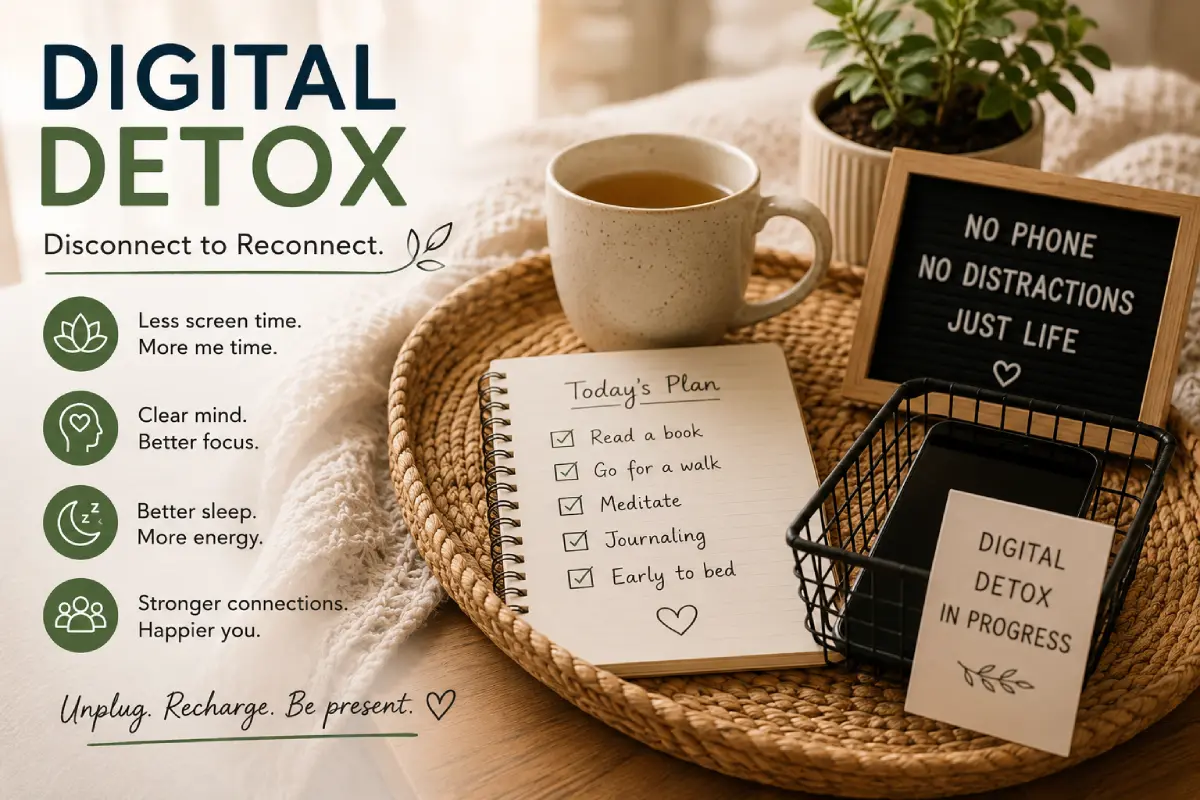
You grab your phone to see one alert then come to two hours later with no idea what happened. Not a mind-blowing loss of willpower that‘s the goal. A digital detox isn‘t about avoiding technology, it‘s about reclaiming your right to choose when you are on your phone, instead of having your phone work it out for you. Digital detox is one important part of looking after your overall wellbeing. To explore other ways to support your physical, mental, and emotional wellbeing, read our complete guide to self care.
What a Digital Detox Actually Means
The term used is digital detox, a targeted, planned decrease in screen time, not an outright need to go completely offline. For many adults with families, work, and the like, that‘s neither practical nor appealing. Instead, a combination of planned breaks, limits on individual apps, and un-established habits with no reliance on a screen for boredom have been more effective.
Signs You Might Need a Digital Detox
- And you grab your cell phone before it even crosses your mind to.
- A false alert: You feel a sudden wave of fear that you can‘t have it.
- You‘ve scrolled past the delightful into just… more scrolling.
- Your sleep has worsened ever since screens made their invasion.
- You can‘t endure a meal, a journey to work, or a waiting period without monitoring something.
None of this is a moral failure-it‘s a sign that the design is working properly and is worth interrupting.
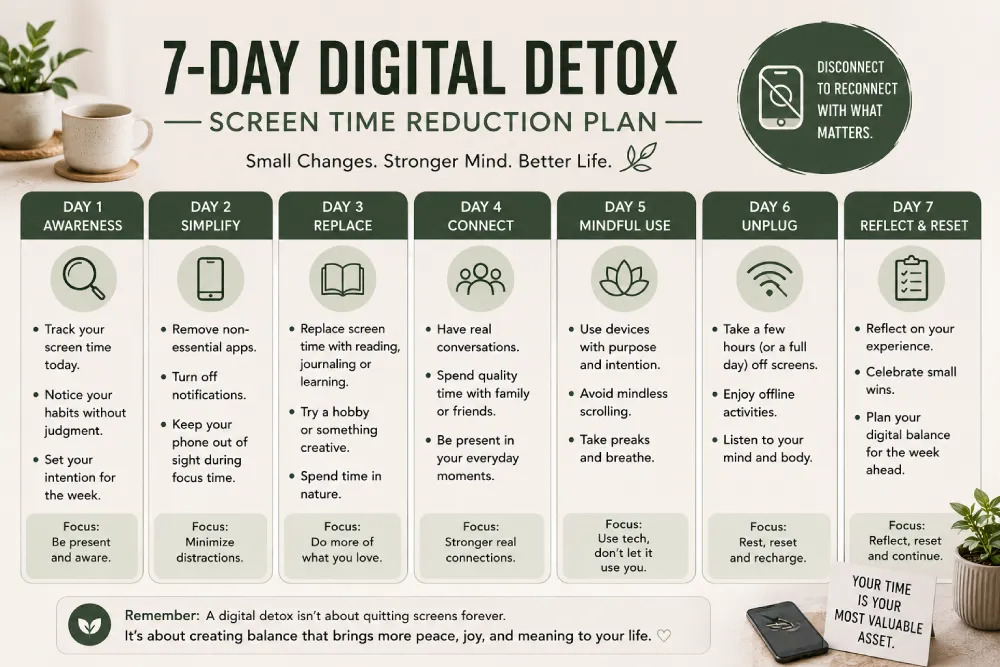
A 7-Day Screen Time Reduction Plan
Rather than an all-or-nothing detox, try shrinking your screen use gradually:
Day 1–2: Track, don‘t alter. What does your device report for your screen time? Observe the number and how much time you spend on each app, but don‘t judge yourself.
Day 3–4-One trigger is gone: Nothing that isn‘t really necessary is going to pop up so eliminate some notifications. While this might not seem like an obvious step just trying to shut off notifications will eliminate a ton of phone instances.
Day 5: Commit to one phone-free window. The first half hour after waking, or the last half hour before sleeping choose one and honor it.
Day 6: Take the most offending item and move it off your home screen. Seeing it less than you would otherwise will actually help you resist it more than good old-fashioned willpower.
Day 7: One established hard boundary. No phone at meals or no phones in bedrooms overnight pick one and keep it past day 7.
This slower approach lasts longer than the quick one-week ban each step in it does not involve heroic forearm-burning self-control.
Phone Addiction Help That Doesn’t Require Quitting Your Phone
If your relationship with your phone feels genuinely compulsive, then several concrete changes work much better than generic willpower suggestions:
- Switch your screen to black and white tiny change but color contributes a lot to apps overlearning.
- Log out of apps not delete altogether. Provide a barrier to accessing them that requires an active mental step.
- Charge your phone in the living room during the night.
- Switch one particular habit Scrolling in bed, scrolling on the toilet out for something else within that same instant, instead of trying to cut out usage of your phone everywhere right off the bat.
- If it truly feels like it is completely beyond your control then talking to a doctor or therapist about assistance with phone addiction is normal and practical. This is a real issue not just a personal failing.
A Realistic Social Media Detox
A full social media break can really be helpful, but it doesnt necessarily have to involve taking every app out of your life for good.
- Weekend detox: Log out (NOT delete) of your social apps from Friday evening to Sunday evening. Observe how you spend the time you get back. You can also include screen-free activities in your Self Care Sunday rituals to create a relaxing weekly reset before the new week begins.
- Selectively detox: hold on to whatever platform is your portal to authentically connecting with people, and delete the one that leads mostly to comparison and doom scrolling.
- Time-boxed use here: For example, the family perhaps limits the individual to a definite period (say 20 minutes) after a meal.
- Unfollow audit; Block for ten minutes those of your FB friends who you unfollow and who always make you feel worse off.
The most successful social media break is specific and deadline, not wishy washy and open ended. “less social media” rarely leads to change, “no I.G. until 12 pm” has many users succeeding.
Digital Minimalism: The Longer-Term Approach
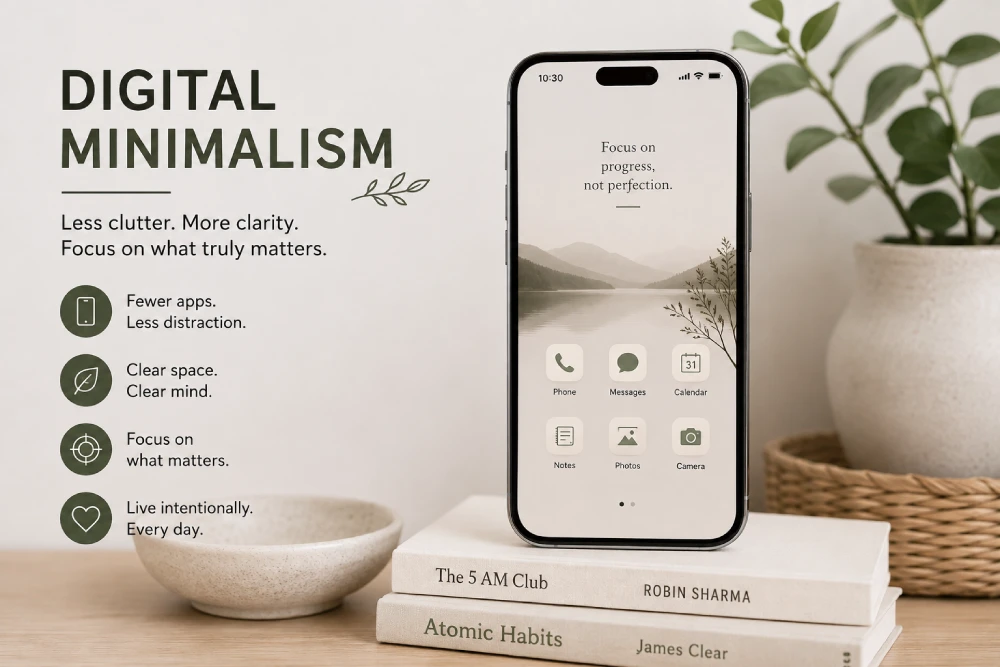
In the case of a temporary detox, however, digital minimalism is an always-running credo: hold onto the tools that serve a specific purpose, otherwise careful pruning.
- Audit your home screen remove unnecessary apps by creating folders, or deleting them altogether.
- Select wisely, don‘t just collect one messaging application, one social site, and no five doing the same thing.
- Create offline defaults for dead moments a book, a notebook, nothing rather than automatically access to your screen.
- Review your subscriptions and alerts monthly as you would review the budget.
Understanding “Dopamine Detox” (Without the Hype)
The “dopamine detox” is everywhere, but it‘s a loaded term. You can‘t detox or reset your dopamine all that abstinence from hyper-stimulating apps really accomplishes is restoring normalcy to your baseline so that we start feeling good again with the slow and quiet stuff (reading, walking, IRL conversation.)
Loosely, a dopamine detox – A day or a weekend not scrolling free high stimulation – can indeed give you a red chip to do just that: shift how much you want to need time for boredom and quiet. It‘s not a reset button: it‘s a reset of your habits and so….still good to do.
Digital Detox for People Who Need Their Phone for Work
The world of digital detox advice hinges on the fact that you must be able to vanish for a weekend that‘s not always possible, especially for working adults. Instead the focus is on setting some limits:
- “Do Not Disturb” and focus work blocks. Try to utilize “Do Not Disturb” not only at night, but also during production work.
- Ensure that work notifications are on a different profile/ device mode than personal browsing.
- Protect a hard stop time to stop work messages each evening even 30 minutes will be better.
- Batch check email and messages throughout the day instead of constantly responding to new messages and updates in real time.
Common Mistakes People Make With Digital Detoxing
- Going cold turkey and burning out fast. The dramatic one-week ban doesn‘t hold up well when faced with real life gradual reduction will be more effective.
- Just having it in one go. In fact one detox weekend can not untie a hundred months of taking. It has to be continuously.
- What it boils down to: Don‘t replace the screens. If there‘s nothing else around to reach for, you‘ll pick up that phone again simply out of boredom.
- All-or-nothing thinking. One mistake doesn‘t mess up the entire detox just get back on track in the next moment, not the following week.
Myth vs. Fact
| Myth | Fact |
|---|---|
| A digital detox alone means no phone– at all. | Most successful detoxes are gradual reductions, not total abstinences |
| Dopamine detoxating ratchets your brain chemistry back to nothing. | It‘s more of a habit reset a chance to step back from the hype. A physical break from overstimulating applications, not a neural reset. |
| You require a week leave from work to manage the detox process properly. | Minor daily limits one hour without the phone, no email notifications further accumulate instead of a single make-or-break week |
Quick Action Steps
- Take a look at your screen time report today. Just take it in, don‘t judge.
- Choose one of the 2 phone-free windows (morning or bedtime) and defend it this week.
- How about a weekend absent. Just sign off, no task of erasing.
- Build one offline default; a book or a notebook for roadside or waiting time.
A digital detox isn‘t about being someone who doesn‘t use a phone. It‘s about breaking the habit so the phone is something you opt to use instead of the thing that drags you in.
FAQs
Q1. How long should a digital detox be? There is no “correct” length – one unplugged evening, a weekend off social media, or a daily ilness to it (something you set boundaries on not to cross each day) – all work. A forced and repeated rhythm produces massive, unsustainable, peaks.
Q2. What is the distinction between a digital detox and digital minimalism? Digital detox generally refers to a set period of time where you intentionally disconnect. Digital minimalism is a approach or way of life: maintaining only the technology that makes explicit, positive contributions to your life.
Q3. Does dopamine detox really work? It won‘t cause an actual reset in brain chemistry, but taking a hiatus from highly stimulating apps really does restore your tolerance for boredom and allow less engaging pursuits to be enjoyable again.
Q4. If I need to keep my phone for work but want to spend less time on it, what should I do? Set boundaries rather than bans! Batch running through messages at preset times, put the phone on Do Not Disturb when working on specific tasks, and identify blocks of time of where you will not use the phone.
Q5. What should I look for in the early stages that I might need a digital detox? Trying to get to for your phone without really thinking about it, anxiety without access to the device, deteriorating sleep quality & fatigue, and mindless scrolling are all early indicators.
Final Conclusion
A digital detox works better as a habit of saying no, instead of one dramatic offline-out. Repeatable commitments to boundaries will beat one unsustainable week offline every time. Begin by simply tracking your screen time, safeguarding one phone-free window, and establishing one offline default at moments you reach for your phone. The point isn‘t to go off the grid it‘s to make sure you‘re the one to decide when.