Weight Loss Workout Plan: The 2026 Fat Burning Guide
Published: September 2, 2026 Last Updated: September 3, 2026 If weight loss workout plan is what you are after,
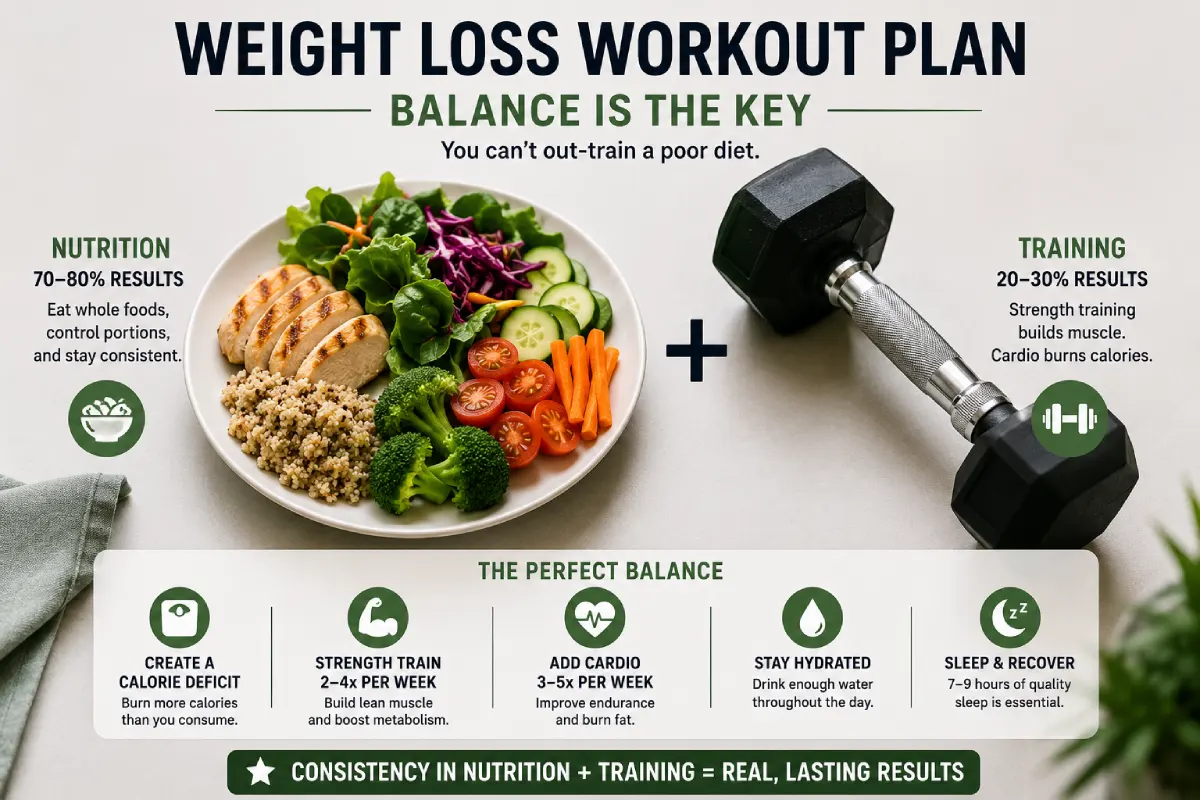
If weight loss workout plan is what you are after, the one important thing you need to know about is this: the workout plan is not doing most of the work. Your eating habits are creating most of the calorie deficit which results in weight loss the workout program just accelerates that process, preserves your muscle and makes the results much more sustainable.
This approach provides a practical framework that is current and effective without going to extremes with sit-ups or making unsustainable claims.
Why Workouts Alone Don’t Cause Weight Loss
Exercise burns calories. But in reality it is quite hard to currently out train a calorie excess of food. A quality workout keeps your muscle when you are in defecit, enhance your metabolic rate, and makes the journey more realizable than dieting.
What actually drives results:
- A moderate calorie deficit from the nutrition.
- Strength-train to maintenance of gains (or gain…) during the deficit.
- Carbohydrates to meet the deficit and enhance general health of the heart and circulatory system.
- Daily non-weight training activity steps, stairs, walking that can often be a lot more than the workout!
Myth vs. Fact: Weight Loss Workouts
| Myth | Fact |
|---|---|
| “I am able to perform a targeted workout for weight reduction in the abdominal region.” | There‘s no such thing as ‘spot reduction’ – fat decrease occurs in the whole body according to your genetics and overall deficit, not the muscle you‘re working out. |
| “One or two years ago cardio was the only best way to lose weight.” | Strength training working with a calorie deficit, typically is preferable for sustainable fat loss over cardio only. |
| The more the intensity of the workout, the faster you are going to see the results. | Hardcore exercise regimes and brutal diets frequently lead to muscle loss, exhaustion, and overtraining – hindering your gains, rather than accelerating them. |
| So I need to be working out every day in order to see change. | 3-5 good structured sessions a week if applied consistently beat daily unsustainable session. |
The Best Fat Burning Exercises
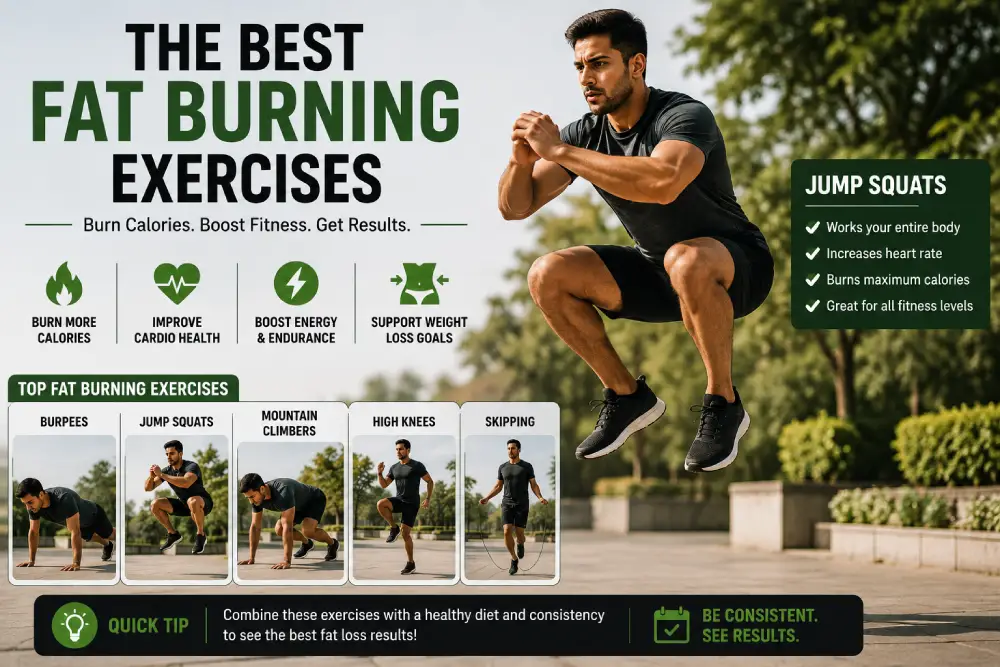
Fat burning exercises work sufficiently when they combine with strength and enhanced heart rate. These aren‘t very complex moves — they are rather simple compound movements performed with motivation:
- Squats, lunges. -large muscle group exertion, very high calorie count demand
- Push-ups and rows – upper body strength, maintain muscle tone.
- Burpees or jump squats There is a combo of both cardio and strength in this move.
- Mountaineers – back + cardio together
- Walking ( yes, really)– low intensity, but adds up a lot over the course of the day
It‘s not about finding one “magic” exercise, one that has the elusive ability to target everything at once. It‘s about combining a few of these into a manageable, repeatable plan of attack.
Structuring Weight Loss Cardio
Weight loss cardio doesn‘t have to be a fifty-minute run. Most beginners find working at various intensities much more effective:
- 2–3 sessions/week of moderate cardio (e.g. brisk walk, bicycle, swim, ..) 20–30 min
- 1–2 sessions/week of higher intensity intervals (alternately working hard and resting) 12–15 minutes
- Walking outside of a formal workout everyday (even just 20–30 minutes) adds up significantly to weekly count
Should you choose moderate cardio, it need not be draining to be that effective – a brisk walk over a significant distance is just fine and puts far less strain on long-term endurance than sustained high elevations each day.
The Truth About “Workout to Lose Belly Fat”
This is one of the most googled fitness phrases, and the truthful answer is a let down to many: you can‘t choose to lose fat from one part of your body through exercise. Ab exercises can develop and shape the muscles beneath, but the fat over them is reduced according to your total body fat percentage, which is determined by total calorie balance.
What actually helps reduce belly fat over time:
- A steady, moderate calorie deficit
- Whole-body strenuous strength training, not just core strengthening exercises.
- Cardiovascular activity! To support a negative energy balance( net loss or deficit). Exercises such as running, cycling and swimming can be used to help sustain training programs and to achieve a net loss of energy.
- Less stress and sufficient sleep, both of which affect where fat is stored:
A Beginner Weight Loss Plan Structure
A beginner weight loss plan should include all of the following each week, not just one:
| Component | Frequency | Duration |
|---|---|---|
| Strength training | 2–3x/week | 20–40 min |
| Cardio | 2–3x/week | 15–30 min |
| Moving around daily (steps, stairs) | Daily | Ongoing |
Sample weekly split:
| Day | Focus |
|---|---|
| Monday | Full-body strength |
| Tuesday | Moderate cardio (fast walking, cycling) |
| Wednesday | Additional walk or rest/short walk or rest. |
| Thursday | Full-body strength |
| Friday | Interval cardo session. |
| Saturday | Active recovery, which means walking or low activity. |
| Sunday | Rest |
Your 30 Day Weight Loss Starting Plan
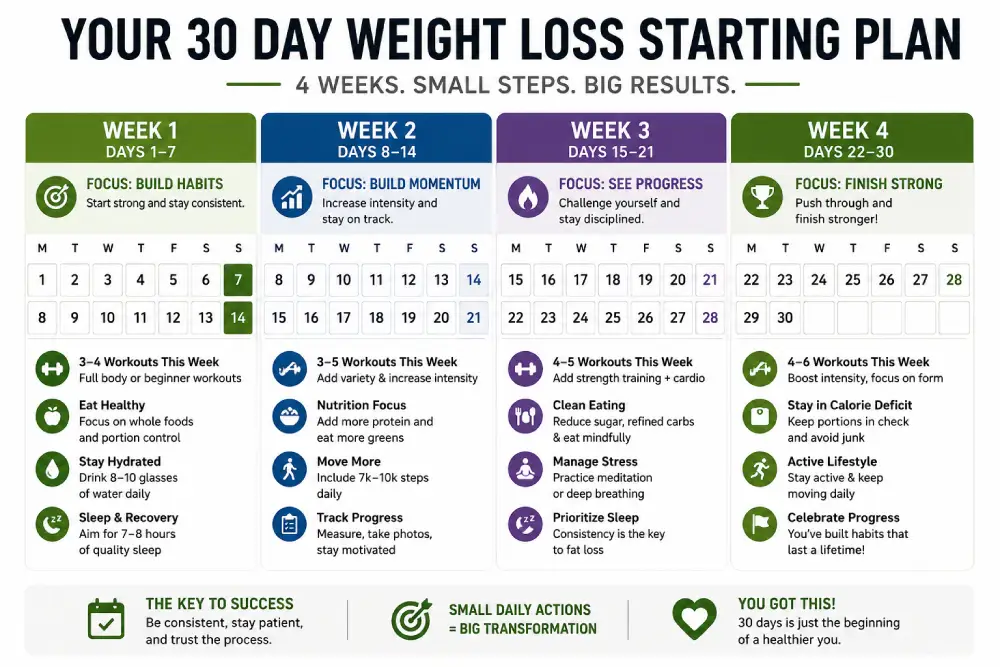
Really an effective 30 day weightloss plan isn‘t about dramatic changes it‘s about creating the habit loop that makes those changes possible.
- Week 1: As above, but focus solely on consistency. 3x mixed workouts, walk 20+ minutes everyday, push the intensity side of things.
- Week 2: same set up but add an extra repetition or 2 to your walking duration. Feel the difference in your energy levels and moods prior to seeing the changes in your body.
- Week 3: only if manageable, one more (we were doing four at this point). Document (clothes, energy, sleep, etc.) in a relaxed manner.
- Week 4: Keep in there. Never be tempted to crank it up to an extreme level the first month is about convincing yourself that you can keep the regimen on the road, not about burning as many calories as you can.
The weight loss over 30 days will be different for everyone, but the best habits gained within in that window matter more than weight by day 30.
Common Mistakes in Weight Loss Workout Plans
- Crash workouts combined with crash diets. A high deficit coupled with a savage workout everyday usually ends in fatigue, burn-out and muscle loss.
- Just neglecting the strength training altogether. Cardio only plans will burn calories during the workout session, but they won‘t spare the muscle the way strength training will.
- Judging progress on a daily basis. The scale can leap up or down within the space of 24 hours weekly averages are where the real story lies.
- Hunting for a ”‘belly fat workout.” Instead of wasting your time searching for a “spot-reduction” plan, commit yourself to a reliable, full-body program.
- All-or-nothing thinking. Missing one workout is not a failure missing two in a row without a good plan to get back on track usually is.
A sustainable fat loss workout schedule is not finding the hardest, most punishing workout you can find. It is doing an effective mix of strength, cardio, and activity everyday so consistently that the results will just happen as a natural consequence of the system.
FAQs
What is the optimum weight loss workout plan for beginners? An achievable starting point is about 2-3 strength training and 2-3 cardio training sessions per week and walking every day.
Can I work on getting rid of my excess fat in my belly with particular exercises? Unfortunately not. This is known as spot reduction and is impossible to achieve. Ab workouts only work the abdominals, fat loss occurs countrywide and not from the particular area being worked.
What is better for weight loss cardio or weight training? Neither by itself is the best; using both together weight training (to help keep muscle) and cardio (to help the calorie deficit) is more effective than each one by itself.
What is a realistic amount of weight to expect to lose in 30 days? This depends on the individual but you should attempt to set your goals for the first 30 days on establishing a sustainable routine, instead of achieving a particular number.
Ideally, how many days per week should I exercise in order to lose weight? Regular exercise 3–5 days per week, including both resistance training and aerobic activity.
Are I required to do heavy workouts to shed body fat? No. Regular training at moderate levels, accompanied by a sane calorie deficit is better than extreme workouts that are difficult to adhere to.
Final Conclusion
A real weight loss workout plan is not about the most punishing program but about strength training for muscle preservation, cardio for your deficit, daily movement, and consistency. Begin with the 30-day plan above, concentrate on creating the habit before pursuing the number, and the results will materialize as a natural consequence of the system.