Mind-Body Wellness Practices for Holistic Health in 2026
Published: August 28, 2026 Last Updated: September 3, 2026 Stress isn‘t only in your mind– it manifests as clenched
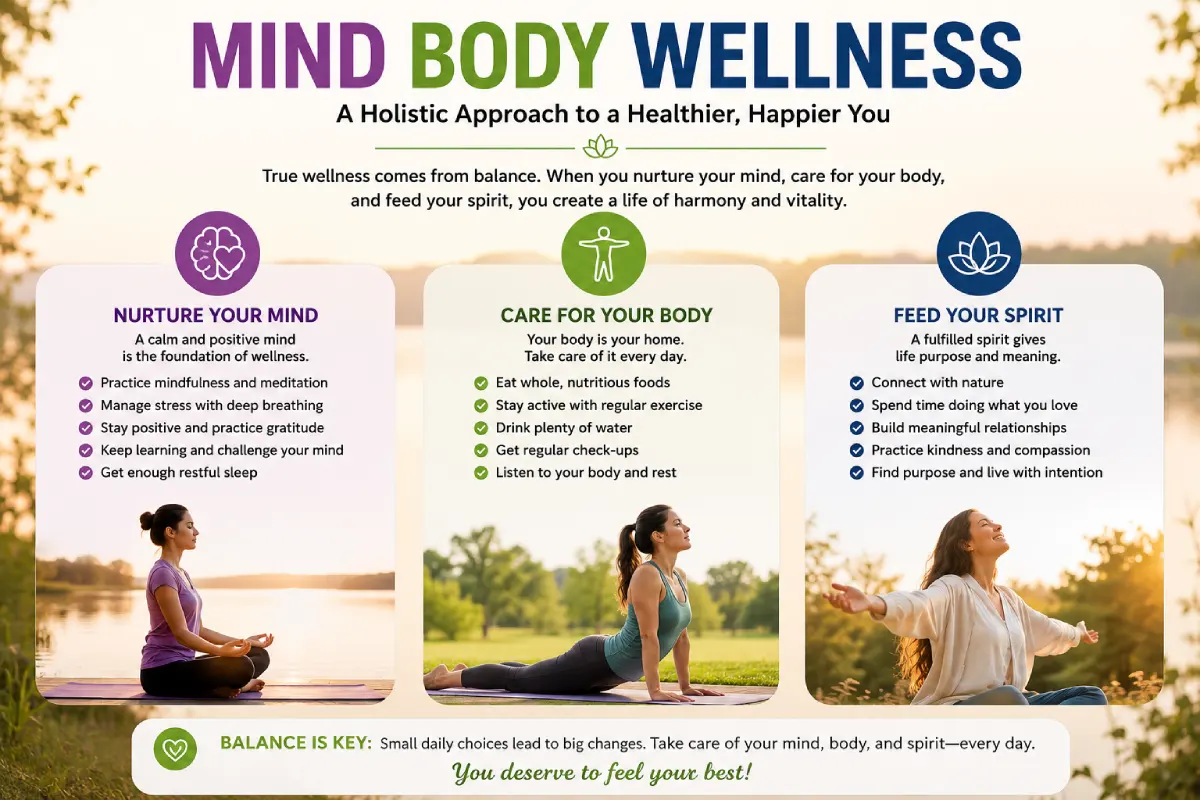
Stress isn‘t only in your mind– it manifests as clenched shoulders, quick and irregular breathing, a pounding heart. This is the entire fundamental of mind body wellness: your mind and your body aren‘t two separate systems, they are a single, ongoing feedback loop. When you learn to utilize that loop rather than fight it, your recovery rates will skyrocket.
Within this book you will find the science, the daily great habits and an easy routine to allow you to start experiencing real mind-body health in 2026 in less than an hour of free time that you don‘t have.
What Is Mind-Body Wellness, Really?
Mind body wellness means using physical methods – breath, movement and awareness of the body to directly affect mental/emotional states, and vice versa.It‘s not only one way, but a set of methods that include breathwork, somatic practice, yoga, meditation and conscious movement.
The bottom line: your nervous system can‘t tell the difference when it sees a looming lion or a cruel email you received today. Your fight or flight response fires in either case. Mindfulness studies are showing us that these techniques allow a shortcut to relax that nervous system instead of having to think out of the situation.
The Mind Body Connection: What the Science Actually Says
Mind body connection isn‘t just a fad it actually has to do with how your autonomic nervous system functions. Your vagus nerve connects your brain to your heart, your lungs, and your stomach, making it possible that slow breathing can drop your heart rate in minutes, and that long term stress can manifest in back and stomach problems and muscular tension.
Something about breathwork and somatic movement work is effective because they work through this system directly through the body, which is a quicker button for to switch to the relaxation mode than through the thinking mind.
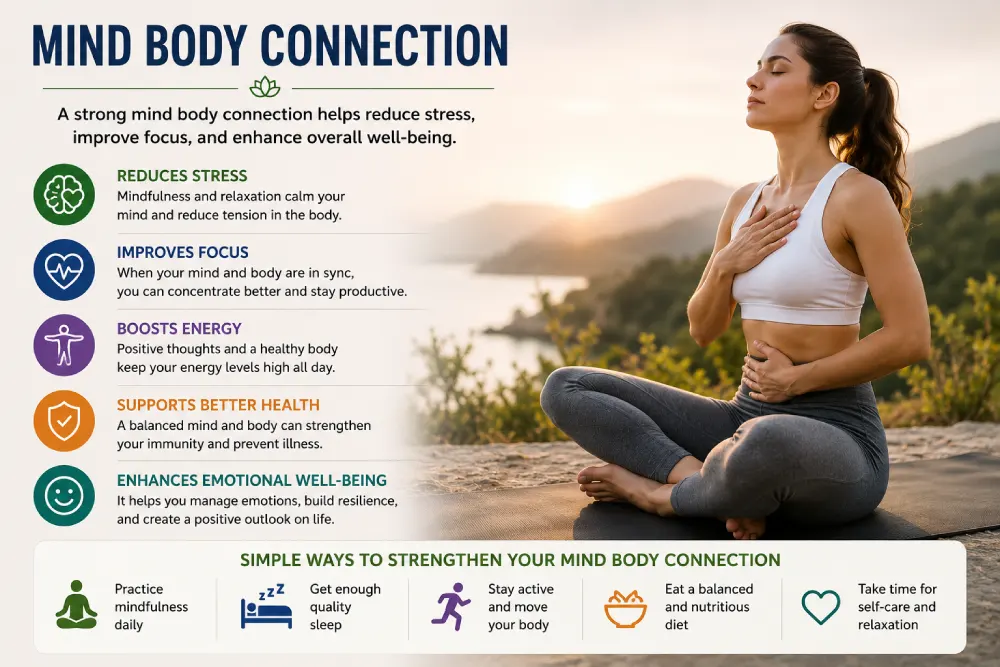
Breathwork Daily: The Fastest Entry Point
You do not require 30 minutes of silence to gain from a breathwork practice, as only 3–5 minutes a day of breathwork can be quantitatively shown to change your nervous system state.
A simple daily breathwork practice:
- Morning (2 minutes): box breathing inhale 4, hold 4, exhale 4, hold 4. Do 8–10 rounds at the beginning of the day to be regulated (not reactive).
- Noon (1–minute): physiological sigh–1 second nose inhales, 1 long mouth exhale. Overly effective break to relax and clear the mind. Use between meetings.
- Before bed (3–5 mins): prolonged exthrough breath breathe in for 4 counts, breathe out for 6–8 counts, to relax and neutralize the body‘s rest-and-digest mechanisms prior to sleep.
Time is less important than regularity. A daily 90 second experiment will get far more results than an occasional 20 minute one which you avoid most weeks.
Somatic Exercises: Releasing Stress Stored in the Body
Somatic exercises involve gentle movement of the body which are performed with awareness, intending to release underlying tension in the body created by stress. The purpose of somatic exercises is not to increase strength and flexibility as in a workout, but to bring about awareness and release.
Simple somatic exercises to try:
- Body scan release: lie down and – heel to top – become aware of your whole body and begin to allow each part to relax. As you breathe, slowly focus on each areas of tension (you might like to focus on the jaw, shoulders and hands) and allow it to relax.
- Shaking/TRE-style movement: light voluntary shaking of the arms and legs, 1–2 minutes, to facilitate the release of stored nervous-system arousal.
- Gentle but attentive neck and shoulder rolls (without being mechanical). Carefully watch where movement is limited.
- Grounding with the feet: Standing, and gently transfering your awareness from feet to foot, observing whichever part of the foot encounters the ground can be really helpful at times when I feel out of control or overcome.
These exercises can be particulary useful after prolonged sitting, an hectic day or before going to bed.
The Yoga and Meditation Combo: Why Together Works Better
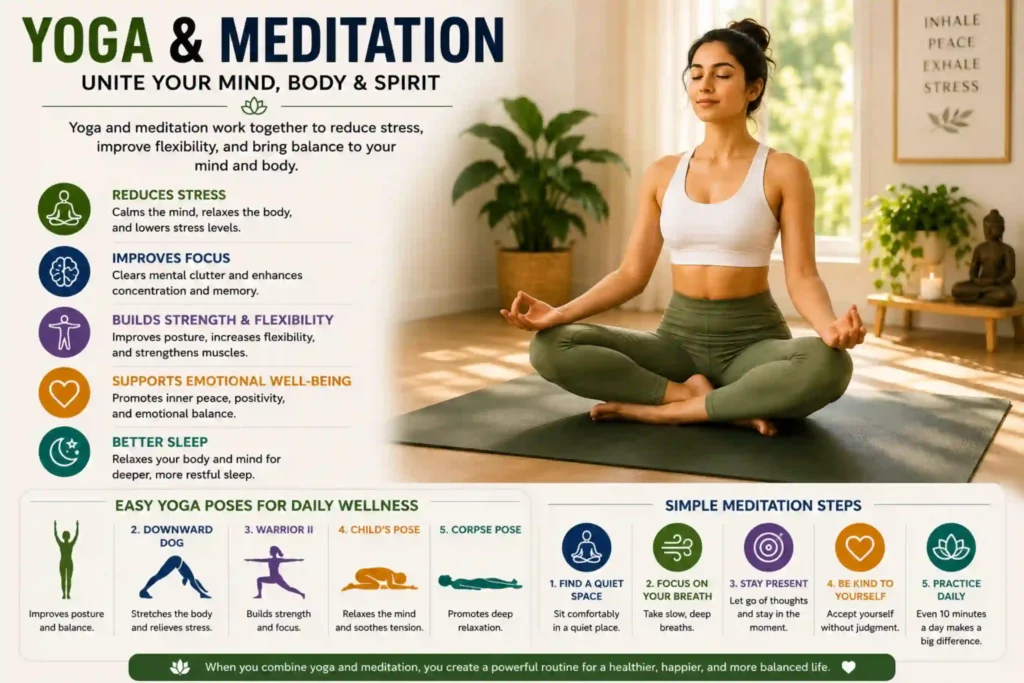
Although often practiced separately, yoga and meditation are a more effective combination than either alone. Performing yoga first releases physical energy, restlessness and tightness, making it much simpler to sit in stillness and pay attention afterward.
A simple combo structure:
- 10 minutes of relaxing yoga slow flow, cat-cow, forward bends, concentrating more on the movement through the breath as opposed to how hard it gets.
- 5–10 min meditation in a seated position; breath-focused orbody-scan method, immediately after the yoga practice, with the body already settled in one position.
Getting in yoga first eliminates the most common meditation gripe: “I can‘t sit still.” A body that‘s been shaken and stirred will find it much easier to find stillness.
Building a Holistic Wellness Routine That Actually Sticks
You don‘t need a 5-practice daily wellness routine a day; you need 2-3 that you can reliably do on a regular basis in your current routine.
A realistic weekly structure:
- Daily: 2– 5mins breath work (morning/evening)
- 3–4x per week: 15–20 minute mixture of yoga and meditation
- 2–3x a week: 5-minute somatic release (more 20-minute if possible, however I understand you are a busy woman and may not have the time) prefer an evening thank works well after a stressful day, really releases heaviness. Do on your own, without Andrew.
- Weekly check-in: See where you actually were able to do the practices and where you didn‘t and adjust accordingly instead of trying to be consistent in a way that doesn‘t work for your life
Common Mistakes in Mind-Body Wellness
- This will be to address the mind-body practices as a one-time band-aid, rather than a habit of repeatability
- Attempting to implement 5 new practices simultaneously instead of just one at a time.
- Different ways of evaluating the mind in meditation: “success” determined by the mind feeling at peace (more likely with practice)
- Using the practices too infrequently (not doing breath work and movement, relying solely on journaling or visual imagery, and thinking positively only some of the time)
Myth vs. Fact: Mind-Body Wellness Edition
| Myth | Fact |
|---|---|
| Meditation is to. empty the mind completely. | Meditation is training attention, not having a blank mind thoughts come up anyway. Meditation is not about stopping thoughts; it‘s about separating yourself from them. |
| To enjoy the benefits, you will need to spend between 30 and 60 minutes a day. | Even as little as 5–10 minutes of daily, regular practice causes quantifiable changes to the nervous system. |
| Somatic exercises just stretching When you compare the movements learned to what you do when you exercise on your own, the basic exercises can seem more like stretches than active exercises. | The dose of the practice is the somatic focus of the work, which is on sensation and nervous-system release rather than flexibility or strength. |
| Mind-body techniques are considered one of the new-aids to health care, and to be distinct from “real” health care. | They are more and more frequently used in conjunction with standard treatment for stress, anxiousness and persistent discomfort |
Action Steps: Start Your Mind-Body Wellness Practice Today
- Choose one daily breathwork practice and do it 7 days in a row before adding anything else.
- Add a 10-min yoga-meditation combo 3x this week.
- Use any of these somatic exercises after your next overly stressful day.
- Build an honest Habit by simply tracking only what you really do not what you intended to do.
- Evaluate and revise your routine as often as every 2 3 weeks if needed. Do so only if it‘s sustainable, not just to look pretty on paper.
Authentic mind body health is never about doing ‘more’. It‘s about using your breath, your body, and your movement directly toward a less reactive nervous system. Get comfortable with just one small thing you do each day, practice yoga and meditation together several times a week, and rely on somatic release for the rough days. That‘s a true holistic approach to health you can stick to.
FAQs
What is mind-body wellness? Mind-body wellness is the application of physical modalities (breath, movement, awareness of the body, etc.) to directly effect mental-emotional phenomena through the inherent link between breath, nervous system, stress response.
How often do I need to do breathwork? Every day, even for a few minutes. 2–5 minutes every day is more beneficial than the odd hour here and there.
What are somatic exercises? Somatic exercises are used to release chronic muscular tension, distortions, and stress held within the entire body through low intensity, mindful movement. (Whereas other exercise techniques primarily emphasize on developing strength or flexibility.)
What is the order- yoga or meditation? Yoga, then meditation. Physical activity also helps burn off mental restlessness to better settle down and mediate in later sessions.
What if I don‘t have time to do everything? Choose 1 practice to do daily (ex. 5 min Breathwork), 1 practice a few times a week (ex. a short Yoga + Meditation practice), and keep a log of the practices you manage to do and not of the ones you don‘t instead of trying to do everything perfectly.
Final Conclusion
Mind-body health isn‘t an isolated practice it means small, repeatable efforts that directly operate on your nervous system rather than intrapersonal. Begin with a few minutes of daily breathing practice, throw in somatic work on busy days, make yoga and meditation an integrated daily ritual rather than two standalone workouts, and gradually increase the ritual without overdoing it, measure consciously, and let consistency rather than effort define your 2026 holistic well-being.