Gut Health Routine: Daily Habits to Heal Your Gut in 2026
Published: August 27, 2026 Last Updated: September 3, 2026 If your gut has felt “off” lately — bloating, low
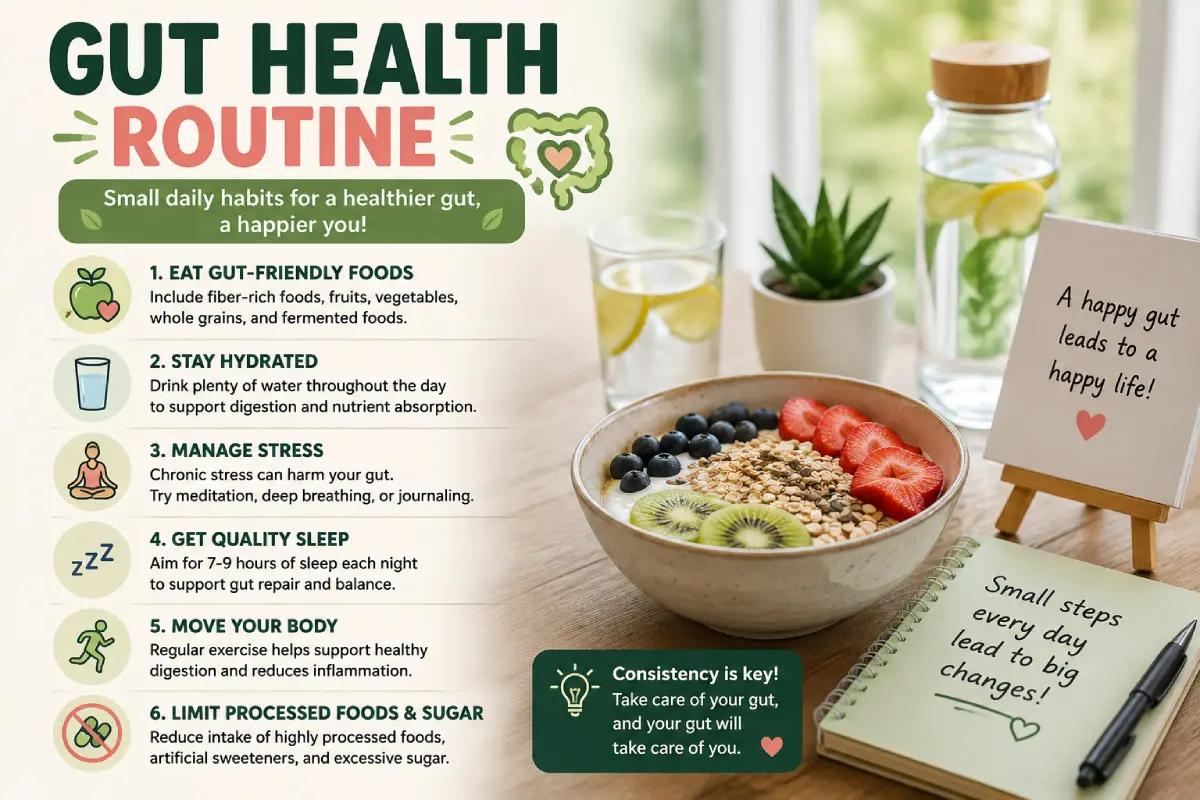
If your gut has felt “off” lately — bloating, low energy, sluggish digestion — you’re far from alone. Gut health has quietly become one of the most searched wellness topics of the decade, and for good reason: your gut microbiome doesn’t just handle digestion. It talks to your immune system, your mood, your skin, and even your sleep.
The good news is that a gut health routine doesn’t need to be complicated or expensive. It just needs to be consistent.
What Is Gut Health, Really?
There are trillions of bacteria, fungi and other microbes living in your gut called the gut microbiome. A “healthy gut” just means having a healthy variety and proportion of microbes in your gut to enable good digestion, assimilation of nutrients and a healthy immune system.
When the microbiota ratios are out of balance famine, and then seen by poor diet, ongoing stress, regular use of antibiotics and deprivation from sleep what is often referred to as by many is called ‘gut dysbiosis’ observed as bloatedness, irregular digestion, sluggishness and skin flare-up.
Why Gut Health Is Getting So Much Attention in 2026
Hundreds of studies on the gut-brain axis the direct link between your gut and your brain have been published in recent years, connecting gut health to mental health, anxiety and even diseases of aging. Concurrently, the worldwide market for microbiome-targeted supplements and foods has boomed as consumers seek more functional, food-based solutions to digestion instead of medication.
In summary: the science has finally respected much of what many traditional diets fermented foods, whole grains, very little processed sugar had discovered centuries ago.
Common Mistakes People Make With Gut Health
- Using probiotics without giving them something to eat. Bacteria from probiotics require fiber (prebiotics) in order to live and reproduce in your gut.
- Elimination of whole foods on the basis of trends and without any true intolerance can actually lower the microbiome diversity.
- By not restoring the intestinal flora after excess use of antibiotics or antacids.
- Disregarding stress and sleep, which both directly alter gut bacteria composition.
- Planning for instant results. A significant change in microbiome composition generally occurs after weeks of disciplined behavior; not hours.
Myth vs. Fact: Gut Health Edition
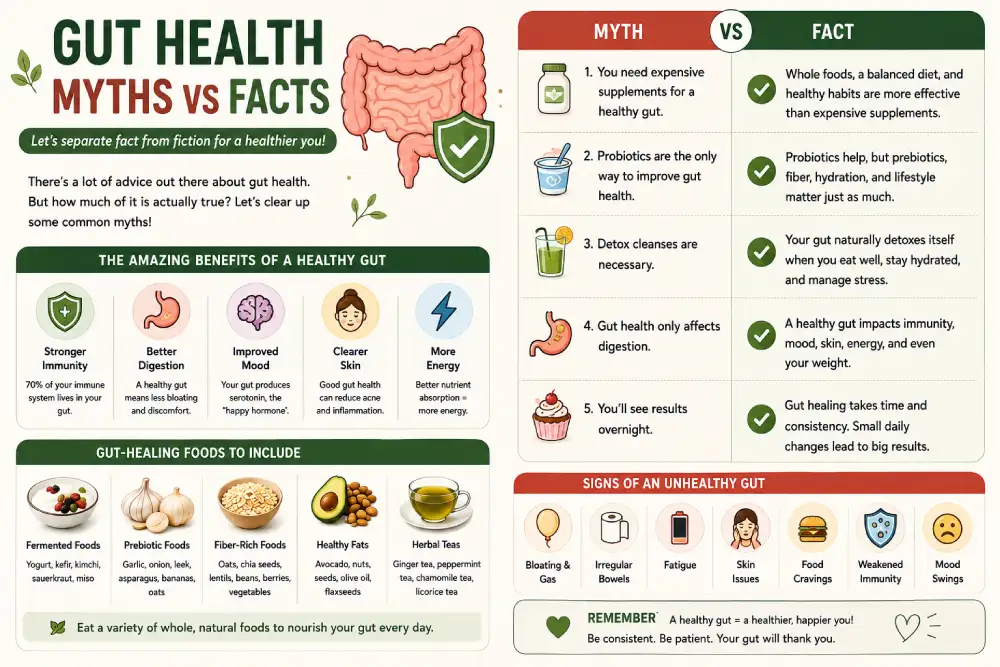
Myth: All probiotics work the same. Fact: Depending on the species, some strains of probiotics support digestion while others support immunity, skin/hair or mood. Ensure you look for the exact strain or species, not just the word probiotic.
Myth: Leaky gut can completely heal in one night with just one supplement. Fact: Healing the gut lining takes some time (and miles of patience) through proper diet, combatting inflammation, managing stress and allowing time there is no quick fix here.
Myth: You can replace fermented foods with probiotic supplements. Fact: While fermented foods such as yogurt, kefir and fermented vegetables contain lots of live bacteria, they also contain vital nutrients and fibers – supplements isolate particular strains. They both have their place, but they‘re not equal.
Myth: A healthy gut equals never bloating. Fact: Everyone bloats sometimes, it even has to be related to your diet. The real concern is chronic daily bloating.
Gut-Friendly Foods to Build Your Routine Around
- Add some of these fermented foods to your daily diet: yogurt, kefir, kimchi, sauerkraut, kanji and idlidesa batter (naturally fermented).
- Category 1: foods rich in fiber from sources such as oats, lentils, peas, beans, dark green vegetables and whole grains help the good bacteria to grow.
- Prebiotic containing foods: garlic, onions, bananas and asparagus stimulate the growth of the probiotics you‘re already taking.
- Polyphenol rich (berber, berries, dark chocolate (in moderation), green tea) foods support microbiome diversity.
- Unofficial consumption of seasonal vegetables and tender meats plus broths or light soups, easily digested.
Categories of foods to limit or avoid include: highly processed snack foods, excess added sugar, and high consumption of artificial sweeteners that have been associated with decreased diversity in microbiome populations
A Realistic Daily Gut Health Routine
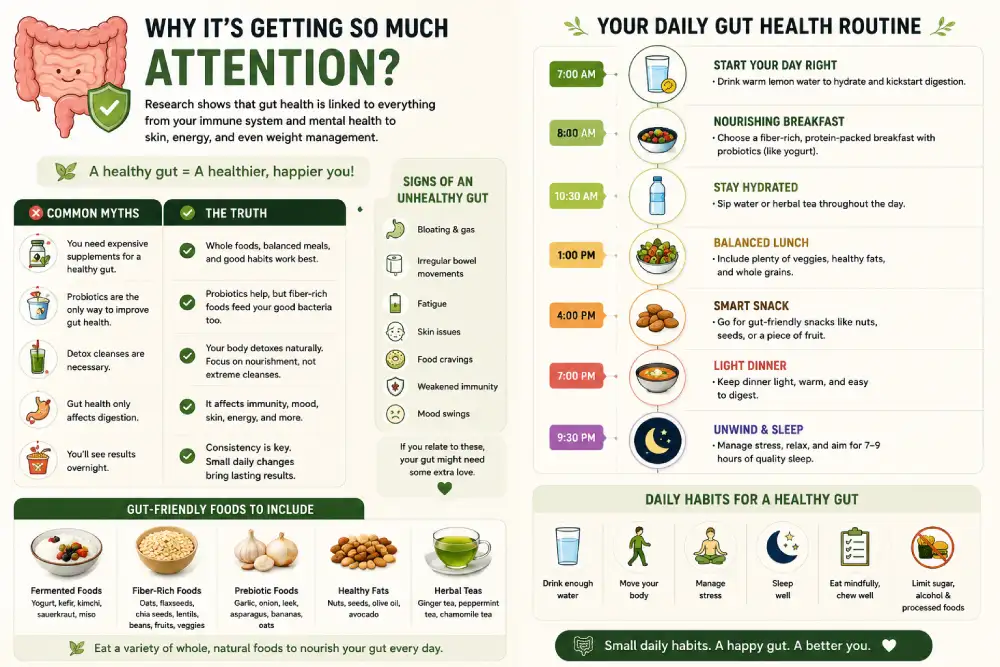
MORNING: Warm water, followed by a fiber-loaded quick breakfast: oats, poha or a bowl of fruit-yogurt. If you are prone to acidity, never start your day with coffee on an empty stomach.
Midday time (on lunch): Vegetarian?one fermented food with lunch? These include a small amount of yogurt, a pinch of kimchi, or a few bites of curd to be eaten along with meal. Don ‘t under-eat to catch up afterwards.
A short walk after lunch is very good for digestion more than most people know moving alone is very beneficial for bowel motility.
Evening: Maintain lighter, earlier evening meals where feasible. Heavy, late evening intake is one of the most familiar (and ignored) causes of poor following day digestion.
Before bed: get into the habit of sleeping at the same time every night. Bacteria in the gut also live by circadian rhythms and irregular sleeping patterns have been found to influence the composition of the microbiome.
Action Steps to Start This Week
- Incorporate in your diet one fermented food item daily from the following list no matter how small.
- Build up fiber gradually (sudden flux can cause bloating) via oats, lentils and veg.
- Cut down on these Ultra-Processed snacks for 2 weeks and see what happens.
- Walk your body at least 20–30 minutes 7 days a week (including walk).
- Protect your sleeping schedule; keep consistent times to sleep and wake.
- If activated using probiotics, using the specific, well-research strains is preferred to using labeling.
The Bigger Picture
A gut health routine is not a 7-day reset or a restrictive diet it’s a long-term relationship with your body. The most effective practices are surprisingly easy: eat real food, add in fermented foods, exercise daily, sleep well, and enjoy life. If you practice this, your gut (and your energy, digestion, and mood) will likely improve.
FAQs
Q: What is the timeframe to get my gut healthy? A:Some improvements in digestion can be seen within a few weeks of regular efforts. Significant changes to microbiome diversity may take 4-8+ weeks.
Q: What do probiotics do? A: Support digestion, restore gut balance following antibiotics, support immune function/mood in select strains Benefits are strain specific.
What heals a leaky gut? Fiber-rich vegetables, fermented foods, bone broth, anti-inflammatory foods such as leafy greens and omega-3-rich fish are suggested in conjunction with a decrease in processed foods and increased efforts to manage stress.
Q: Are fermented foods superior to using supplements? A: No, they are each different. Nutritional benefits are found together with live cultures and fiber in fermented foods, and in supplements through specific measured strains. Many gut products include both.
Q: Is it possible that stress can impact gut health? A: Yes. The gut and brain have a direct connection called the gut brain axis and evidence indicates that long term stress influences the composition of gut bacteria and digestion.
Final Conclusion
Healing your gut in 2026 does not mean a costly supplement stack or sticking to a strict diet plan it‘s all about consistent daily habits: fermented foods, fiber, movement, sleep, and cutting down on processed foods. Stick to a straightforward gut health routine focusing on these fundamentals, maintain it for several weeks, and you‘ll notice improvements in your digestion, energy levels, and overall mood.