Better Sleep Routines: The 2026 Guide to Deep Rest
Published: August 25, 2026 Last Updated: September 3, 2026 If you’ve ever slept a full eight hours and still
If you’ve ever slept a full eight hours and still woken up groggy, the problem usually isn’t how long you slept — it’s your better sleep routine, or lack of one. Good sleep is built the same way any other habit is: through consistency, not intensity. This guide breaks down the sleep hygiene basics, the bedtime rituals that actually work, and how to improve deep sleep and REM sleep without overhauling your entire life overnight.
What Makes a Sleep Routine “Better,” Not Just “Longer”
Sleep quality matters as much as sleep quantity. A broken eight hours can feel worse than a solid seven. A better sleep routine focuses on three things:
- Consistency — same wake-up time, every day, including weekends
- Wind-down structure — a predictable buffer between “awake” and “asleep”
- Environment — a bedroom that actually supports rest, not just holds a bed
Fix these three, and most sleep complaints improve without needing supplements or gadgets.
Sleep Hygiene: The Daily Habits Behind Good Sleep
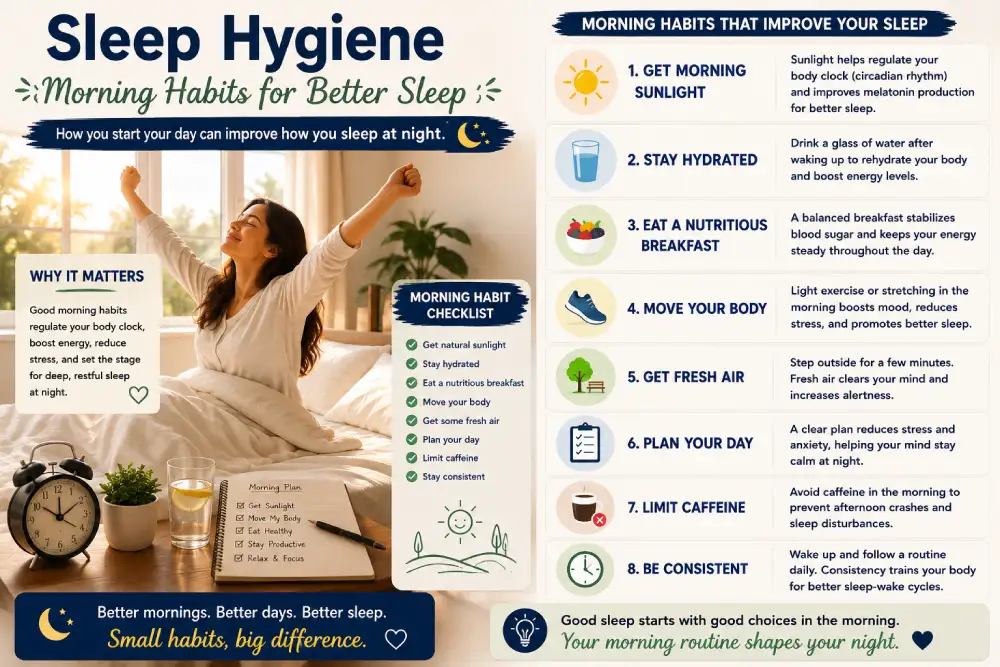
Sleep hygiene refers to the everyday choices that either support or sabotage your sleep — not just what happens at bedtime.
- Anchor your wake-up time, not your bedtime. Waking at a fixed hour trains your circadian rhythm far more effectively than forcing an early bedtime.
- Get morning sunlight within 30-60 minutes of waking. This is the single strongest cue for a healthy sleep-wake cycle.
- Cut caffeine after early afternoon. Caffeine has a long half-life — that 4 PM coffee is still partly active at 10 PM.
- Limit alcohol before bed. It may help you fall asleep faster but fragments sleep later in the night.
- Keep a consistent meal schedule. Late, heavy meals disrupt the body’s ability to wind down.
Bedtime Rituals That Actually Work
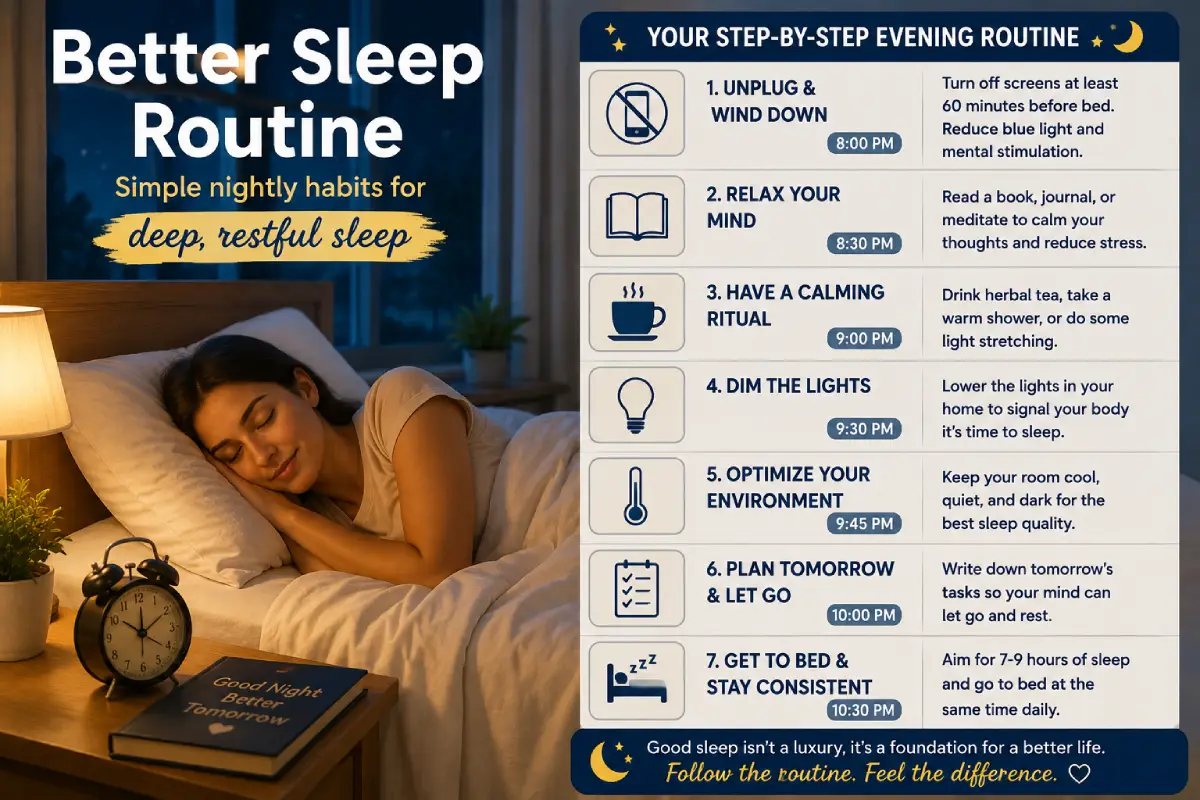
Bedtime rituals are different from sleep hygiene — they’re the specific 30-60 minute sequence that tells your brain “we’re switching off now.”
- Dim the lights an hour before bed. Bright light delays melatonin release.
- Set a screen cutoff. If quitting screens entirely feels unrealistic, at least switch to night mode and lower brightness.
- Do one calming, repeatable activity — reading, light stretching, or journaling. The repetition itself becomes the sleep cue over time.
- Keep the bedroom cool and dark. A slight temperature drop is a natural biological signal for sleep.
- If you’re not asleep in 20 minutes, get up. Lying awake trains your brain to associate the bed with wakefulness — leave the room, do something calm, and return when drowsy.
How to Improve Deep Sleep
Deep sleep is when the body physically repairs itself — tissue growth, immune support, and memory consolidation all happen here. To get more of it:
- Exercise earlier in the day. Regular activity increases deep sleep, but working out too close to bedtime can delay it.
- Avoid alcohol close to bedtime — it’s one of the biggest deep sleep disruptors, even when it helps you fall asleep faster.
- Keep the room genuinely dark. Even small amounts of light exposure can reduce deep sleep quality.
- Don’t skip meals entirely before bed — mild hunger can fragment deep sleep just as much as overeating.
REM Sleep Tips: Supporting the Dream Stage
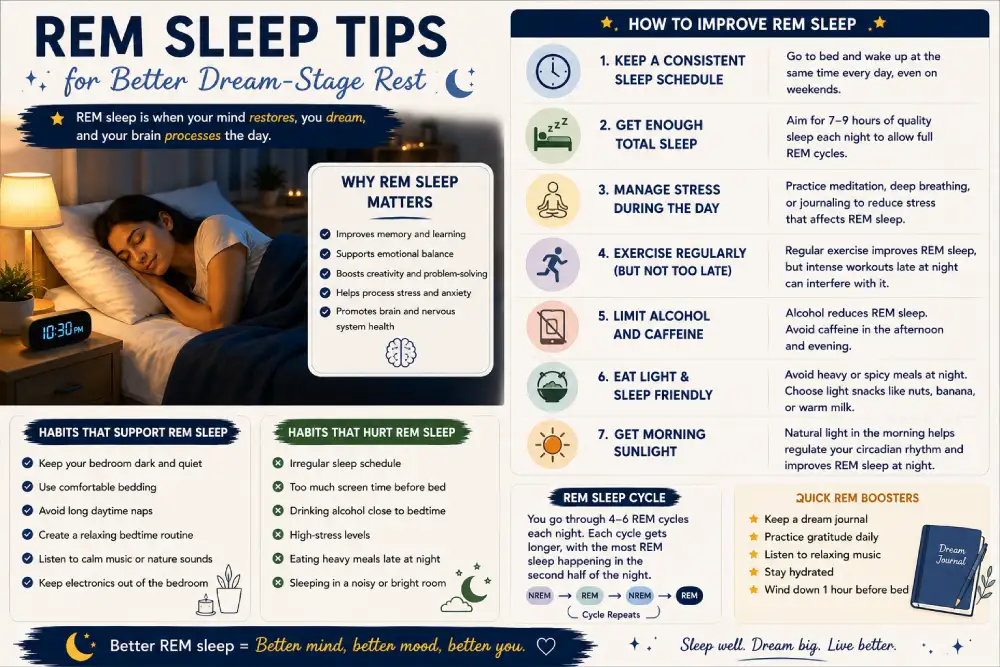
REM sleep — tied to memory processing, learning, and emotional regulation — happens more in the later hours of sleep, which is why cutting sleep short disproportionately affects REM.
- Protect your full sleep window. REM sleep is concentrated in the second half of the night, so shortened sleep cuts REM first.
- Keep alcohol and heavy sedatives out of your evening. Both suppress REM sleep even when total sleep time looks normal.
- Stick to a consistent schedule. Irregular bed and wake times disrupt REM cycling more than most people realize.
- Manage stress before bed. High cortisol levels in the evening can reduce REM sleep quality.
Sleep Tracking Devices: Worth It or Not?
Sleep tracking devices — rings, wearables, and bedside sensors — have become a popular way to measure sleep stages, but they come with trade-offs.
When they help:
- You genuinely don’t know if your sleep issue is quantity or quality
- You want objective data before making bigger changes (mattress, schedule, etc.)
- You like data-driven motivation to stay consistent
When they backfire:
- You start obsessing over nightly scores, which raises stress and worsens sleep — a pattern now nicknamed “orthosomnia”
- You treat the device as diagnostic rather than directional; consumer trackers estimate sleep stages and aren’t clinically precise
Bottom line: a sleep tracking device is a helpful mirror, not a fix. Use it to spot patterns over weeks, not to judge a single night.
Common Sleep Routine Mistakes
- Chasing a “perfect” number of hours instead of consistency
- Fixing bedtime but ignoring wake time, which confuses the circadian rhythm more than it helps
- Adding too many rituals at once — one or two consistent wind-down habits beat a ten-step routine you abandon in a week
- Using the bed for work, scrolling, or eating, which weakens the brain’s bed-sleep association
Troubleshooting: “I Slept 8 Hours But Still Feel Tired”
If total sleep time looks fine but you’re still exhausted, the usual suspects are:
- Inconsistent wake-up times across the week
- Late alcohol or heavy, late meals affecting deep and REM stages
- Screen exposure delaying melatonin release
- An irregular sleep-wake schedule fragmenting sleep stages, even if total hours add up
A 7-Night Action Plan to Build a Better Sleep Routine
- Night 1-2: Fix your wake-up time and hold it, even on weekends
- Night 3-4: Add a 30-minute wind-down buffer with dimmed lights
- Night 5: Cut caffeine after early afternoon
- Night 6: Adjust bedroom temperature and light for a cooler, darker environment
- Night 7: Review the week — if using a sleep tracker, look at the trend, not a single night’s score
FAQs
What is the difference between sleep hygiene and bedtime rituals? Sleep hygiene covers daily habits — caffeine timing, light exposure, meal schedule — that affect sleep quality overall. Bedtime rituals are the specific wind-down sequence in the 30-60 minutes before sleep.
How can I improve deep sleep naturally? Exercise earlier in the day, avoid alcohol close to bedtime, and keep the bedroom fully dark. These three levers have the biggest impact on deep sleep quality.
What affects REM sleep the most? Shortened sleep windows, alcohol, and inconsistent bed/wake times all reduce REM sleep, since REM is concentrated in the later hours of the night.
Are sleep tracking devices accurate? They’re directionally useful for spotting patterns over time but aren’t clinically precise for exact sleep-stage measurement. Use them for trends, not nightly verdicts.
Why do I feel tired after 8 hours of sleep? Usually it’s sleep quality, not quantity — inconsistent wake times, late alcohol, or screen exposure before bed are the most common culprits.
Featured snippet opportunity: The “7-Night Action Plan” numbered list and the “Sleep Tracking Devices: Worth It or Not?” pros/cons breakdown are formatted for Google’s list and comparison snippet formats.
Final Conclusion
A better sleep routine doesn’t come from a longer to-do list — it comes from consistency. Anchor your wake-up time, build a short wind-down ritual, protect your bedroom environment, and let deep sleep and REM sleep improve as a result rather than chasing them directly. Whether or not you use a sleep tracking device, the real fix is the same: fewer, steadier habits, repeated night after night.