Relationship Red Flags Explained: 15 Signs to Watch in 2026
Published: August 12, 2026 Last Updated: August 12, 2026 Relationship red flags are recurring patterns — not one-off arguments
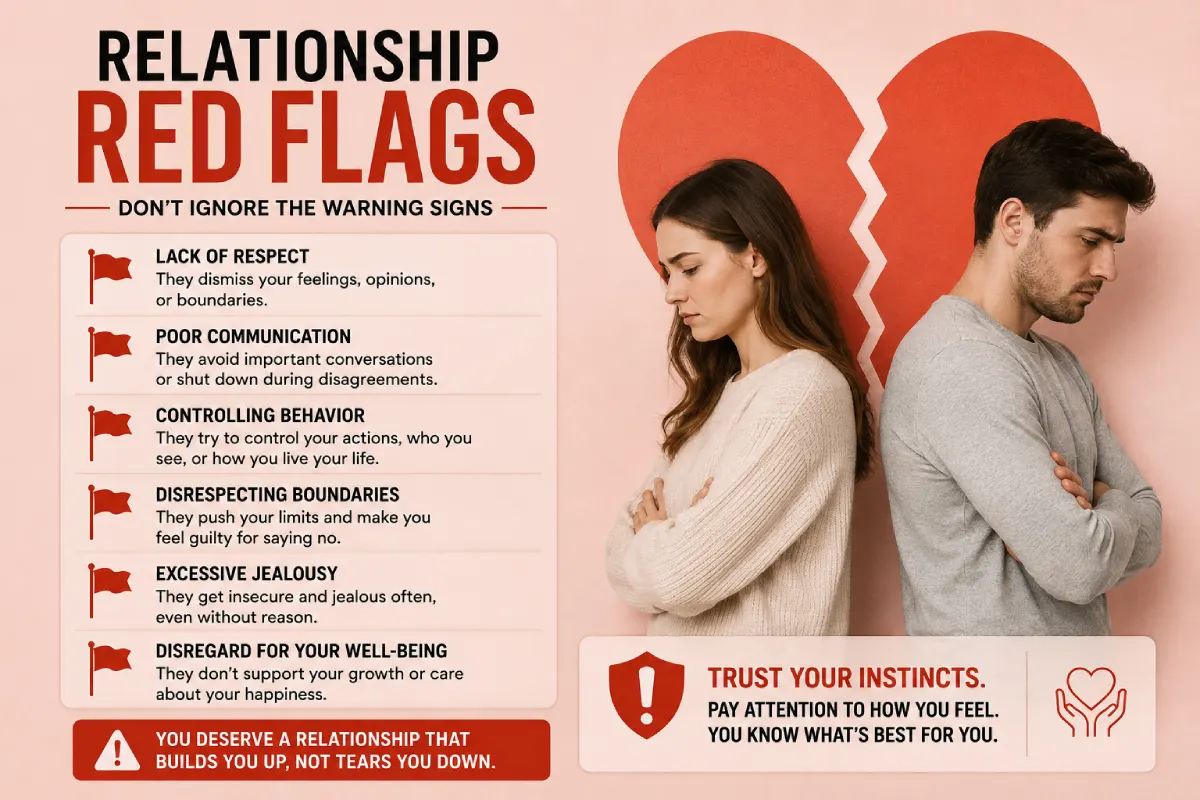
Relationship red flags are recurring patterns — not one-off arguments — that undermine trust, safety, or your independence. The 15 signs below cover emotional manipulation, gaslighting, and controlling behavior, alongside how to tell a genuine red flag from ordinary incompatibility.
Yeah, pretty much everyone has googled something like “is this a red flag or am I overthinking it” in the middle of the night. Red flags in relationships are very real, and knowing what to look for can save you months, if not years, of confusion. However, the internet red flag culture has become so extreme that even minor disagreements are branded as toxic relationship signals. This guide aims to clarify the difference between actual red flags and regular relationship issues with 15 realistic examples.
First, a disclaimer: this article is about everyday relationship warning signs, not abuse or safety emergencies. If any of this seems relevant to a situation of violence or safety concerns, seek out a local resources or professional now.
What Counts as a Real Red Flag?
A red flag isn‘t just one bad incident a developing pattern of behavior over time that erodes trust, respect, or your self-esteem. One argument about money isn‘t a red flag. A partner who continually talks down to you about money and then blames you for bringing up the subject is.
Fundamental difference: usual friction is context-dependent it gets solved when acknowledged. Toxic relationship sign keeps occurring even after you have talked to that person directly.
15 Relationship Red Flags to Watch For
Emotional Manipulation
- Attempting to manipulate us by using guilt rather than talking to us openly.
- Silencing and withdrawal as a means of punishment for disagreements.
- Try to make you carry the burden of their feelings or responses.
- Beginning to love bomb you becoming excessively affectionate, making a bunch of empty promises that have no business being made at this stage of your relationship.
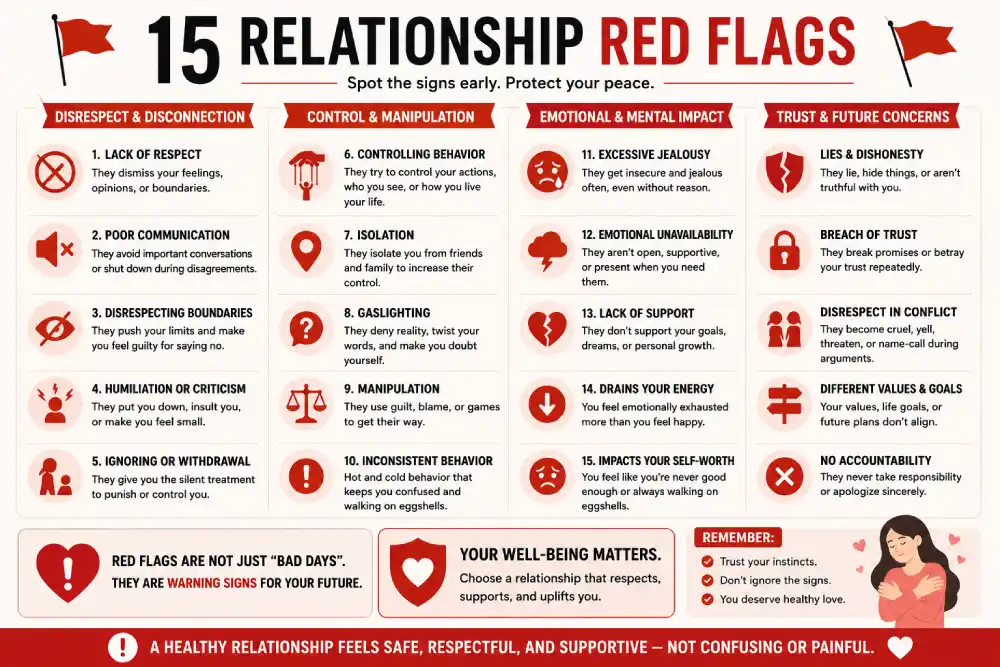
Gaslighting examples 5. Denying things they have said or done that they obviously have. 6. Telling you you are “too sensitive” when you say you‘re upset. 7. Re-writing histories of things that they have done or said to make themselves look better. 8. Cutting you off from friends or family that might validate what you observe.
Controlling Behavior.. 9. Keep track of your phone, location, or on-line profile without your permission. 10. Deciding about your work, money, friends without talking to you. 11. Get angry or jealous when you spent time with others. 12. Use threats (leave, feel embarrassed, suffer the consequences) to control your choices.
Narcissist Leach 13. Magnanimous about their own mistakes but insensitive to your pain6. 14. Chronic need for praise and glory on the one hand and [ref30 in bold. 15. Lack of consistency between words and behavior that can persist for a longer period.
Myth vs. Fact
Myth: “If it‘s a red flag, I‘ll know it immediately.” Fact: The majority of indicators of a toxic relationship develop one after the other. Seeing the pattern can take weeks or even months rather than one conversation.
Myth: 1. “Any friction or personality mismatch should be a dead give-away.” Fact: Not all gaps are red flags: differences in cultures, clashes in communication styles and routine disagreements are by no means abnormal.
Red Flags vs. Green Flags
It is useful to understand what you are measuring to. Green flags are ‘Matches words with actions, true care and concern for you and your boundaries, space for your own friendships and interests, genuine effort to apologize and compromise rather than just apologies offered…if most of your relationship adheres to this pattern then some tolerance for friction is not necessarily a warning sign.
Common Mistakes People Make
- Using any uncomfortable experience as evidence that the relationship is unhealthy and stressing out.
- Pardoning a repeated pattern of behavior (a form of “excusing”). Overlooking a pattern of behavior simply because someone is otherwise lovable, lovable, or even likeable.
- Knowing that you can always be waited on for that one crisis.
- Diagnosing the partner with a clinical disorder when you apply a checklist as opposed to concentrating on real life behavior, and how it affects you.
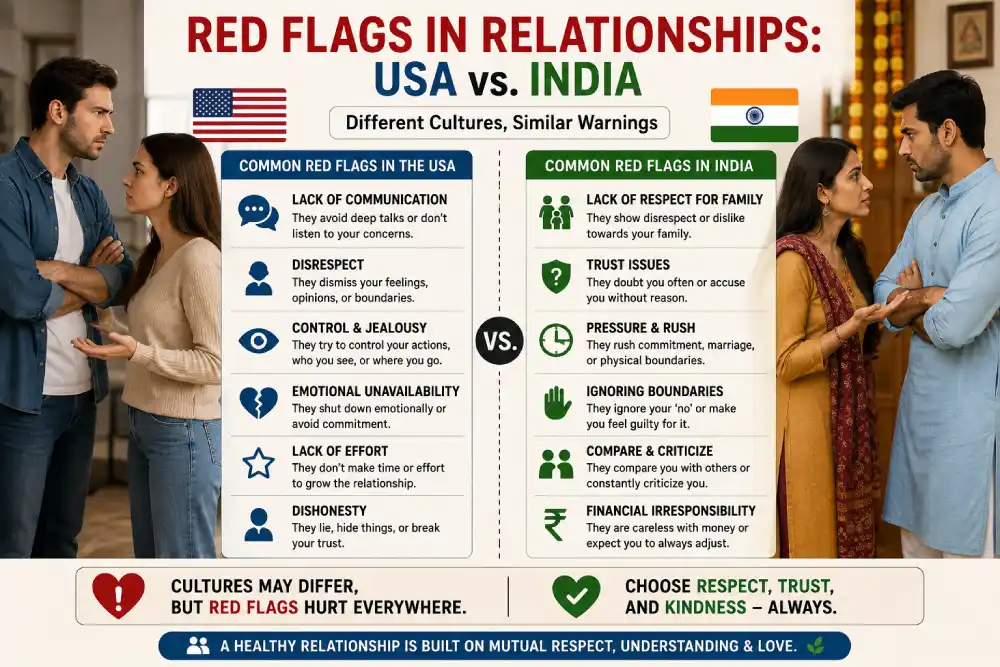
USA vs. India: How Red Flags Show Up Differently
In the US, controlling is more likely to be overt checking your phone, undermining your friendships, limiting your spending. In India, abusive control might be less transparent because family is often integrated into romantic lives it isn‘t the family that necessarily gives red flags, but a partner who leverages family pressure so you‘re cut off, don‘t respect your boundaries, and can‘t hold him accountable. In both markets, the underlying test is the same: doe sthis pattern make you feel less than, less safe, or less free to be yourself?
What to Do If You Notice a Pattern
- Acknowledge the specific action/behavior to yourself in clear language, not as an emotion.
- Just mention something directly and keep an eye on what happens one such talk should result in a tangible resolution, even if it‘s only an apology.
- Discuss with a friend or family member who you feel comfortable seeking advice from.
- If the pattern persists or worsens, consider consulting a therapist or counselor.
Conclusion
Not relationship red flags these are signs you learn to recognize when a disagreement spirals, repeats, and begins to eat away at your trust and sense of self. Think of this list as something to hold up to your relationship as a mirror, not a diagnosis: if most of what you read doesn‘t resonate, that too has value. And if you find yourself zoning in on a bunch of them, rely on that trend over a one-off.
FAQs
What distinguishes a red flag from a personality difference? A personality difference is a situational one, which does not worsen and repeat over time; a red flag is a consistent pattern that destroys trust, safety or yourself.
Does gaslighting have to be on purpose? No at times, it is driven by insecurity and selfishness, but it will be just as damaging whether or not the intent is there.
Can red flags become green flags? Very unlikely without actual change a person can truly change but it will not if the behavior doesn‘t change, only the person‘s words.
Is controlling behavior always so obvious? No it may just seem like “care” or “nice to just check in” at first, which is why the pattern (not a one time occurrence) is the key.
When might I seek outside support? if the gameplay pattern repeats after direct addressing, or if you are always feeling weird or unheard, a therapist or counselor might be able to help you maintain perspective.