How to Avoid Burnout in a Busy Career (2026 Playbook)
Published: August 11, 2026 Last Updated: August 12, 2026 Work burnout is more than “tiredness.” The World Health Organization
Work burnout is more than “tiredness.” The World Health Organization officially classifies it as an occupational phenomenon a state of emotional, physical, and mental exhaustion caused by excessive and prolonged stress. According to a 2026 survey, 65% of US workers and 57% of Indian workers currently feel burnout in their jobs, with the most rapid increases in this feeling ever occurring in India. Fortunately, as this guide explains, prevention of work-related burnout can also be learned. We detail how to spot the warning signs of burnout accurately, what common mistakes to avoid when trying to “muscle through,” and the best step-by-step recovery plan to start implementing today.
If you wake up exhausted every day, loathe Sundays by Sunday afternoon and worry how to get rid of burnout at your workplace before it takes its toll on your health or catches hold of your high paying job, you are not the only one. Burnout has increased exponentially in recent times in India, the incidence of the condition increased from 58% to 72% within 3 years and over 50% US workers say that they are suffering from some form of burnout.
What Burnout Actually Is (And Isn’t)
Burnout isn‘t simply feeling exhausted after a long week. According to the World Health Organization “a work-related phenomenon characterized by three dimensions: feelings of energy depletion or exhaustion, increased mental distance from one‘s job, or feelings of negativism or cynicism related to one‘s job, and reduced professional effectiveness”. Unlike everyday stress, burnout persists even after the stressful event has passed workload is often reduced immediately after the deadline, but burnout may persist.
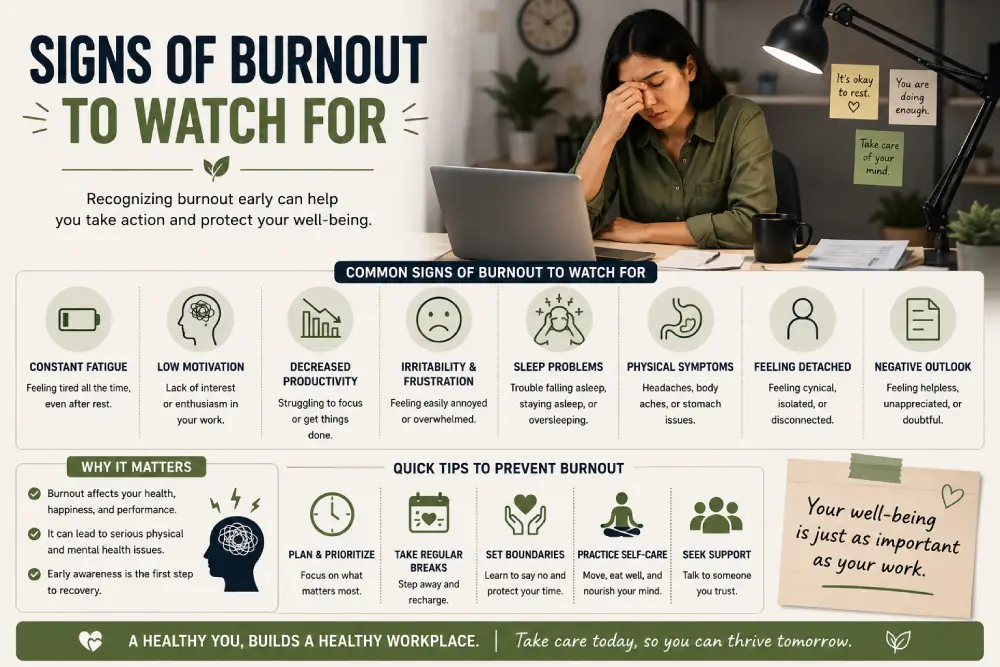
Signs of Burnout to Watch For
Few psychological experiences sneak up on you so much as burnout. It sneaks up on you slowly, unlike your competition your training partner or even your coach. It makes itself known gradually, it‘s hardly where you‘d expect it to be, it‘s perceived as a “rough patch.
- Constant tiredness that sleep isn‘t helping to cure
- Cynicism an increase in negative attitudes toward work that previously mattered to you:
- Difficult to concentrate or a significant decline in productivity
- Physical symptoms-Headaches, Tiredness, illnesses frequently.
- Irritability, or a sharp decrease in emotional response, particularly of those with whom you have close relationships
- Naive- dreaded tasks that formerly seemed manageble NOT just difficult.
No one sign not even two or three in combination over a period of weeks is a sufficient indicator of burnout to be worth taking seriously.
Myth vs Fact: Burnout at Work
Myth: You only get burnout if you work 70 or more hours. Real: Fairness, unmanageable work, and a lack of control over your work are strong predictor of burnout, much more so than hours.
Myth: Willpower can overcome burnout. Fact: Overcoming burnout through sheer effort without any structural changes usually results in making the burnout worse. Burnout is actually set in deeper by doing more, not achieving respite.
Myth: burnout is a personal failure to deal with stress. Fact: fields such as mental health are now seeing the positive shift towards viewing burnout as a systems/ workplace issue rather than an individual‘s lack of resilience.
Common Mistakes People Make Trying to “Fix” Burnout
- Taking only vacation long enough for a week away is good in the short run but burnout happens quickly if there isn‘t a change to the workload or environment.
- Ignore the signals early on by the time you‘re in crisis mode your recovery will be slower and more difficult.
- Using wellness benefits as a Band-Aid for a lack of fundamental change a meditation app doesn‘t resolve an overwhelming amount of work.
- Not discussing the issues with manager/HR many people are suffering in silence, thinking nothing will change.
- Seeking to distinguish between being busy and being productive, which inadvertently encourages the acceptance of unsustainable lifestyles.
Practical Burnout Prevention Tips
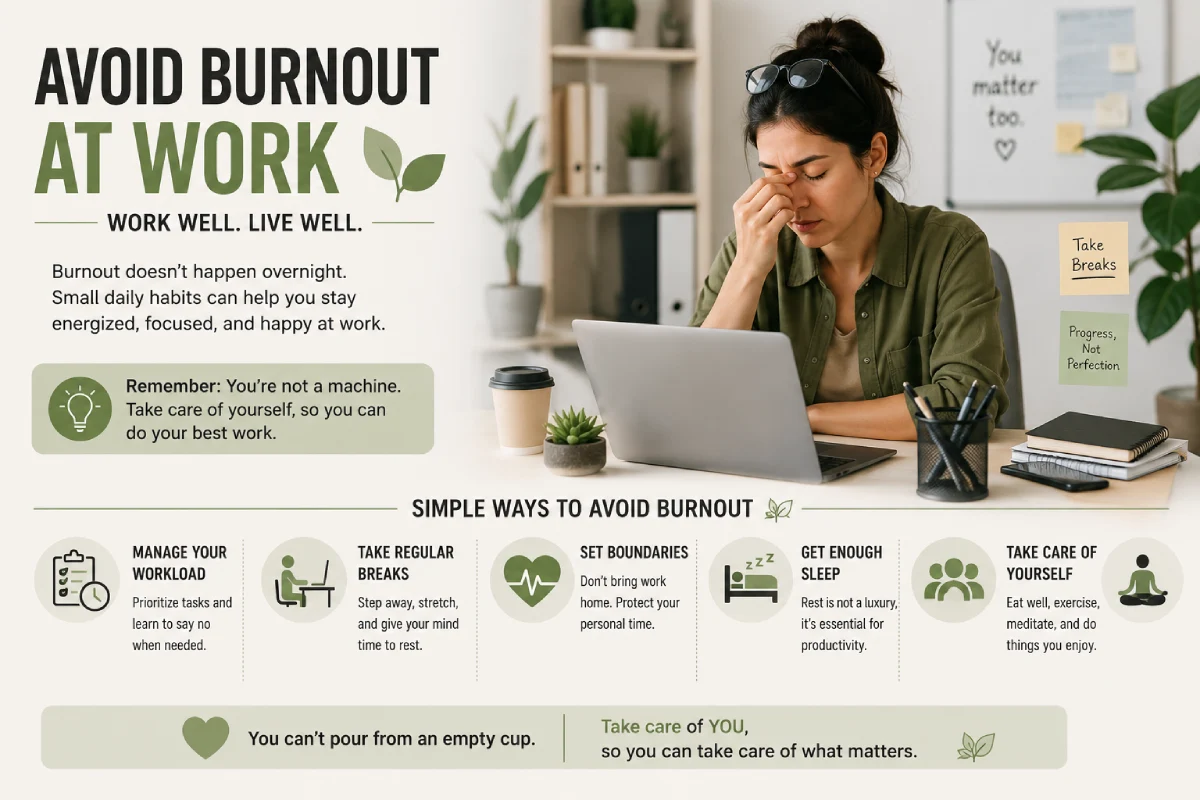
- Time boundaries Define when work stops a set stopping point allows recovery even if it‘s unofficial.
- Protect one non-negotiable recovery ritual sleep, exercise, or a creative art that is purely for enjoyment.
- Distance yourself from further commitments when at full capacity, even forsaking them for a minute
- Have brief rests through the day, than at the conclusion of the week.
- Monitor your energy not only your to do list support to identify patterns before they become chronic
- What to do when priorities are always changing? (1) Clarify the workload. Create a work plan for the day.
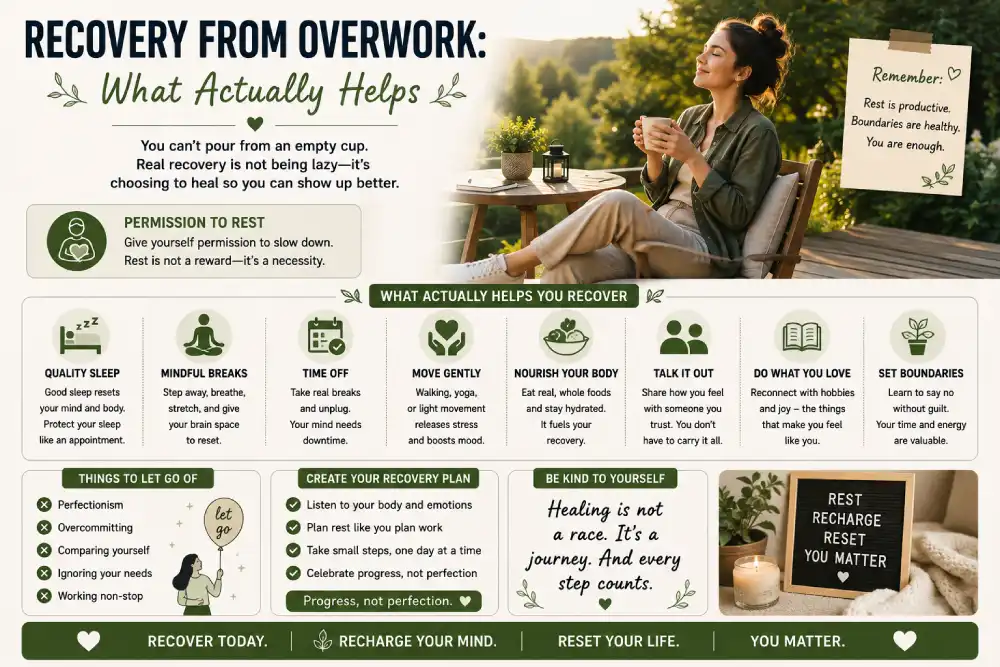
Recovery From Overwork: What Actually Helps
If you are drowning in burnout, then a long weekend just won‘t cut it.
- Reduce input first take stock of what is on your plate before adding self-care.
- Discuss workload with your manager, even if this is uncomfortable. Adjustment of work load is one of the most effective type of intervention available
- Reflect on gaining professional support access to therapy or counseling has been demonstrate to significantly reduce levels of burnout.
- Rebuild safely SLOWLY. Do not jump back into full training. Build up to the full intensity over a period of time.
- Revisit why, in the first place, the work meant so much to you.
Workplace Mental Health: US and India Snapshot
In the US, burnout is becoming evermore associated with the vagaries of hybrid and remote work, with blurred working hours correlating with increased burnout relative to more defined boundaries. And in India, the situation is accelerating most rapidly in IT, BFSI and rapidly growing startups, where grind culture long hours working understaffed is invariably associated not with higher output but with decreased productivity, implying overwork often breeds inefficiency, not merely misery:
Action Steps to Start This Week
- Monitor your energy for five days for example, write down when you feel exhausted and when you feel fine in a journal.
- Can you mention one workload or boundary issue you will be able to bring up with your manger?
- Protect one recovery habit Come rain or shine, absolutely no possibility of life and family and work getting in the way for at least 20 minutes a day.
- And do the following, say no to one non-urgent task.
- If you feel the exhaustion lingers, seeking guidance from a mental health expert may be useful:
Burnout isn‘t a reflection that you‘re not succeeding in your career it‘s simply an indicator that something within the system over you needs to change. To learn how to avoid burnout in the workplace begins with recognizing the warning signs and implementing small, regular changes so exhaustion doesn‘t become habit.
FAQs
Q: What are the tell-tale signs of burnout? A: The most common symptoms are a constant feeling of tiredness, no matter how much sleep you get, a deepening bitterness toward your job, and a waning ability to concentrate or produce work.
Q: How does burnout differ from just work pressure? A:Work pressure will generally pass after a few hectic days or weeks. Burnout doesn‘t ease up when the workload drops; it is caused by sustained depletion, not an isolated period of strain.
Q: Can burnout be prevented, or can it only be managed once it occurs? A: Burnout is preventable. By putting up boundaries, safeguarding recovery time, and tackling work overload as they first emerge, burnout can be much more manageable and less severe.
Q: Does a vacation cure burnout? A: Short-term it does, however burnout will likely climb right back up when you return unless work conditions or demands have been altered.
Q: How long should someone wait before seeing help for burnout? A: While taking time off and setting boundaries helps, if after a few weeks, burnout symptoms still do not seem to improve in terms of fatigue, numbness, and failure, then consider talking to a therapist/counselor.
Final Conclusion
Learning how to avoid professional burnout is not about working less for the hell of it, it’ about protecting the energy that enables you to do valuable work in a way that is sustainable. Recognize any warning signs early, establish firm boundaries and seek help before stress spirals out of control. A demanding, successful career does not have to be incompatible with a healthy life, but finding a balance requires consciousness, not just gut instinct.