Zero Waste Lifestyle Guide: How to Start in 2026 (Beginner’s Blueprint)
Published: August 6, 2026 Last Updated: August 7, 2026 Adopting a zero waste lifestyle is about reducing what you
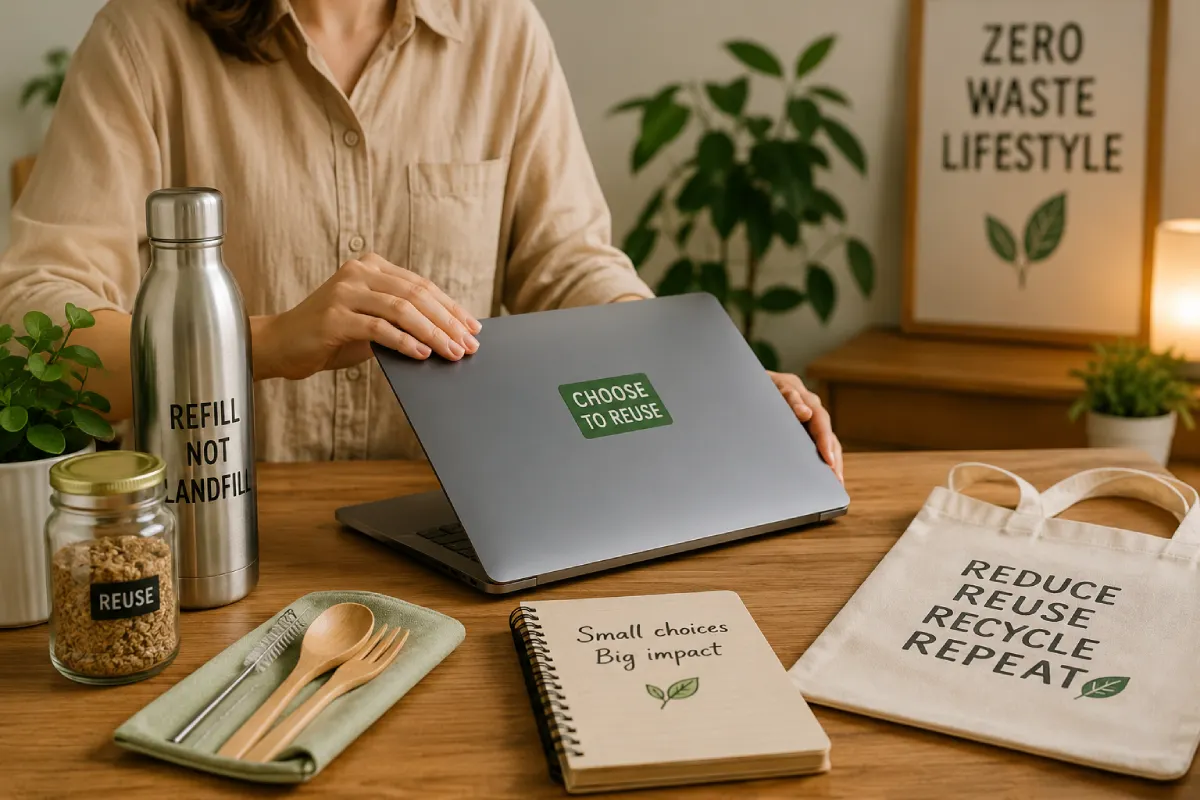
Adopting a zero waste lifestyle is about reducing what you put into landfill using the 5 Rs of refuse, reduce, reuse, recycle and rot, not about having nothing to throw away. Here it provides zero waste first timers with practical zero waste swaps, a zero waste kitchen checklist, sure-fire reusable product recommendations, and a 7 day trash free living plan for the US and India
What Is a Zero Waste Lifestyle?
A zero waste lifestyle means wanting to send as little trash as possible to land fills, incinerators or the ocean. It isn‘t about trying to have zero trash immediately it‘s about changing your mentality so that you refuse, reduce, and reuse before you ever use the trash can.
For zero waste newbies in the USA and India, the beginning is a bit different.. This year, an increasing number of US states are outlawing single-use plastics and non-recyclable to-go containers. India‘s recycling, though, is much more informal, so the sweet spot is in reducing packaging and food waste at the source.
Why Trash Free Living Matters in 2026
Landfills are being filled at a rate that cities can‘t keep up with, and we see more plastic enters the oceans than ever before. Living without trash isn‘t just an environmental statement–it has tangible, everyday advantages:
- It‘s not just about less costs every month less packaging, less impulse shopping
- Healthier habits at home less synthetic single-use materials
- A more subdued, more thoughtful home fewer pieces, less waste guilt
Zero Waste Lifestyle: Myth vs Fact
| Myth | Fact |
|---|---|
| Which is like trying to fit a years worth of garbage in a jar. | Even known to be passionate zero waste enthusiasts move slowly… progress not perfection |
| If you want a whole new “eco kit” to get started: | The majority are all stuff you already have. |
| It‘s only real if you have the time and money. | Turning down gratis items and excess packaging costs nothing. |
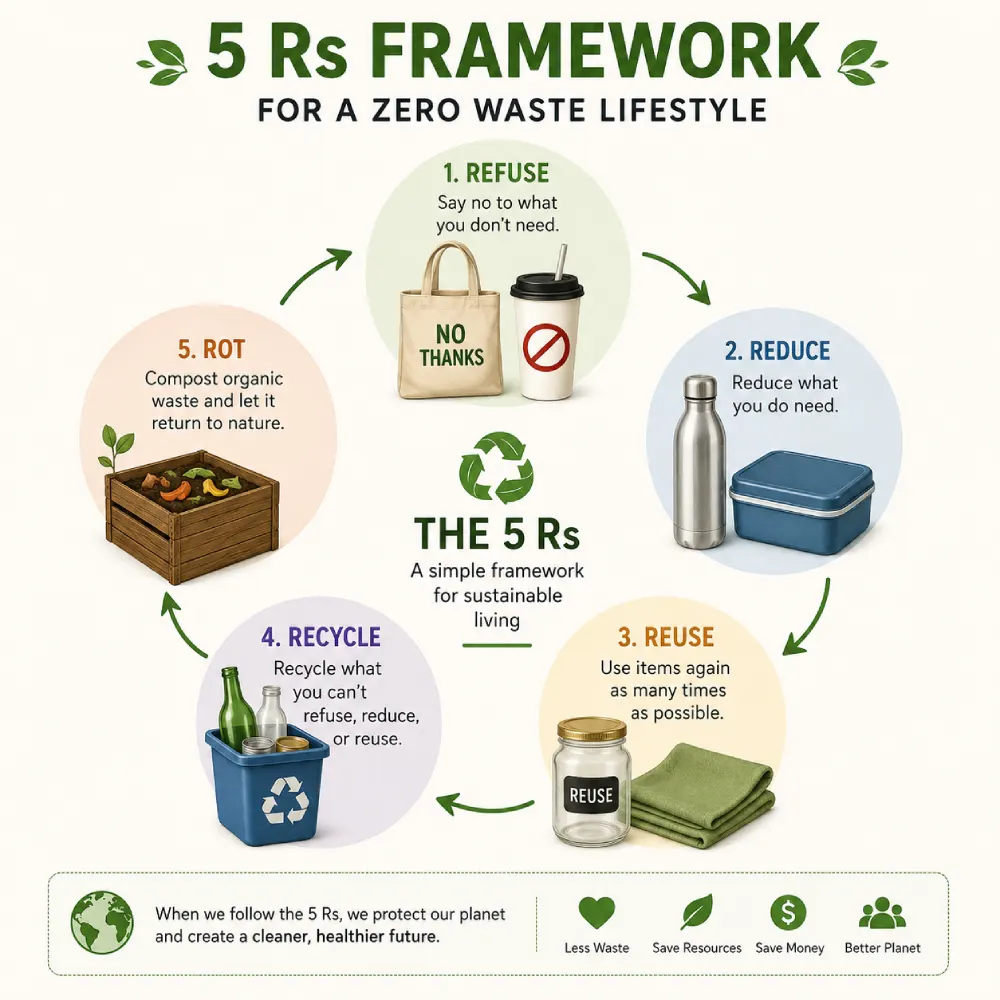
The 5 Rs Framework Every Zero Waste Beginner Should Know
- Avoid what you don‘t need such as plastic knives and forks, freebees, unnecessary packaging.
- Anything you do will be reduced to what you actually need. Buy less. Buy better.
- If the trouble you saved is worse than what you bought,…. (Recycle anything you already had rather than replacing it)
- Recycle is only what remains after the first three steps.
- Rot was a compost food scraps and organic wastetting what you send to landfill through the 5 Rs refuse, reduce, reuse, recycle, rot not zero trash in a literal sense. This guide offers zero waste newbies down to earth swaps, a zero waste kitchen checklist, reusable product recommendations, and a 7-day trash free living plan for the USA and India.
Easy Zero Waste Swaps for Beginners
Begin with an unattended single change in your soon-to-be sleazy abode. Taking on an entire house in one week is the quickest way to say sayonara.
-
Plastic water bottles → a reusable steel or glass bottle
- Cling film → beeswax wraps or a container with a lid
- A folding cloth tote for carrying plastic shopping bags..
- Disposables n razor (A safety razor)
- Plastic bottles of liquid soap → bar soap
Reusable Products Worth Buying First
If you‘re buying anything at all, prioritize items with the fastest payoff and longest lifespan:
- A stainless steel or glass water bottle which replaces hundreds of plastic bottles every year
- A collection of beeswax wraps (permanently replaces cling film, just wash it, rather than discard it)
- Cloth tote bags ( substitute hundreds of plastic bags for their whole life span)
- A compost caddy (turns food scraps from trash into garden input)
These four re-usable products alone cover most of an average household‘s disposable waste.
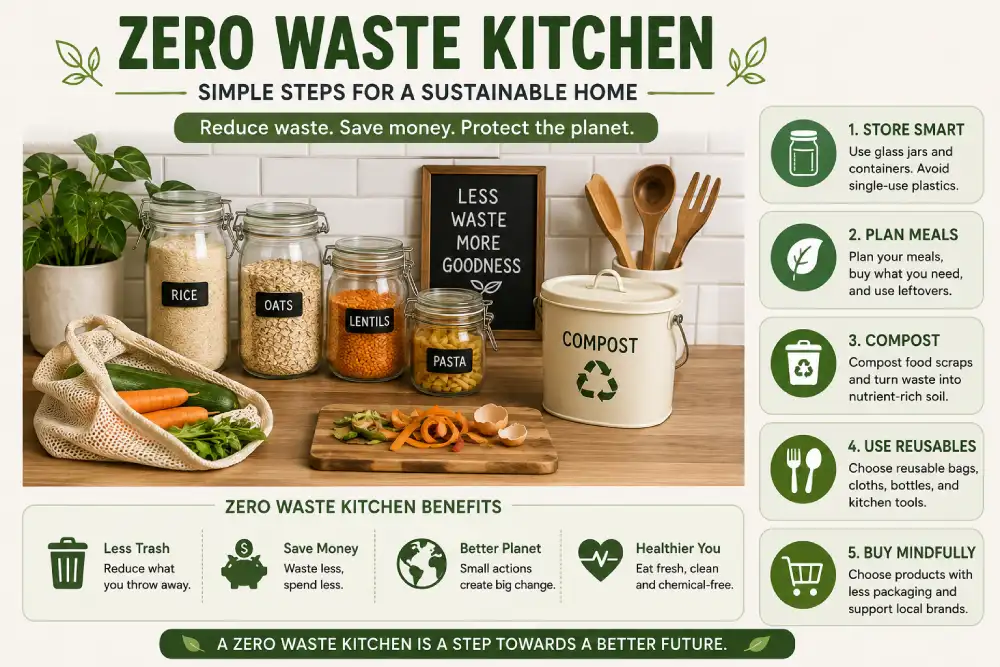
How to Build a Zero Waste Kitchen
As the room that produces the most household garbage, the kitchen is the best place to start with minimizing one‘s waste.
- Use washable cloths instead of paper towels
- Use glass jars rather than plastic containers for storing leftovers.
- Buy grains, spices and pulses from bulk or refill shops.
- Keep a small compost bin or countertop caddy for scraps
- Have carry reusable produce bags for shopping
Common Mistakes Zero Waste Beginners Make
- Over consumption/ fast replacement replacing still functioning items at home with brand new ones in “eco” versions
- Depending on your circumstances, to begin with, cut out food waste the usually largest single waste stream at home.
- Striving for perfection and then giving up after a single minimum waste day.
- Bypassing a trash audit – you can‘t manage what you don‘t measure
Your First 7 Days: A Trash Free Living Action Plan
- Day 1–2: Conduct a trash audit keep a record of all you dispose of.
- Day 3: refuse a single use item (bag, straw, cutlery)
- Day 4 2nd Day of Reuse (1 reuse swap, bottle, container, or bag).
- Day 5: Begin composting even small amounts of kitchen scraps.
- Day 6: Organise the recycling appropriately according to your city regulations
- Day 7: Summarise what went well and discuss next week‘s swap.
Living zero waste isn‘t like a magic switch you flip overnight, but over time the small changes you incorporate become ongoing habits that add up and that is what truly makes an impact on your trash free life permanently.
FAQs
Q1: What do you understand by Zero Waste lifestyle? It is a way to minimize the waste we generate that is meant to go to landfill. Zero waste lifestyle includes principles of refuse, reduce, reuse and recycle, so it technically, produces no or little waste.
Q2: What are the most effective zero waste swaps to make as a novice? Initially, opt for a re-usable water bottle, a cloth shopping tote and beeswax wraps instead of cling film – they are quick wins.
Q3: How do I operate a zero waste kitchen? Start with reusable glass storage; use a compost bin to dispose of food scraps & buy common grocery items in bulk where possible.
Q4:Is trash free living expensive to start?No. Most swaps are using things you already have, and the few reusables that are worthwhile to buy pay for themselves within months.
Q5: Does zero waste work the same in India and the US? While the basic approaches are similar, what has to be tackled is different: here the US seems to be following up on the single-use plastics ban and the transition away from them, while the greatest benefits in India are in reducing unnecessary packaging and food waste.
Final Conclusion
A zero waste lifestyle is not about being perfect. It is about making many small, persistent changes. Regardless of your location (whether you‘re a zero waste newbie in the United States during a plastic bag ban or living in India reconsidering your packaging practices), the idea remains the same: refuse first, reduce forever, reuse before you recycle. Choose one product or swap from this resource, implement it this week, and let trash free living evolve naturally from there.