Rosacea Symptoms & Remedies: Complete Care Guide (2026)
Published: July 22, 2026 Last Updated: August 20, 2026 If your cheeks stay flushed long after you’ve cooled down,
If your cheeks stay flushed long after you’ve cooled down, or you’ve started noticing tiny visible veins and the occasional bump that won’t go away, you might be dealing with rosacea rather than “sensitive skin” or acne. Rosacea symptoms and remedies are searched constantly because the condition is so often confused with something else — and treated the wrong way as a result. Here’s how to actually recognize it and manage it well.
What Is Rosacea?
Rosacea: a lifelong disease, mostly on the face with persistent flushing, telangiectasias, and sometimes papules of the skin and pustules, otherwise known as pimples. Usually manifesting in middle age, for example after 30, with those who have more sensitive, fair skin at risk however any skin type can develop rosacea.
Key signs to look for:
- Erythemaledezing of cheeks, nose, forehead and chin not fading completely.
- Small, visible blood vessels on the surface of the skin.
- Acne-like bumps or pustules without blackheads:
- Skin that feels hot, tight or prickly to touch when you apply products.
- Occurred in some instances (dry or irritated eyes (ocular rosacea)).
Rosacea Triggers to Avoid
The good news is that Rosacea flares are triggered by specific causes, not by any “mistake” you made in your skincare regim. Knowing your own triggers can make the biggest difference.
Common triggers include:
- Exposure to sunlight and heat
- Alcohol in general and red wine in particular,
- Machinery spicy foods and hot drinks.
- Severe cold or high speeds
- Stress, training and therefore humidity and high intensity of exercisethat is, when the conditions are stressed.
- Followed by some specific ingredients that you may not think of such as alcohol based toners, rough scrubs for exfoliation, etc.
How to monitor yours in practice: Use a simple trigger journal tracking the specifics of your meals, hydration, activities and any flare ups for 3-4 weeks. You‘ll discover your triggers faster than you thought!
Rosacea vs. Acne: How to Tell the Difference
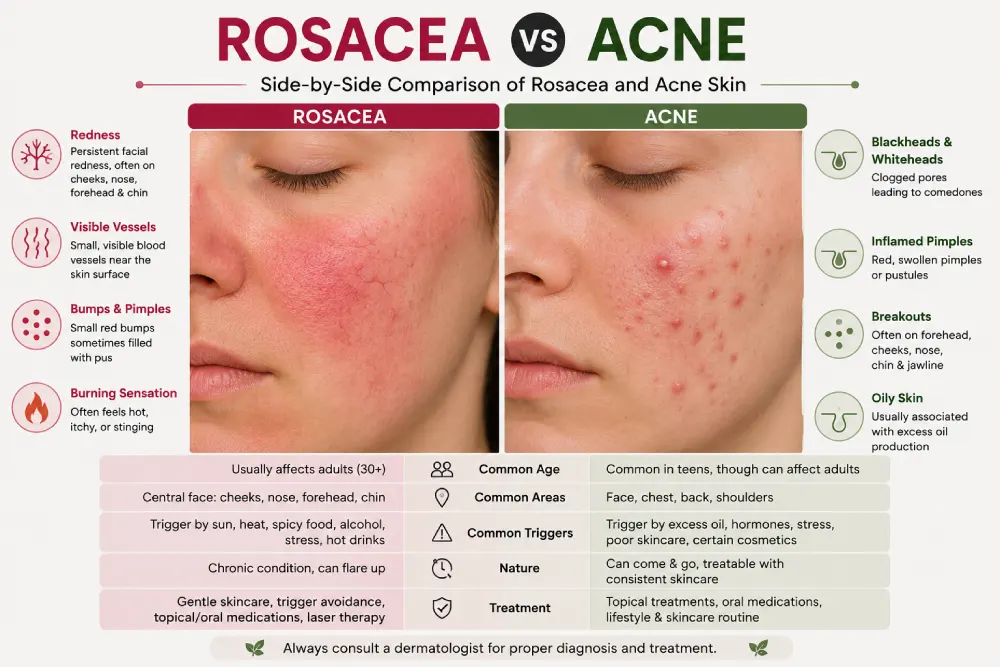
This is where most people make the mistake, as the use of highly active acne products on a rosacea skin can exacerbate the condition.
| Feature | Rosacea | Acne |
|---|---|---|
| Typical onset | Time; Generally; after 30 years of age | Puberty, which may remain into permanence. |
| Blackheads | Not present | Common |
| Blood vessels that can be seen. | Common | Not typical |
| Location | The central face, which includes cheeks, nose and forehead. | May be found anywhere such as in the jawline, back and chest. |
| Eye irritation | Sometimes (ocular rosacea). | Not typical |
| Main triggers | Sun, alcohol, heat, spicy food, stress and now an even earlier onset, a glance in the mirror. | Glands and the resulting hormones, production of oil or oiliness of skin, blocked pores |
If you are unsure, a dermatologist should be able to diagnose rosacea in one visit and it does matter, because typical acne medications can aggravate skin with rosacea.
Best Skincare for Rosacea
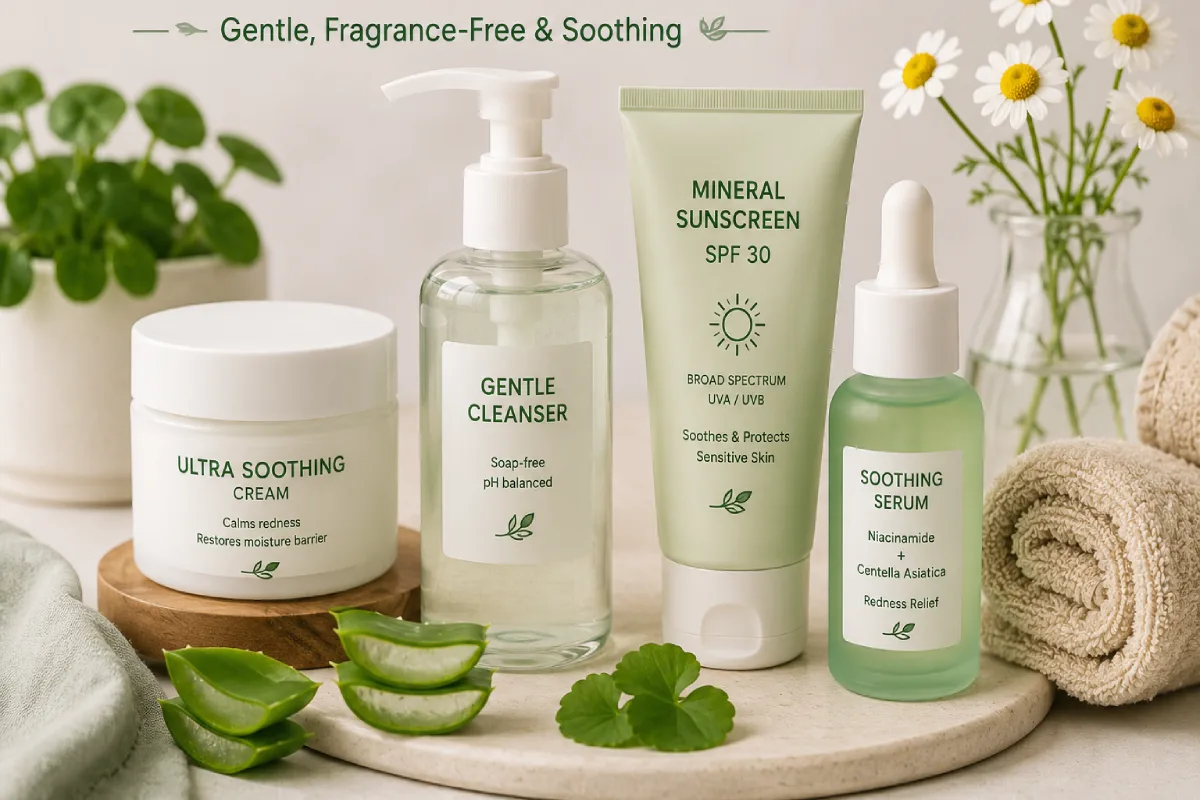
Rosacea-friendly skincare is to relax and protect the skin barrier; it is not to treat it as if it were oily or acne prone skin.
Look for:
- All fragrance free, alcohol free formulas.
- Soft Non-Foaming cleansing products.
- Mineral sunscreen ie zinc oxide or titanium dioxide sun exposure is one of the biggest triggers
- Ingredients to soothe: these include niacinamide, centella asiatica, azelaic acid
Avoid:
- No physical scrubs or severe exfoliating acids.
- Astringents and toners that contain alcohol.
- Hot water when cleansing before. best to use lukewarm water on fluprone skin.
Natural Remedies for Rosacea Flare-Ups
While natural remedies will never take the place of prescription treatment for moderate to severe rosacea, they can certainly help normalize the skin during the occasional flare.
- Aloe vera gel (if an active flare is present, it will soothe the heat and redness) (use a fragrance free one)
- Green Tea Extract (cooled and topical application): is calming and anti-oxidant, therefore may aid in reducing redness.
- Chamomile pack: a soft, moist chamomile tea bag placed on the face can reduce sudden flushing and irritation.
- Moisturizers based on oatmeal: can soothe weakened and aggravated skin.
A practical tip: patch test all new natural ingredients, as skin prone to rosacea is especially reactive, more so than the average skin, even to supposedly “gentle” natural ingredients.
Prescription Treatments for Rosacea
To gain sustained, long-term control, most dermatologist go beyond the daily skincare regime, & into targetedprescriptionbased products.
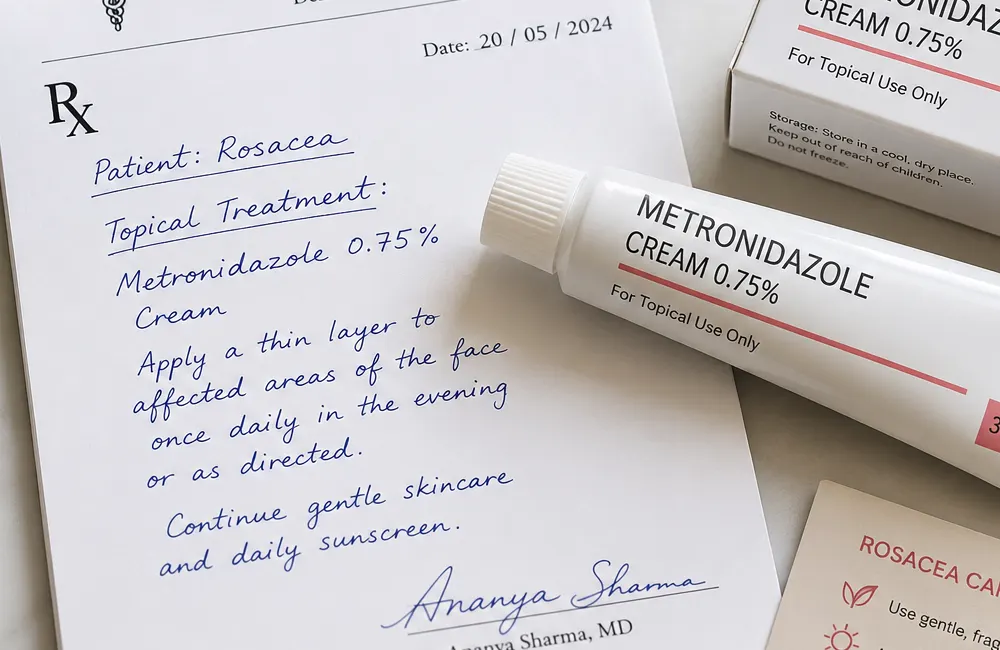
- Apply 0.75% metronidazole or 20% azelaic acid directly to the inflamed papules and pustules. Maintain application on a daily basis until the condition improves.
- Oral antibiotics (low dose doxycycline): prescribed primarily for the anti-inflammatory properties and not their antimicrobial activity.
- Laser or light therapy: directly addresses visible blood vessels and residual erythema.
- Ivermectin cream: extra effective the bumps and pustules are a problem.
There isn‘t a permanent cure to rosacea at the moment, but this mix of trying to avoid rosacea triggers, using mild skin cleansers and using as directed your doctor can be extremely well controlled.
Myth vs. Fact: Rosacea
| Myth | Fact |
|---|---|
| It is lazily said but actually true that rosacea is simply adult acne. | They‘re different disorders and have different causes/stimuli. |
| An example of rosacea is alcohol over indulgence, caused by alcohol. | 2) Alcohol…may cause flares, but it does not cause rosacea. |
| It will be self-limiting. | Rosacea is a chronic condition that needs to be continually treated, not a quick fix. |
| The natural prescriptions will also be effective; even without any drugs. | They help control flares, although most people also require medical treatment. |
| Rosacea occurs only in white population? | Less common in fair skin, but can happen to anyone. |
Common Mistakes People Make With Rosacea
- We subject it to aggressive acne therapies, which generally exacerbate erythema and irritation.
- Avoiding the use of sunscreen as the skin is already itchy.
- Writing off any use of trigger-tracking within days instead of weeks.
- Duplicating by over-exfoliating to “fix” the texture.
- Waiting excessively to seek the advice of a dermatologist when bumps or visible vessels form.
When to See a Dermatologist
If it continues for several months, gets worse or is associated with sore eyes, bumps or spider veins then it may be wise to get checked by a doctor or dermatologist rather than just guessing. As it can be confused with allergy, sunburn or acne the wrong form of treatment can actually make it worse!
Final Take
Rosacea treatments and symptoms boil down to two factors which must be employed in conjunction with each other: awareness of your triggers, and the use of the appropriate synergy of mild skincare, natural ingredients that soothe, and for many, medicine. It is possible to maintain rosacea even though it cannot be cure, and being diagnosed promptly as well as correct is key to facilitating such regime.
FAQs
Q1: What is the appearance of rosacea in its mild early stages? Early rosacea can look like persistent flushing or persistent erythema through the cheeks and nose that does not fully settle when not active, and can sometimes be confused with sunburn or hypersensitivity.
Q2: Can rosacea be cured permanently? No, not at present, although it‘s a chronic condition, good trigger avoidance and treatment can keep it under excellent control.
Q3: Do certain foods aggravate rosacea? In sum, the consensus is that spicy foods, hot drinks and alcoholic beverages (particularly red wine) are the most common offenders.
Q4: Is rosacea the same as acne? No! Rosacea doesn‘t have blackheads, often occurs after the age of 30, and is caused by different triggers to acne even if both disorders cause the appearance of red pimples.
Q5. What‘s the most effective natural solution to a rosacea flare? To soothe sudden redness and heat during a flare, aloe vera gel and an ice-cold chamomile poultice are recommended by the authors.
Q6. Do I need a dermatologist for rosacea, or can I do a rosacea self-diagnosis? If your rosacea isn‘t severe, try to manage it by being kind to your skin and avoiding triggers, but if it persists or worsens see a professional so that it does not progress.