Eczema Symptoms and Treatment: A Complete Guide
Published: July 20, 2026 Last Updated: August 20, 2026 If you’re researching eczema symptoms and treatment, you’re dealing with
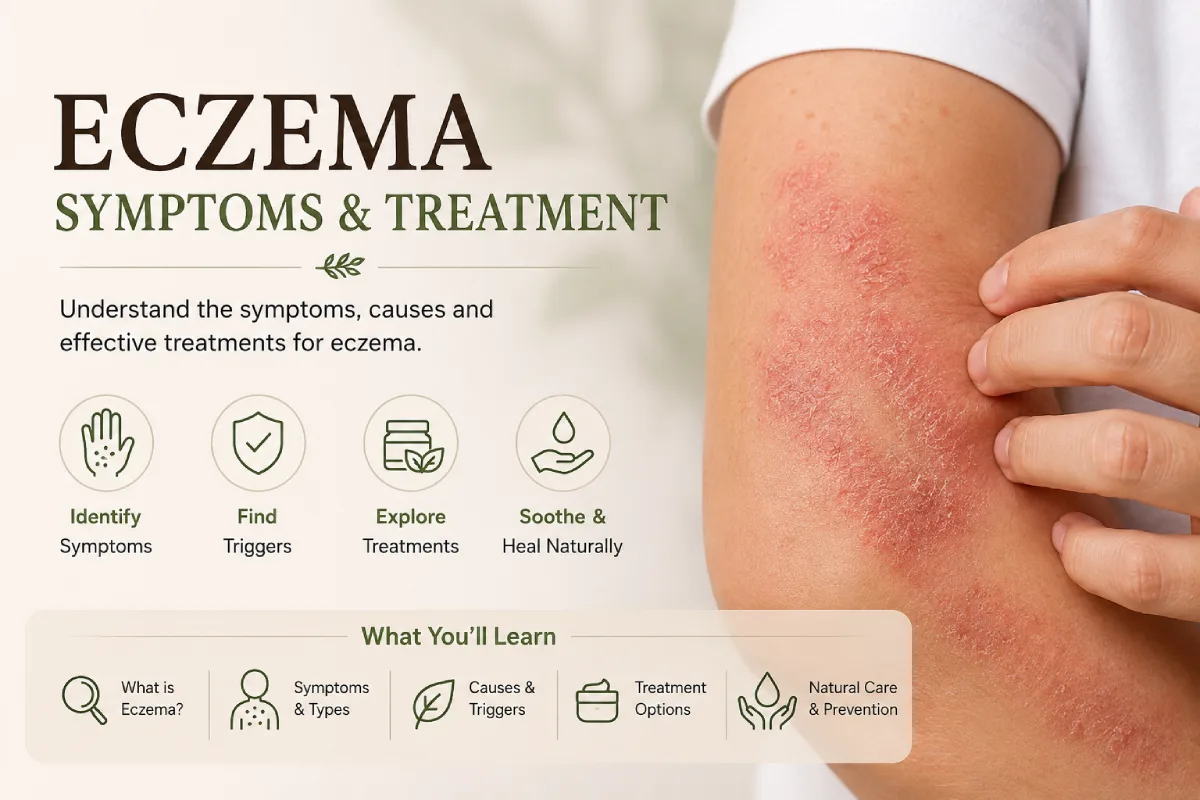
If you’re researching eczema symptoms and treatment, you’re dealing with more than “just dry skin.” Eczema causes real discomfort — persistent itching, cracked patches, and flare-ups that seem to appear out of nowhere. Understanding what’s actually happening beneath the surface makes it much easier to manage.
This guide breaks down eczema symptoms, common triggers, moisturizer choices that actually help, care for babies and children, and where natural remedies genuinely fit in.
What Is Eczema
Eczema is an umbrella term for a group of conditions that cause inflamed, itchy, irritated skin. The most common form, atopic dermatitis, develops from a combination of a weakened skin barrier and an immune system that overreacts to everyday triggers. Because the skin barrier doesn’t retain moisture well, it becomes more vulnerable to dryness, irritation, and infection.
Eczema isn’t contagious, and while it often starts in childhood, it can appear or persist at any age. It tends to be a long-term, flare-and-remission condition rather than something with a single fix.
Atopic Dermatitis Symptoms
Atopic dermatitis symptoms vary somewhat by age and skin tone:
- Dry, rough, scaly patches of skin
- Intense itching, often worse at night
- Thickened or discolored patches from repeated scratching
- Cracked or oozing skin during active flares
- In babies, patches often appear on the cheeks, scalp, or face
- In older children and adults, patches typically show up on elbows, knees, wrists, ankles, or the neck
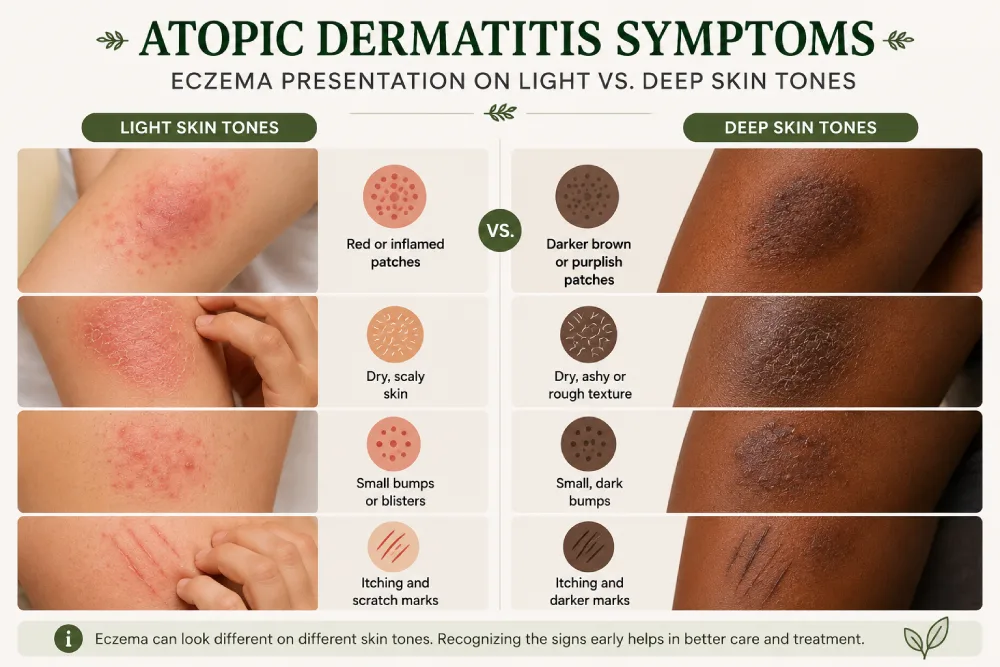
On lighter skin, patches often appear red or pink. On deeper skin tones, eczema can present as darker brown, purple, or gray patches, and hyperpigmentation or hypopigmentation may remain after a flare clears — a detail many guides miss but that matters for accurate self-recognition.
Eczema Triggers to Avoid
Triggers vary from person to person, but common ones include:
- Fragranced soaps, detergents, and skincare products
- Rough or synthetic fabrics that irritate sensitive skin
- Excessive sweating or overheating
- Dry winter air or, conversely, high humidity that increases sweating
- Dust mites, pollen, and pet dander
- Stress, which frequently triggers or worsens flares
Keeping a simple trigger diary — noting flares alongside recent products, weather, or stress levels — often reveals patterns faster than guessing.
Best Moisturizers for Eczema
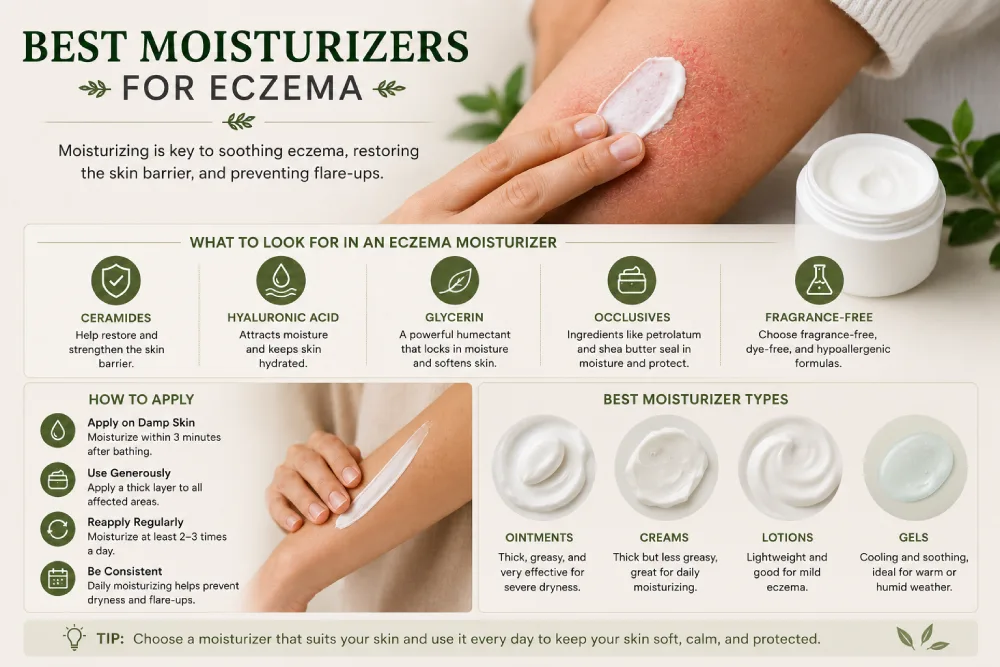
Not all moisturizers perform equally for eczema-prone skin. Thick ointments and creams typically outperform light lotions, since they form a more effective barrier that seals in moisture rather than evaporating quickly. Lotions have a higher water content, which can actually feel drying for eczema-prone skin over time.
Look for:
- Fragrance-free, dye-free formulas to avoid unnecessary irritation
- Ceramide-containing creams, which help rebuild the skin’s natural barrier
- Thicker ointments (like petrolatum-based options) for very dry or cracked areas
- Application immediately after bathing, while skin is still slightly damp, to lock in moisture most effectively
Eczema in Babies and Children
Eczema is common in infants, and many outgrow it, though a meaningful share continue to experience symptoms into adolescence or adulthood. In babies, it typically shows up on the face, cheeks, or scalp before potentially spreading to other areas as they grow.
For babies and young children:
- Keep bathing brief and use lukewarm, not hot, water
- Moisturize generously right after bathing, at least once or twice daily
- Dress children in soft, breathable fabrics like cotton
- Watch for signs of infection — increased redness, warmth, oozing, or fever — and consult a pediatrician promptly if these appear
- Never apply prescription-strength creams to a child’s skin without a pediatrician’s specific guidance
Because children’s skin is more sensitive and treatment needs shift as they grow, ongoing pediatric or dermatologist guidance is genuinely important here, not just a formality.
Natural Remedies for Eczema
Natural remedies can meaningfully support — but shouldn’t replace — a proper treatment plan for moderate to severe eczema:
- Coconut oil has mild antimicrobial properties and can help moisturize sensitive skin for some people
- Oatmeal baths are well known for calming itching and reducing inflammation during flares
- Sunflower seed oil may support skin barrier repair, based on emerging research
- Aloe vera gel can soothe mild irritation, though pure formulations without added fragrance work best
These approaches tend to help most with mild symptoms or as a complement to medical treatment, rather than as a standalone fix for moderate-to-severe eczema.
Common Mistakes in Eczema Care
- Switching moisturizers frequently instead of sticking with one fragrance-free option consistently
- Using hot water for bathing, which strips natural oils and worsens dryness
- Stopping prescription treatment as soon as symptoms improve, which often leads to faster flare-ups
- Assuming natural remedies alone can manage moderate-to-severe eczema without medical guidance
- Ignoring early signs of infection, like oozing or increased warmth in a patch
Myth vs. Fact
Myth: Eczema is caused by poor hygiene. Fact: Eczema stems from a weakened skin barrier and immune response, not cleanliness — over-washing can actually worsen symptoms.
Myth: Children always outgrow eczema by adolescence. Fact: While many children see improvement, a significant number continue experiencing symptoms into their teen years or adulthood.
Action Steps to Start Today
- Switch to a fragrance-free, ceramide-based moisturizer and apply it right after bathing
- Track potential triggers for two weeks to spot patterns in your flares
- Use lukewarm water for bathing, and limit bath time to reduce moisture loss
- See a dermatologist if flares are frequent, painful, or not improving with consistent moisturizing
- For babies and children, involve a pediatrician early rather than managing symptoms alone
Eczema symptoms and treatment come down to one core idea: protect and rebuild the skin barrier while managing the triggers that set off flares. With the right moisturizer, consistent trigger avoidance, and medical support when needed, most people can bring eczema under meaningful, lasting control.
FAQs
Q: What are the first signs of eczema?
A: Early signs typically include dry, rough patches of skin along with persistent itching, often appearing on the face in babies and on elbows, knees, or wrists in older children and adults.
Q: What triggers eczema flare-ups the most?
A: Fragranced products, rough fabrics, sweating, dry air, and stress are among the most common triggers, though specific triggers vary from person to person.
Q: Are natural remedies enough to treat eczema?
A: Natural remedies like oatmeal baths and gentle oils can help manage mild symptoms, but moderate-to-severe eczema usually needs prescription treatment alongside them.
Q: How is eczema in babies different from eczema in adults?
A: In babies, eczema typically appears on the face, cheeks, or scalp, while in adults it more commonly shows up on the hands, arms, or areas with skin folds.
Q: What’s the best type of moisturizer for eczema?
A: Thick, fragrance-free ointments or ceramide-based creams generally outperform light lotions, since they form a stronger barrier that locks in moisture.