Common Skin Conditions Explained: Causes, Symptoms & Treatments (2026)
Published: July 7, 2026 Last Updated: July 7, 2026 Almost everyone will have to encounter some sort of skin
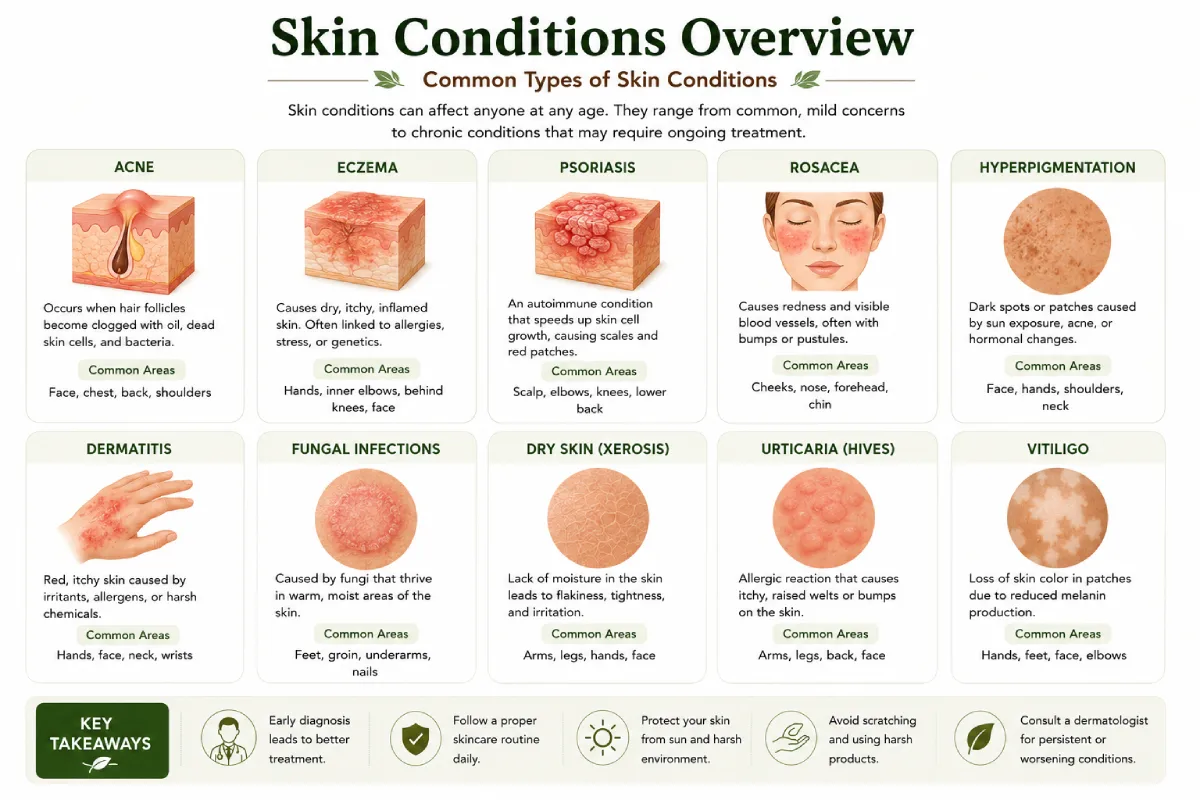
Almost everyone will have to encounter some sort of skin problem at some point in their lives that will make them scratch their heads and think ‘is this normal, or should I be worried?’. There are many skin problems that are encountered by the general population, some of which are really common, like spots that everyone seems to get at some stage in their lives, and some conditions that are long-term such as eczema and psoriasis.
This is a basic overview of the most common skin conditions people look up, what usually causes them, how to identify the symptoms, and the most common treatments. We are not trying to stuff this page full of medical information that would make it difficult to read, instead consider this the appetizer course of your map. Brief overviews of the issues are provided, followed by a link to an in-depth, treatment-specific guide.
Some brief but important things to remember: This guide is for general information only. There are a lot of skin conditions that can resemble each other and self-diagnosis can only go so far. If you‘re experiencing serious, long-lasting or deteriorating symptoms, please seek advice from a dermatologist or other healthcare provider.
What Counts as a “Skin Condition”?
A skin condition is any disease process that alters the skin‘s appearance, texture or function, from an acute and transient to a chronic and lifelong (eg psoriasis). Some may be purely cosmetic, whilst others will involve the immune system, genes or environmental precipitating factors.
Key takeaways:
- A skin condition can be either acute (short term- an adverse reaction to a new product) or chronic (long term) such as eczema.
- There are many chronic skin conditions in which the immune system responds to triggers rather than ‘bad hygiene’ (unfortunately an unfair misconception many believe).
- Because it can manifest in so many different ways, self-diagnosis can be more difficult than it would otherwise be.
Tip: photograph any new or unusual areas of skin changes if they persist. Having a collection of photographs to show your dermatologist can be very helpful as they are able to compare progress rather than just one point in time.
Mini summary: The skin is a wonderfully complex spectrum, but almost all of these conditions require you to get it right before you start to treat.
Why Skin Conditions Are So Common (and Often Misunderstood)
Skin is the body‘s largest organ and it is subjected every hour of every day to the sun, pollution, stress, hormones, the applications of any creams and products – in no wonder so many things go wrong.
Key takeaways:
- Hormonal alterations (puberty, pregnancy, menopause) are also a significant cause of such skin problems as pimples, hyper-pigmentation.
- Climate and pollution levels have a big impact on flare ups from conditions such as eczema, rosacea, dermatitis.
- Genetics have a profound influence on long-term or chronic disease such as psoriasis and eczema. They are commonly hereditary.
- Stress doesn‘t directly cause most skin conditions, although it is widely reported as a precipitant for flare ups in psoriasis, eczema and rosacea.
Mini summary: Often a complex combination of genetics, environment and various triggers leads to most skin problems, never just one, simple problem such as “bad hygiene”, which is one of the most intractable and useless myths on the subject.
Acne: Causes and Treatment
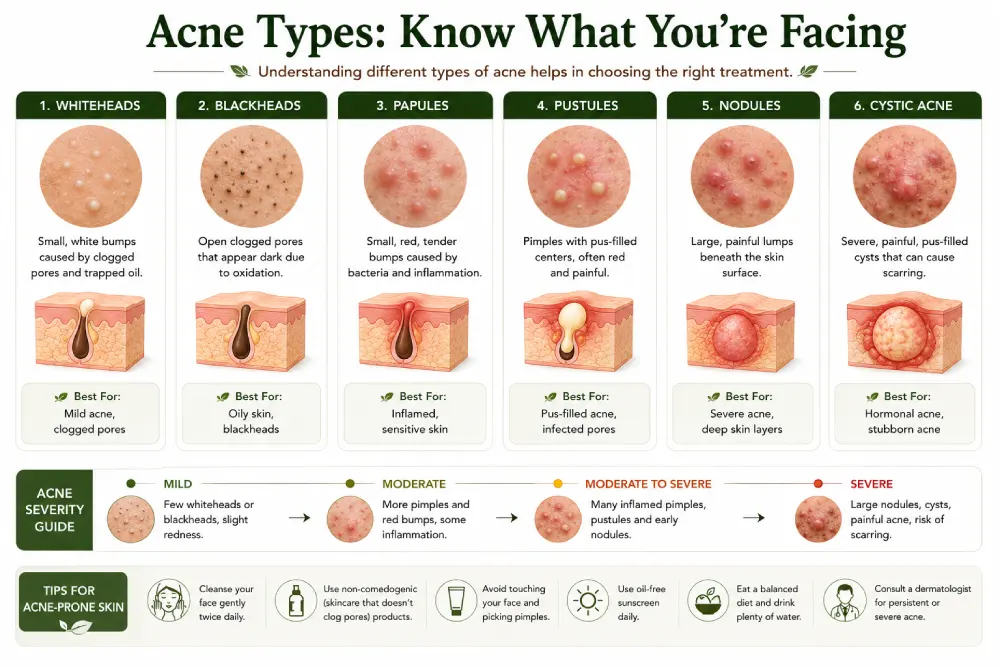
Acne is probably the commonest skin disease experienced by all people at some point in their life, most commonly in adolescence but often continuing or recurring into adulthood.
Key takeaways:
- Acne occurs when hair follicles are blocked by oil and skin cells. This may be further worsened by bacteria and inflammation.
- Hormonal changes are one of the most frequent causes, therefore you will find your spots clumped together around the time of puberty, your period and pregnancy.
- Care can be as simple as any over the counter product or as serious as a prescription if it is a more difficult or chronic case.
Practical example: Mild, occasional breakouts will be easy to treat by using a gentle cleanser and non-comedogenic moisturizers and skincare products. Persistent cases or cystic acne will require expert advice in order for a dermatologist to prescribe high usage and prescription level products.
Mini summary: There are many potential causes of acne and the successful management of it depends upon the correct treatment being selected for the severity and aetiology.
Read More: Complete Guide to Acne Causes and Treatment
Eczema: Symptoms and Treatment
Eczema (atopic dermatitis) is chronic and characterized by dry itchy inflamed dry patches of skin it is one of the commonest complaints in both children and adults.
Key takeaways:
- Eczema is also strongly associated with a failure of the skin barrier to retain moisture, allowing penetration of irritants.
- It is often associated with allergies and asthma and this is sometimes called the “atopic triad”.
- Dry air, fabrics, stress, and certain ingredients may all cause flare ups.
Tip: Applying moisturizer right after bathing, while the skin is still damp, can help to seal in hydration and along with the barrage of other measures, significantly lower the amount of flare-ups.
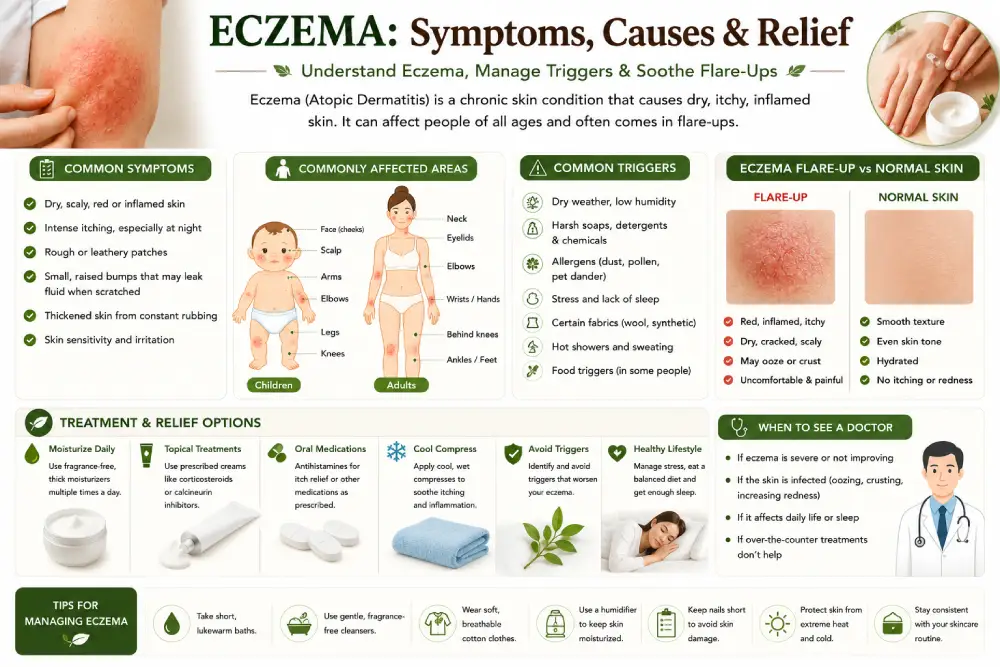
Mini summary: Managing eczema is more about barrier repair and trigger avoidance than finding a “cure”.
Read More: Full Eczema Symptoms and Treatment Guide
Psoriasis: Treatment Options
Psoriasis a long-lasting autoimmune disease that causes the skin cells to grow too quickly making thick, flaky, and a silvery-white hue on the surface of the skin.
Key takeaways:
- The related condition psoriasis is auto-immune in nature, with the immune system mistakenly rushing skin cell production.
- Some other potentially common triggers such as stress, trauma to skin, certain infections and cold dry weather.
- Cases of mild to moderate psoriasis can sometimes be treated successfully with topical preparations, while more generalised and severe cases require systemic medications or light therapy.
Real life example: A significant number of patients with psoriasis experience a trend of their condition worsening in the Winter months.
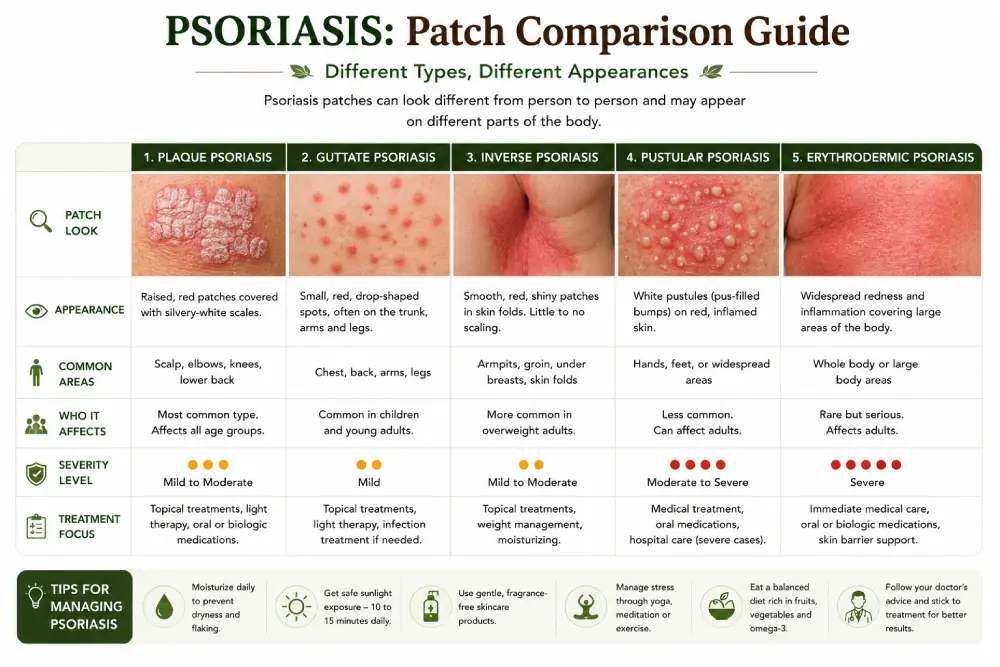
Mini summary: Psoriasis is not contagious and is not related to uncleanliness, it is a long term autoimmune disease that should be treated under the support of a dermatologist.
Read More: Psoriasis Treatment Options Guide
Rosacea: Symptoms and Remedies
Rosacea: Chronic disease affecting mainly the face. Causes flushing of face, visible blood vessels and pustules.
Key takeaways:
- Rosacea can develop at any age but is most common in adult life, and may initially be confused with sensitivity, sunburn or acne.
- Common triggers are sun exposure, spicy foods, alcohol, hot drinks and extremes of cold or heat.
- No permanent cure, but management of triggers combined with dermatological treatment may be very effective.
Practical tip: Maintaining a simple trigger diary, writing down flare-ups and conditions such as food, weather and stress levels can show up individual trends within a few weeks.
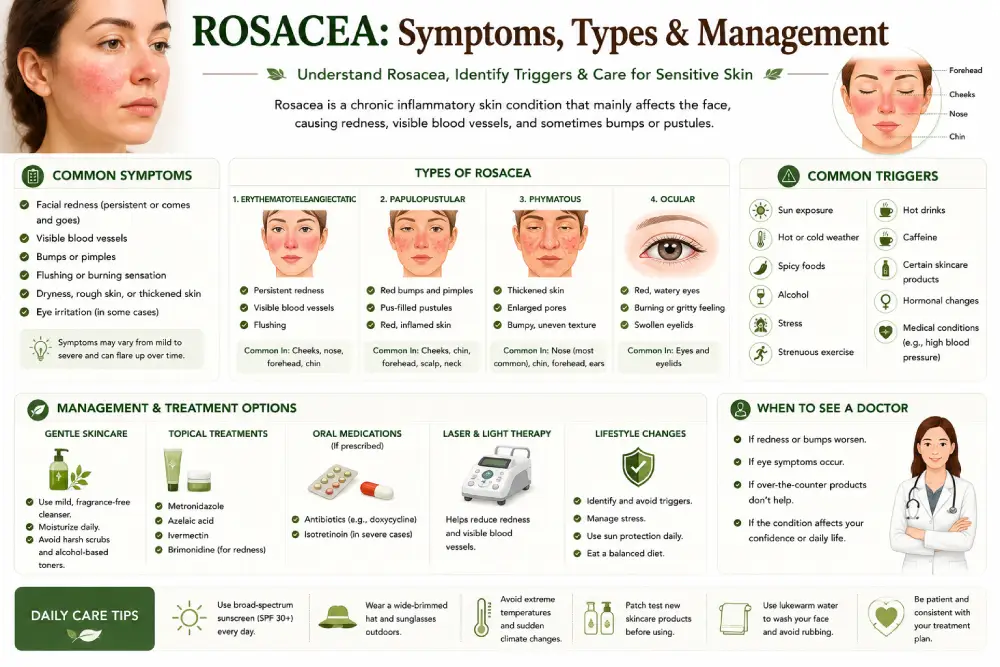
Mini summary: since screens are individual as triggers vary so much from one person to the next.
Read More: Rosacea Symptoms and Remedies Guide
Hyperpigmentation: Treatment Approaches
Hyperpigmentation occurs when the skin appears darker in the patched areas then it is around it. This hyperpigmentation is usually caused by areas of increased melanin within the skin.
Key takeaways:
- Most common reasons are naked sun, scars of post-acne, hormone change (melasma) and injury of skin.
- Protection from the sun on a regualar basis is one of the most effective single measures in the both the preventative and management of hyperpigmentation.
- Procedures are often slow, with persistent treatment for several months necessary for visible fading.
Practical example: Dark marks left behind from acne normally take months or so to fade on their own but heavy exposure to the sun during that time can often cause further darkening or delay.
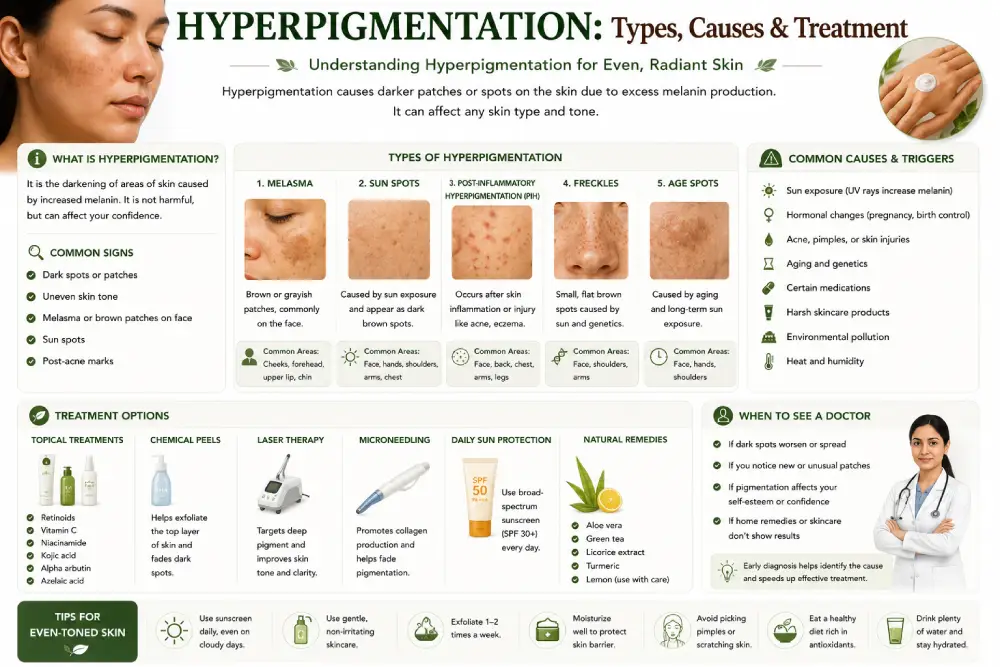
Mini summary: It‘s all about the long game when it comes to hyperpigmentation regular use of a good product and proper sun protection trump the latest “super serum.”
Read More: Hyperpigmentation Treatment Guide
Dermatitis: Types and Treatments
The label “dermatitis” is in fact used as a generic term for several different types of skin inflammation such as: contact dermatitis, seborrheic dermatitis and atopic dermatitis (which shares many characteristics with eczema).
Key takeaways:
- Contact dermatitis develops when the skin becomes inflamed (sensitive or allergic) to a particular substance or allergen, such as some types of metal, perfume or plants.
- Seborrhoeic dermatitis tends to occur in oily areas such as the scalp or face and presents as flakes or greasy scales.
- Avoidance and recognition of the causative allergen is probably the best long-term management for contact dermatitis.
Practical tip: If the rash is in a defined pattern, for example in lines or shapes which reflect the jewelry and clothing, allergy contact dermatitis should be considered.
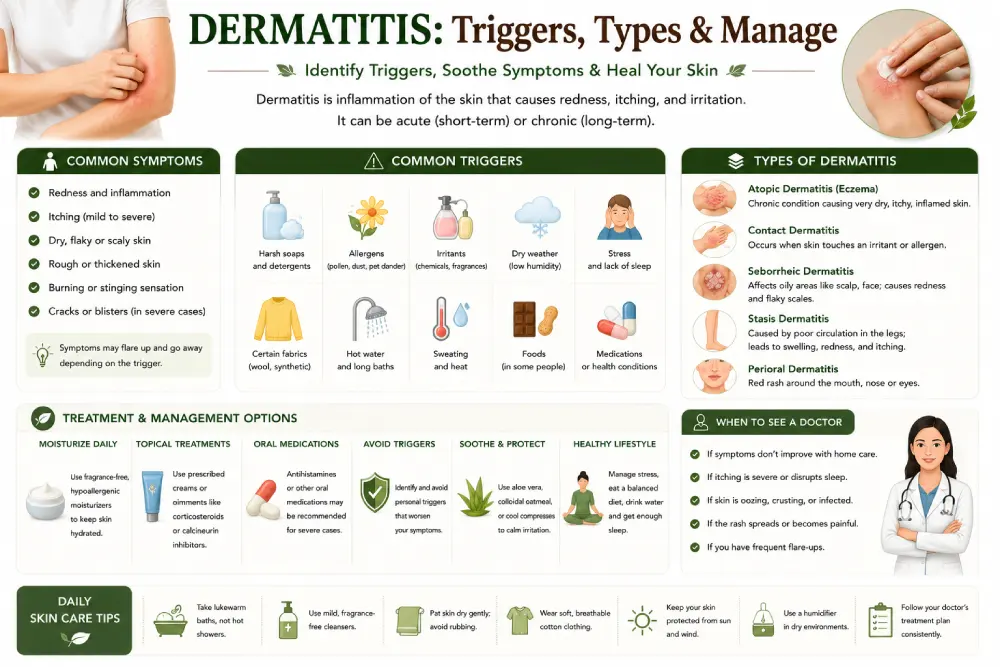
Mini summary: The word “Dermatitis” is not a condition defined in its own right but a term referring to a group of conditions and by extracting the true problem correctly, the treatment can be very successful.
Read More: Guide to Dermatitis Types and Treatments
Telling Similar Conditions Apart
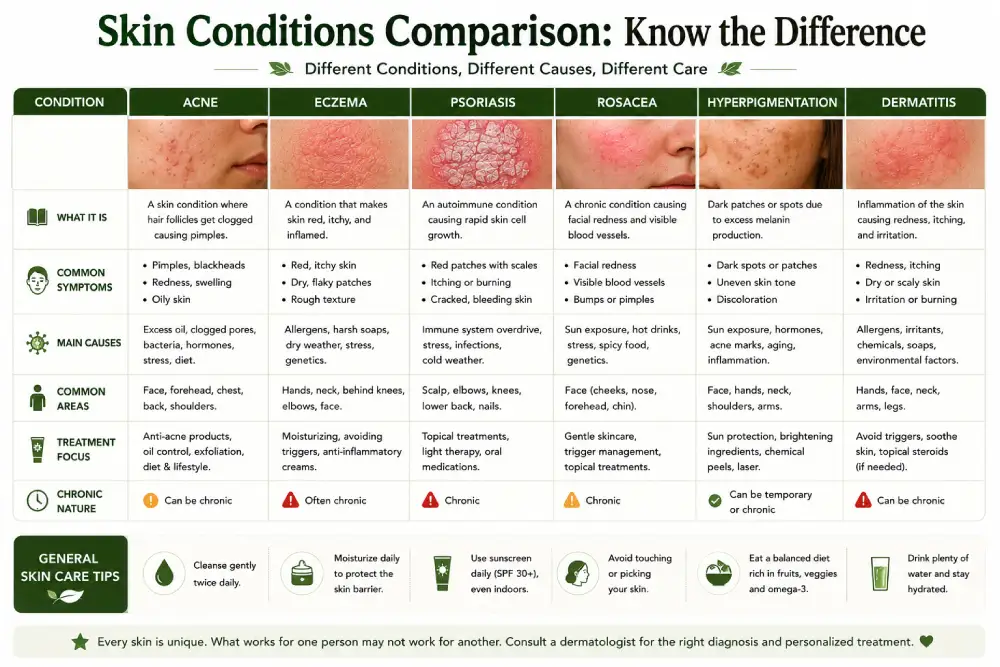
Numerous skin disorders have similar symptoms, which is partly why self-diagnosis is often wrong.
| Condition | Typical Appearance | Common Confusion With |
|---|---|---|
| Eczema | Dry, itchy inflamed areas | Contactdermatitis,psera s |
| Psoriasis | Thick patches of scaly area with clear walls | –Eczema, seborrhandepatitis |
| Rosacea | Chronic redness of the face /visible vessels | Acne, sunburn, allergic response |
| Contact Dermatitis | Localized rash consistent with contact area | Eczema, hives |
| Hyperpigmentation | Flat, darker areas, no inflammation | Melasma, sun spots, scars |
Practical tip: If a patch is discrete and flaky then consider psoriasis, if it is itchy and widespread consider eczema. If the area is focal to the face with underlying erythema consider Rosacea. This is not a diagnosis but always serves as a good basis for a discussion with a dermatologist.
Myths vs. Facts About Skin Conditions
| Myth | Fact |
|---|---|
| “Skin disease is as a result of poor hygiene.” | Most of the chronic diseases are originated by genetic predisposition, immune response, or environmental triggers, not the cleanliness. |
| “Chronic skin conditions can be cured by natural remedies.” | Natural ingredients will help manage the symptoms but the following conditions: psoriasis and eczema- there is no cure at present. |
| “Skin problems are simply a matter of looking better.” | Certain chronic skin diseases can have a real physical and documented emotional presence. |
| If it isn‘t contagious, it‘s not serious. | The severity of the disease has absolutely nothing to do with whether it‘s contagious – all autoimmune conditions such as psoriasis can be very serious without being contagious. |
| “Adults have no eczema; only children do.” | Eczema often continues or progresses into adult life. |
Common Mistakes When Dealing With Skin Conditions
- Attempting to tell themselves what is wrong solely based on pictures. (Inaccurately applying Internet images to the specific condition without considering the similarities.)
- Aggressive treatment of sensitive or delicate skin with harsh products that can increase inflammation, such as for eczema and rosacea.
- Discontinuing therapy at the first signs of improvement, causing rebound flare for chronic diseases.
- Disregarding trigger patterns — For example, rosacea and contact dermatitis whose treatment lies in identifying the triggers..
- Putting off visiting a dermatologist when symptoms do not improve or get worse due to: reluctance over time or money,
When to See a Dermatologist
Although most minor skin problems can be treated at home, go see a professional for:
- Persistent symptoms for more than a few weeks while being under stable home care.
- Pain, swelling or signs of infection (warmth, pus, spreading erythema) are present in the involved area.
- A condition is having a substantial impact upon daily activities, sleeping and mental health.
- A new or changing mole or lesion. This should be seen as an urgent referral.
- Have been taken for at least 4 weeks on over-the-counter therapies without benefit.
Mini summary: You don‘t need to “press on” with treating a skin problem by yourself and dermatologists are there to help you do exactly that.
Skin Conditions in the USA vs. India: Regional Insights
Environmental factors such as climate, pollution and healthcare access all influence clinical presentation and management of skin disease between countries.
In the USA:Cold, dry northern winters tend to be worsened by eczema and psoriasis, whilst humid southern states are also associated with an increase in fungal and bacterial infections of the skin. There tends to be wider accessibility to dermatologists and prescription medications, but not all can afford access.
In India:Hypertension can aggravate fungal infections and acne in large number of areas, urban pollution is also on the rise and is gradually becoming the contributing factor for skin barrier stress and hypersensitivity. Prescribed along with modern dermatological treatment traditional medicine finds its place for popular use and pigmentation becomes one of the major highlighted skin conditions of concern.
Practical tip: If your area is humid, when possible select light weight, breathable products and be speedy in treating any fungal like rashes. In dryer, cold climates, selection of barrier repair and heavier weight products (especially over winter) is preferable.
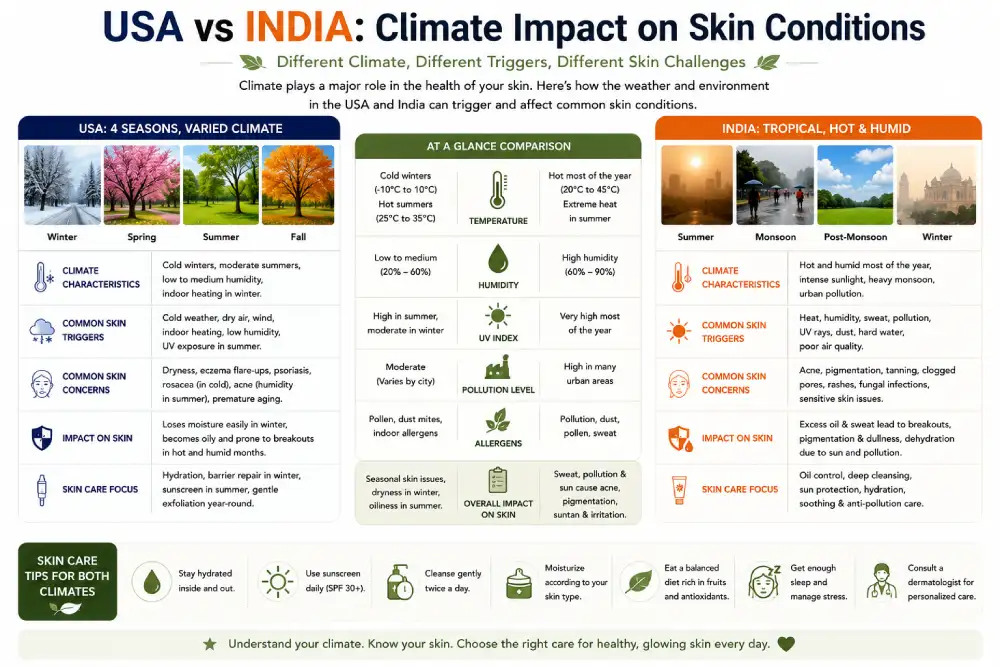
Mini summary: How the climate and environment affect the prevalence and treatment of different skin diseases.
The Emotional Side of Visible Skin Conditions
It is also important to note directly that the visible nature of skin diseases particularly on the face can have a significant emotional impact of the sufferer.
Key takeaways:
- In studies, conditions such as acne, rosacea and psoriasis have been cited as associated with increased self-consciousness and, in some cases, anxiety or low mood.
- Support communities and patient groups are available for most chronic conditions and can be a source of both practical and emotional support.
- A good dermatologist will be focused on the physical treatment plan and, where appropriate, signposting for further support.
Mini summary: if you have a skin problem that is already affecting how you feel about yourself (or bringing down your mood in general) that‘s something to take to your doctor, and not to just grin and bear in silence.
Building a Skincare Routine Around a Skin Condition
Whatever condition you‘re managing, a few general principles apply across nearly all of them:
Step-by-step general approach:
- Define your specific condition as clearly as you can. Better to be as specific as possible.
- Try to keep your routine as simple as possible. If you introduce new products or techniques on top of existing ones, you are more likely to irritate your scalp again.
- Use mild, fragrance free cleansing agents and Moisturisers as the foundation.
- Introduce condition-specific treatments one at a time.
- Monitor flare ups and triggers over a few weeks to see if there are any trends.
- Re-evaluate and modify with a dermatologist if no improvement.
Mini summary: If you think you look better in the mirror after nine new skin products used in random order you might want to consider that a steady systematic approach to a new skincare regime despite it taking a bit longer generally works better for just about every long term skin ailment.
Future Trends in Skin Condition Management (2026 and Beyond)
- Personalized dermatology – AI-assisted skin analysis tools are many steps closer to allowing providers to match patients to the most likely conditions before they step into the office.
- Treatments targeting the Microbiome: increasing research into the significance of imbalance of the bacteria living on the skin in conditions such as eczema and acne.
- Growth in teledermatology especially for India and the rural United States, where it can allow for increased contact with dermatologists.
- Barrier-repair-first formulations Skincare is more and more formulated around inherently strengthening the skin barrier and addressing dryness at its core rather than tackling skin concern symptoms one by one.
Final Thoughts
Skin conditions are very common, diverse, and almost never as straightforward as “just wash your skin more thoroughly”. Whether you have something that comes and goes like intermittent acne, have ongoing contact dermatitis or eczema, or something you‘re still trying to name, learning the fundamentals causes, triggers, and when you should see a doctor puts you in much better stead to treat it effectively. Read the more detailed treatment guides linked to the right of this page for condition-specific strategies, and involve a dermatologist if you are dealing with something persistent, severe, or just plain annoying enough to want some real answers.
FAQs
Q1: What is the most common skin condition?
Acne. Acne is widely accepted as being the most common skin condition in the world, which affects most individuals at some stage in their lives, particularly during adolescence.
Q2: How can I tell if I have eczema or just dry skin?
Dry skin usually clears a lot faster once you start using a moisturiser, whereas eczema involves a constant itch, redness and inflammation which will not clear on just basic hydration alone (a dermatologist can tell the difference).
Q3:Are skin conditions curable?
Some such as mild acne or contact dermatitis caused by an identified trigger can clear. Others such as psoriasis and eczema are managed rather than cured, but symptoms can usually be kept under good control.
Q4: Humid climates cause more skin problems?
Some skin conditions (e.g. fungal infections, certain types of acne) are more common or are more easily aggravated in humid conditions; while others (e.g. eczema) tend to get worse in more dry environments.
Q5: When should I visit a dermatologist for a skin problem?
If the symptoms last a couple of weeks or are becoming worse and/or painful or infected look like them may have to visit a dermatologist.
Q6. Is there a difference between hyperpigmentation and a scar?
Yes, hyperpigmentation is just a flat, discoloured patch, whereas a scar involves a change of texture of the skin due to tissue damage.
Q7: Does stress cause skin conditions?
While stress in itself does not usually result in chronic skin conditions, it is a wellknown trigger of flare ups in rosacea, eczema and psoriasis.
Q8. Do I have to have consistently red or reddening skin for it to be rosacea?
No you don‘t- Rosacea is redness that doesn‘t go away and often is accompanied by thread veins and bumps.