Homemade Face Masks for Acne: Natural Remedies for Clearer Skin
Published: June 29, 2026 Last Updated: June 29, 2026 Breakouts can be annoying we know the feeling when nothing
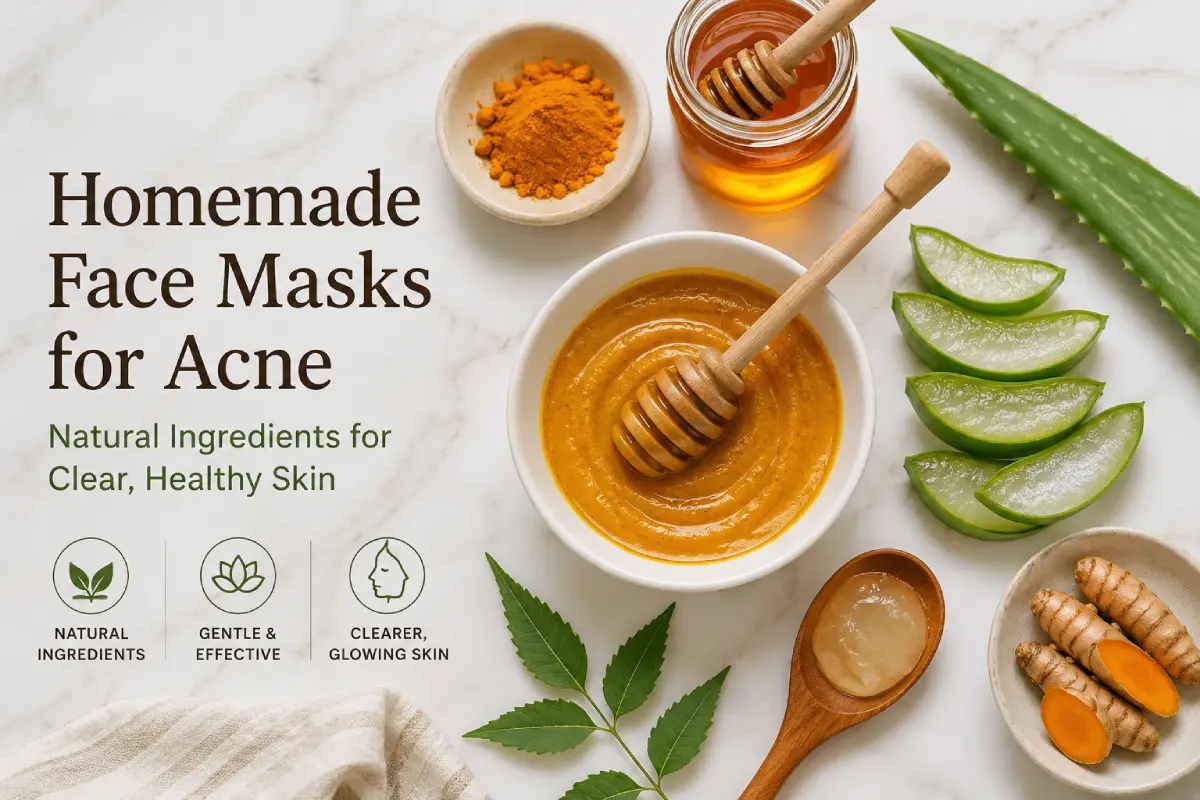
Breakouts can be annoying we know the feeling when nothing seems to do the trick! You may already have the ingredients in your kitchen to prepare inexpensive, all-natural Homemade face masks for acne, such as: honey, turmeric and aloe vera. These ingredients are gentle and affordable; they soothe irritation, eliminate bacteria and block pores.
They are not a “safety Net.” However, if used effectively, they really work.
Benefits of Homemade Face Masks for Acne
Natural DIY masks offer a few real advantages over most store-bought options:
- Doesn‘t contain any harsh preservatives or synthetic fragrance usual suspects which trigger acne on sensitive Indian skin
- Adjustable appropriate ingredients for dry, oily, and combination skin
- Affordable Most ingredients are available for less than Rs.50, and you already have them in your pantry
- Less harsh on the skin great for India where the climate is so humid that drying the skin out also often triggers excess sebum production and aggravates our persistent acne!
That said, homemade is not necessarily safe. Always do a patch test first (see safety section below for more).
Best Natural Ingredients for Acne-Prone Skin
Not all “natural” ingredients are worthy of a spot on your face. Simply put, these are the ingredients that come with some solid skin science in their corner:
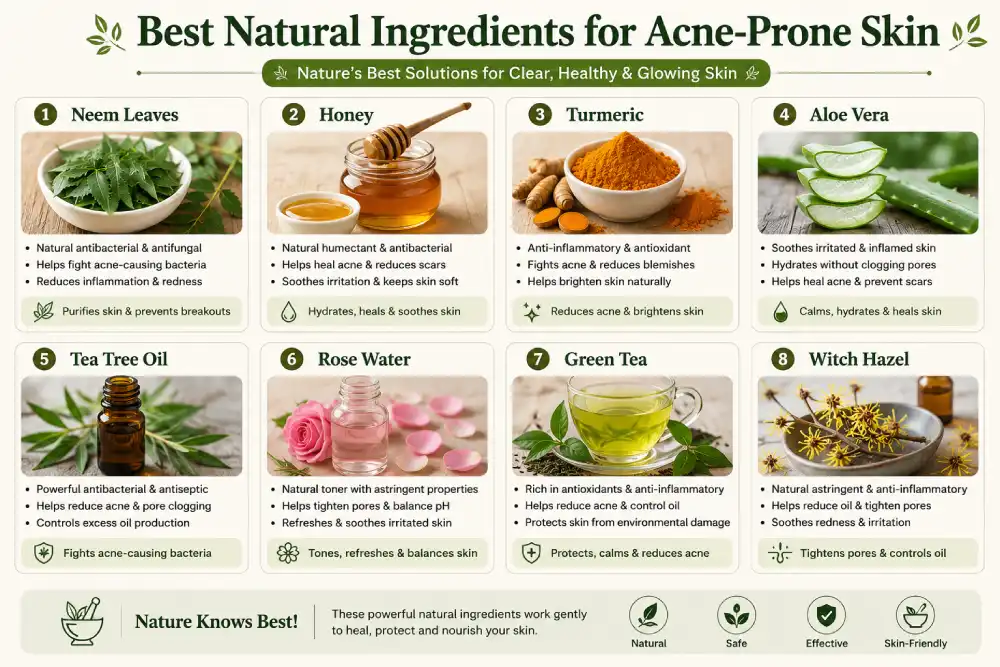
Honey (Raw/Manuka) Readily Anti-bacterial contains natural anti-bacterial agents as well as acting as a natural humectant, it protects skin from bacteria associated with acne growth whilst maintaining moisture. Use raw or unprocessed honey (not filtered).
Turmeric (Haldi) Curcumin, the active agent in turmeric, has well-settled anti-inflammatory and anti-microbial properties. It soothes down redness and prevents new spots from appearing. Remember to use just a little bit it can stain lighter tones temporarily.
Aloe Vera Gel Aloe alleviates itchy irritation, minimizes pimple swelling and hastens healing after a breakout. Use fresh gel scraped from the plant, or store-bought cold-pressed gel.
Neem An integral part of Indian household for generations. Neem has mild anti-bacterial and anti-fungal properties that makes it one of the best natural ingredients for oily, pimple prone skin.
Multani Mitti (Fuller‘s Earth) a native clay mask. Will soak up surfeit of oil, lint out dirt, clog back pores. Great for humid Mumbai-wallahs or those with long-lasting oil T-zone.
Aloe + Tea Tree Oil• Tea tree oil has been researched extensively for its antibacterial activity. When combined with aloe vera gel (who acts as a vehicle), it will be gentle on the skin whilst combating bacteria that cause outbreaks.
💡 Looking for store-bought options that use these same ingredients? Check out our full guide to the best face masks for acne for expert-picked product recommendations.
DIY Honey and Turmeric Face Mask Recipe
One of the most sought after homemade masks for acne in India and probably the most frequently used too. And rightly so, it does work.
What You Need:
- 1 tablespoon raw honey
- ½ teaspoon turmeric powder
- Optional:1 teaspoon plain yogurt (for additional soothing value)
How to Make It:
- Combine the honey and turmeric in a small bowl to make a smooth paste.
- And if you have dry or sensitive skin, add yogurt, which softens the mask and adds milder lactic acid.
- Smooth onto clean, dry skin in an even film. Do not apply around the eyes.
- Leave on for 10-15 minutes.
- With lukewarm water rinse away. Gently pat dry.
Frequency: 2–3 times weekly, if you have oily skin. Once a week if your skin is sensitive, dehydrated or dry.
What to see: Less redness after a few applications. Breakouts will clear up more quickly over time, after about 3–4 weeks of regular use.
Note: Turmeric may leave a slight yellow stain on the skin. Simply cleans off with a drop of milk or cold water.
DIY Aloe Vera Face Mask for Acne Relief
If your skin is red and sore and inflamed this is the mask to use. Aloe vera is one of the most soothing ingredients you can apply to sensitive skin.
What You Need:
- 2 tablespoons fresh aloe vera gel For homemade aloe vera gel, you‘ll need 2 tablespoons of aloe vera gel (found inside the leaves).
- 1 teaspoon raw honey
- Optional: 1–2 drops tea tree oil (for active breakouts only)
How to Make It:
- Remove fresh gel from a leaf of aloe vera or use a cold-pressed, store-bought variety.
- Stir in honey until well blended.
- Use tea tree oil only if you have active pimples and stick to 1–2 drops maximum.
- For application, use on clean skin and effects of penetrator for 15–20 mins.
- Rinse with cool water. No moisturizing required after – aloe is enough to hydrate.
Frequency: For use 2 to 3 times a week. Can be used daily if skin is very inflamed. 3x/week allows skin time to recover.
Why It Works: Aloe helps bring down the inflammation surrounding pimples and speeds up the healing process. The honey inhibits the growth of bacteria. The tea tree oil (used sparingly) boosts this antibacterial strength without irritating the skin.
Myth vs Fact: Homemade Acne Masks
Myth: Lemon Juice good for acne, natural formulation.
Fact: Lemon juice is very acidic, and applied to the skin it can cause burns, redness, and photosensitivity, particularly under India¹s intense sunshine. When applied to a DIY pack, it should be very dilute, and always SPF afterwards.
Myth: Must use a full teaspoon of turmeric per mask.
Fact: Small dose is powerful dose. Use too much and your skin will be irritated and your turmeric definitely will stain. Use about ½ tsp per mask.
False: with DIY masques, you notice results in a matter of hours.
True: You notice results in 3-4 weeks, minimum, if you want to make a difference in active acne. You can do it, it just takes time.
Myth: ‘Natural’ means it can‘t be reactive. !
Fact: Honey, essential oils and citrus are all known allergens. Always do a patch test on the inside of your arm first
Safety Tips for Homemade Acne Treatments
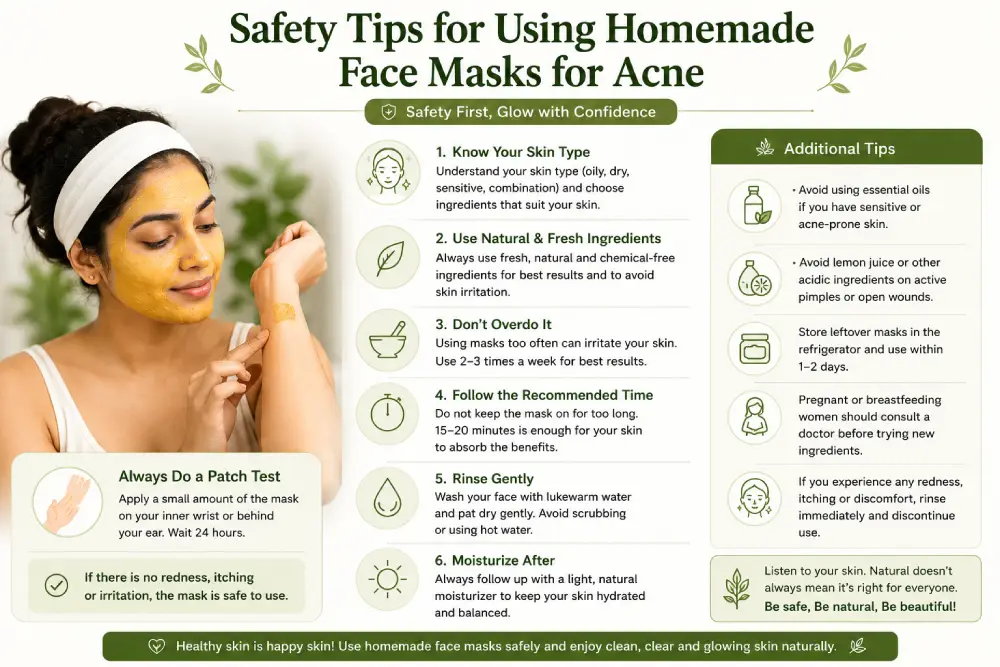
Before you DIY anything, keep these non-negotiables in mind:
Always do a patch test. Dab a tiny amount on your inner wrist or behind the ear. Watch out for the next 24 hours… if there‘s no redness or itching it won‘t cause you any problems on your face.
Don‘t over-mask. Applying a face mask several times a week particularly clay or exfoliating masks uses up the oils on your skin and makes acne worse. 2–3 times a week is sufficient.
Cleanse first. Use a mask on freshly cleansed skin. Effectiveness is reduced when over sunscreen, foundation or dirt.
Moisturise afterwards. Particularly after clay or turmeric masks, conclude with a light, non-comedogenic moisturiser, to prevent dehydration of skin.
Be aware of when you should seek out a dermatologist. For minor or moderate pimples, the masks will suffice. For severe or cystic acne, seek help from an expert no kitchen concoction will ever cure that.