Daily Fitness Routine for Better Health, Energy and Wellness
Published: June 12, 2026 Last Updated: June 16, 2026 A daily fitness routine for beginners should include 20–30 minutes
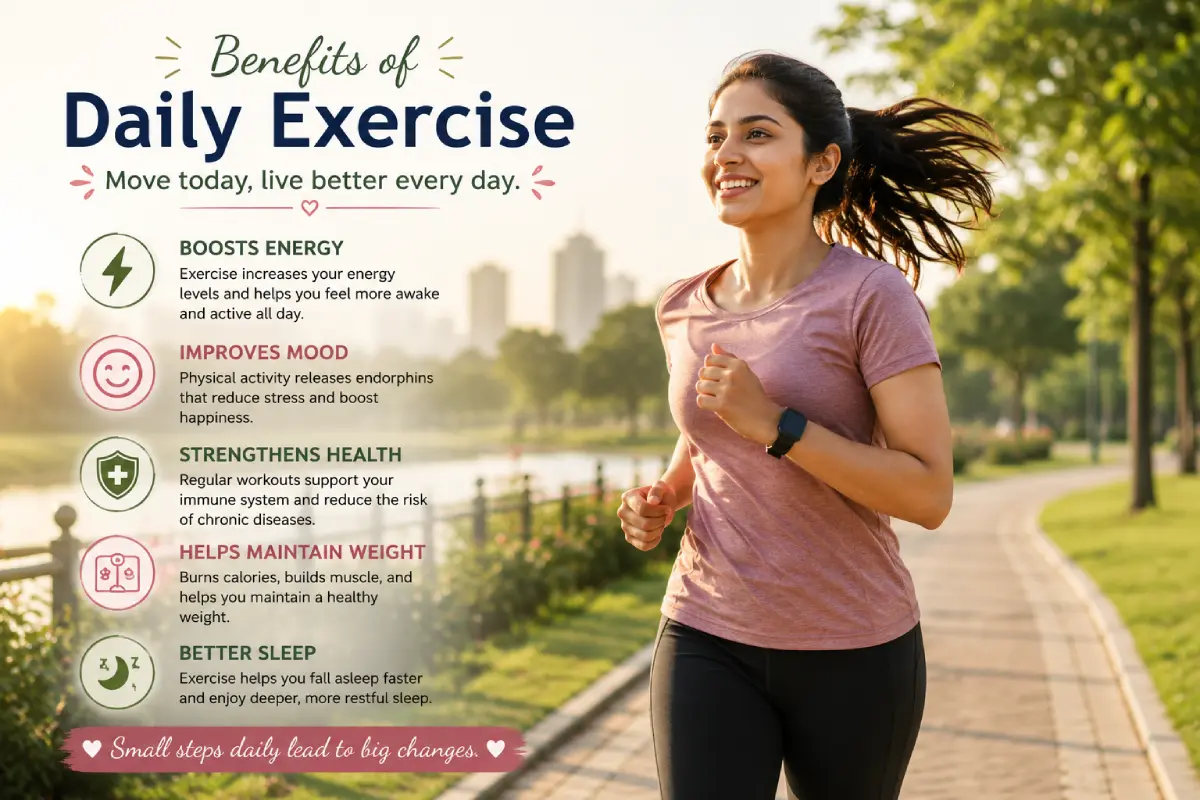
A daily fitness routine for beginners should include 20–30 minutes of movement, 5 days a week — alternating between cardio (walking, jogging), bodyweight strength (squats, push-ups, planks), and flexibility (yoga or stretching). Rest or active recovery on remaining days. The key is consistency over intensity: showing up daily for shorter sessions builds a stronger, more sustainable fitness habit than sporadic intense workouts. Daily exercise improves heart health, energy levels, sleep quality, mental clarity, and skin health through improved circulation and reduced cortisol.
Establishing a daily fitness routine is one of the most significant choices you can make for your health in the long term and it‘s much easier to do than most people realize.
No gym membership required. No hour of free time needed. All you need is a plan, a few minutes, a willingness to start small.
Benefits of Daily Exercise (Beyond Just Weight Loss)
The thing people think of fitness that is a weight loser. It‘s so much more then that.
What are the health benefits of working out daily? Taking part in 30 minutes of physical activity every day helps you control your weight, boosts your cardiovascular system and funtion and even strengthens your immune system. But the benefits go far beyond just physical health.
Regular exercise is associated with a reduced risk of death a single study published by the American Heart Association found a 19–25% reduction in mortality in people who exercised regularly.
And for your skin (Covering Cultones’ great beauty articles as well) keeping active on a daily basis keeps fresh blood pumping through the body bringing with it extra oxygen and essential nutrients that aid cell repair and keep skin looking firm and healthy. Oh, and giving you a lovely natural after-gym glow that no highlighter can match.
Exercise is also important for daily cortisol regulation. It is, after all, a stress hormone that causes acne, loss of radiance and ageing. Exercise is genuinely a beauty care ritual.
📖 Read More: Fitness and Wellness Routines — The Complete Guide
Best Beginner Workout Schedule (No Gym Required)
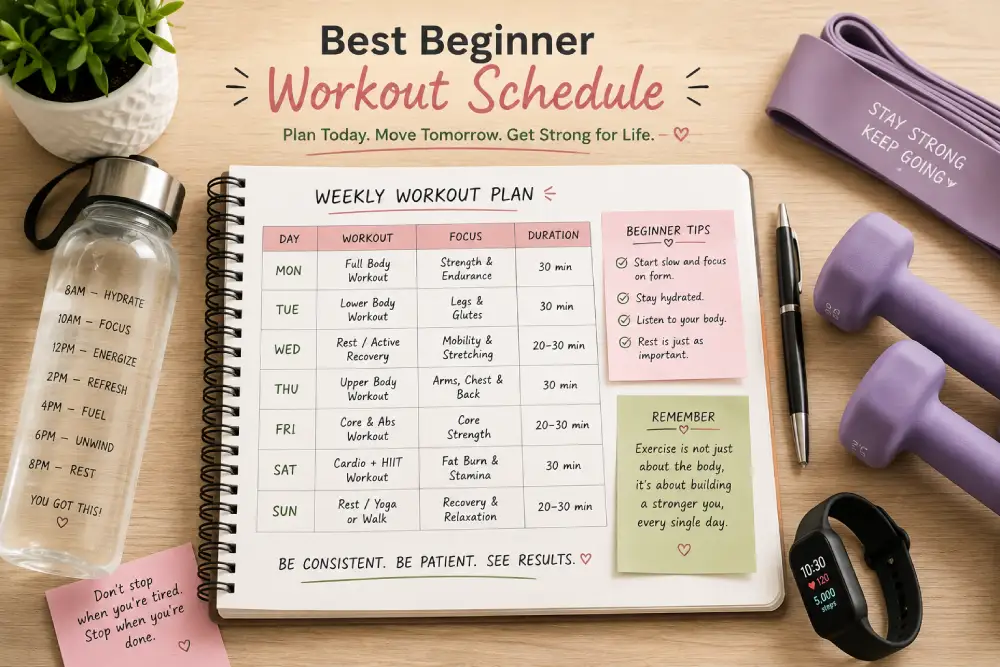
The most common beginner mistake is to set out with very unrealistic expectations. A 60 minutes 6 days a week regime sounds great until you get to day four and your life takes over.
Beginners can also benefit from several full body-body workouts. These can be done 2–3 times a week; these will give the body time to adapt. For individuals with a very hectic lifestyle, 3 workouts per week will keep and build up levels of fitness, as well as giving the body time to recover.
Here‘s a simple, realistic 5-day starter schedule:
| Day | Activity | Duration |
|---|---|---|
| Monday | Fast walk or light run. | 20–30 mins |
| Tuesday | Bodyweight strength (squats, push-ups, planks) | 20 mins |
| Wednesday | Yoga or stretching | 20 mins |
| Thursday | Walk or cycling | 25–30 mins |
| Friday | Full-body bodyweight circuit | 20 mins |
| Saturday | Active rest- light walk, swimming. | Optional |
| Sunday | Full rest | — |
For India: No equipment, no gym, no special clothes necessary. ‘Consistency trumps ‘intensity every time. Your nervous system, joints, heart and brain will thank you for small daily doses rather than the occasional big dose.
For the USA: For high-intensity exercise like HIIT or running – at least 75min/week, which is about 20min/day for 3 days. The muscle-strengthening exercise should be incorporated at least 2 days/week.
How Fitness Improves Overall Wellness
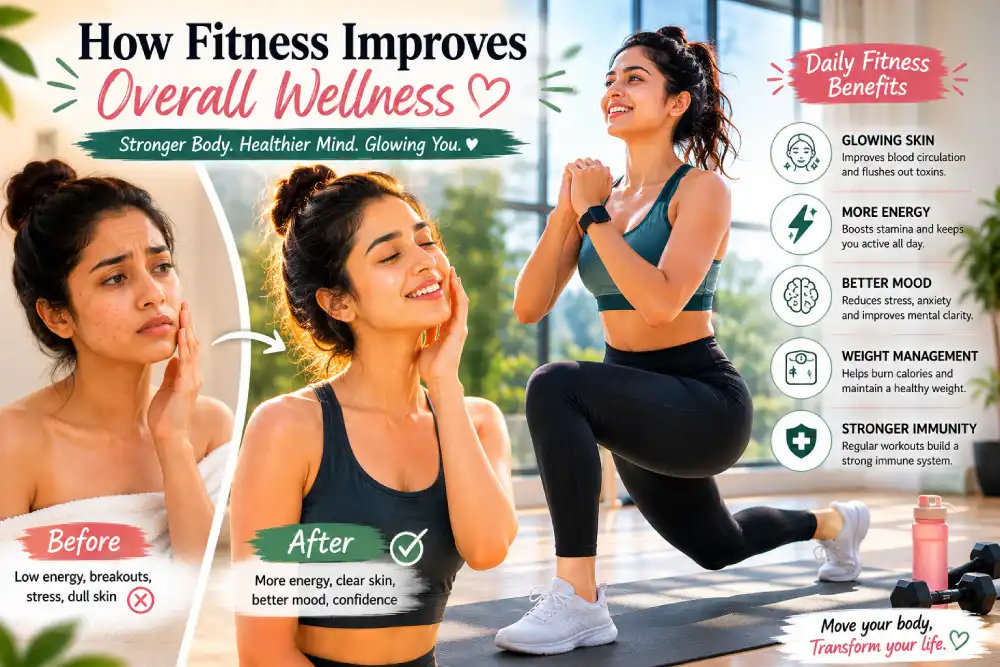
A fitness routine every day not only transforms your body. It transforms the way you operate in every aspect of your life.
Energy levels. Being active per se results in your mitochondria working more efficiently: you are better at making and maintaining energy all day long. The paradox is that exercise makes you less tired rather than more.
Mental clarity. Moving the body releases endorphins and dopamine, which elevate mood, diminish anxiety, and fine-tune concentration. A short, 10-minute walk in the middle of the day can change your mental state altogether.
Sleep quality. Exercisers tend to fall asleep faster and have more deep sleep cycles. Better sleep is better for your skin, your mood and everything.
Hormonal balance. Routine exercise keeps cortisol in check and relieves stress; diminishes insulin insensitivity; promotes collagen production, as well as oxygen flow to skin cells. Maintaining blood sugar levels is critical for the hormonal health of women.
Steer clear of these: they are the main reasons that people quit in their first thirty days.
Starting the intensity too high, too early Going from zero-to-daily HIIT in week one is a recipe for burnout and injury. Begin with something manageable, scalable and consistent (even 20 min of activity) to establish the fitness habit without falling over exhausted. And, remember, the first 30 days is all about showing up, not performing top-notch.
Skipping warm up or cool down. Skip warm up for any reason may be more dangerous after 30 mins. pain=No progress. Soreness=No success. 5-min of light activity before and after your workout protect your joints and make body recover faster.
Handling missed days as failures. Only one day missed is not a fitness failure, quitting in anger and frustration is. The rule is easy; don‘t miss two days in a row. One day missed, rest. Two days missed, pattern.
Just doing cardio. Equal parts strength and cardio will make you strong, cardiovascular fit, flexible and mobile. While walking and running are fantastic, they‘re not all you need or you‘ll miss out on plenty of benefits.
Building a Long-Term Fitness Habit
This is where 99% of the fitness stuff never even gets past.
Consistency is what brings about genuine change. Working with progressive overload, continually raising the intensity of your workout as your body adapts, pushes your muscles to grow.
Here‘s how to make your daily fitness routine stick long-term:
Anchor it to an already existing habit. Exercise immediately after you‘ll have your morning tea or just after leaving work. Linking new habits with existing ones wildly increases your chance of following through.
Track your progress visibly. a simple as a wall calendar on which you can cross off each day that you workout will do the trick. It is very motivating to see a trail of crossed off days you won‘t want to break it!
Make it enjoyable, not punishing. If you can‘t stand running, don‘t run. Walk, dance, do yoga, go swimming, get involved in a sport or a group activity. The physical activity you love doing is so much easier to continue than the activity you can‘t stand doing.
Adjust without quitting. Travelling? 10 pushups, 1 stretch. Feeling under the weather? Take a day off. Busy week? Cut the session short. Motivation comes after movement, not before. Come to the session you are able to participate in that day.
More: Health and Wellness — The Full Pillar Guide
Conclusion
A daily exercise plan is not about changing your body in 30 days. It is about creating a system that works for your body, your mind and your energy for a lifetime. Commit to 20 minutes. Choose a movement that you don‘t loathe. Attend more often than you miss. That‘s all you need to get started.
Your no limits fitness regimen is the foundation everything else is based upon your mood, your skin, your sleep, your focus. Begin small, keep at it, and let the results do the talking.