Clean Beauty Lifestyle: Safer Choices for Skin (2026)
Published: June 15, 2026 Last Updated: June 16, 2026 Clean beauty refers to skincare and personal care products formulated
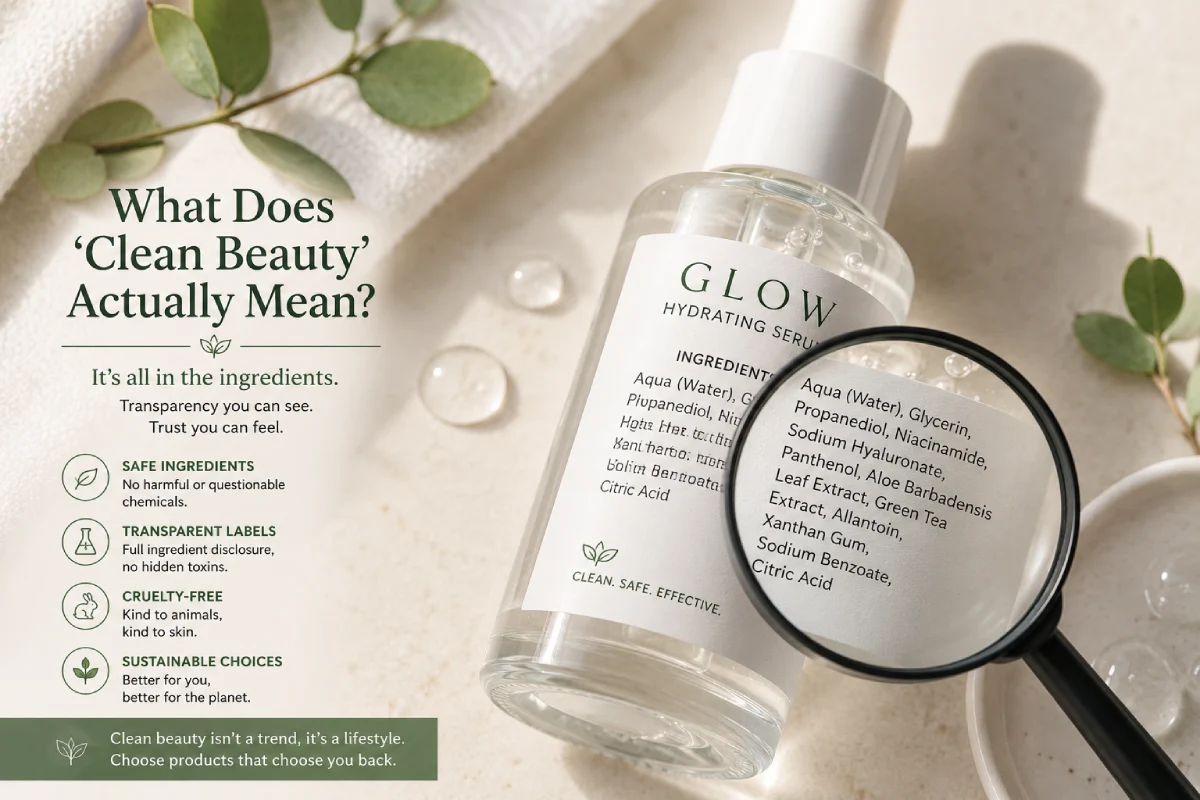
Clean beauty refers to skincare and personal care products formulated without ingredients commonly linked to skin irritation or health concerns, such as parabens, sulfates, and synthetic fragrances. It emphasizes ingredient transparency rather than strictly requiring “natural” or “organic” sourcing, allowing safe synthetic ingredients when well-tolerated.
A clean beauty lifestyle isn‘t just about buying the lastest skincare bandwagons; it‘s a more conscious approach to to be gentler on your skin, body, and planet. If you ever pondered what the hell is in that next bottle, join the club. More and more consumers are opting for the natural alternatives over those lengthy lists of chemicals in India and for a reason.
What Does “Clean Beauty” Actually Mean?
Clean beauty is not a term with legally defined standards, which is why it can be quite confusing. In general, clean beauty means the use of products free from ingredients deemed potentially irritating, disruptive of hormones or harmful to the body long-term think parabens, sulfates, synthetic fragrances, and preservatives.
It isn‘t always “natural” or organic. A clean product may contain ingredients created in a lab, so long as they are deemed safe and well tolerated. It‘s about understanding what is in the product.
Why People Are Shifting Toward Clean Beauty
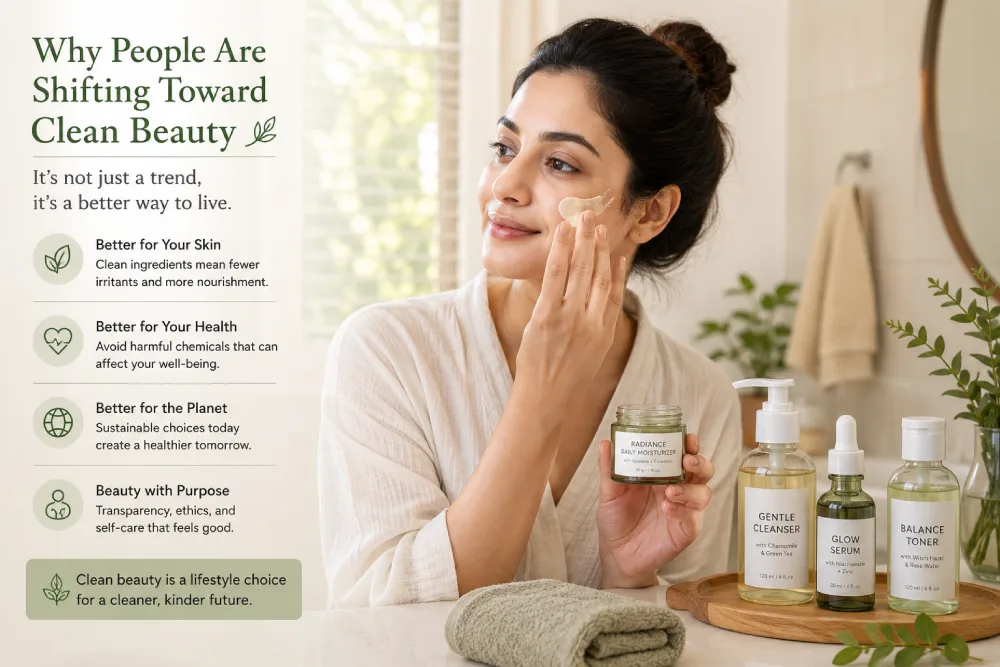
This trend isn‘t just a passing one it‘s also a sign of how much the public is becoming more conscious of their skin and body.
Common reasons people switch include:
- Sensitive or reactive skin which becomes irritated with powerful chemicals
- Worried about chemical and unnatural long term effect of synthetic additives
- An interest in seeking goods which reflect environmentally friendly values
- Desire for more easy individual routines and having less and better products
In the more humid climates of India, a lot of people also find that lighter, more cleaner formulations breathe better on the skin and cause fewer breakouts than a Comparasol34. .com2.WorkinginIndia.html
Ingredients Worth Watching Out For
You won‘t have to learn a whole textbook on chemistry. Just a few common offenders.
Ingredients many clean beauty followers try to avoid:
- Parabens – preservatives implicated in hormone worries
- Sulfates (SLS/SLES) – aggressive foaming agents that can strip the natural oils
- Synthetic perfume (“parfum”) – a popular cause of skin sensitivity1
- Phthalates – Smuggled in the perfumed mixtures
- Preservatives that die to release formaldehyde – used in some nail and hair products
A very easy tip is just simply check the bottle before you buy it and flip it around. If the five ingredients on the front are some ingredient names that you wouldn‘t know because they are just chemicals which you haven‘t got a clue on what they are, then it is time to research.
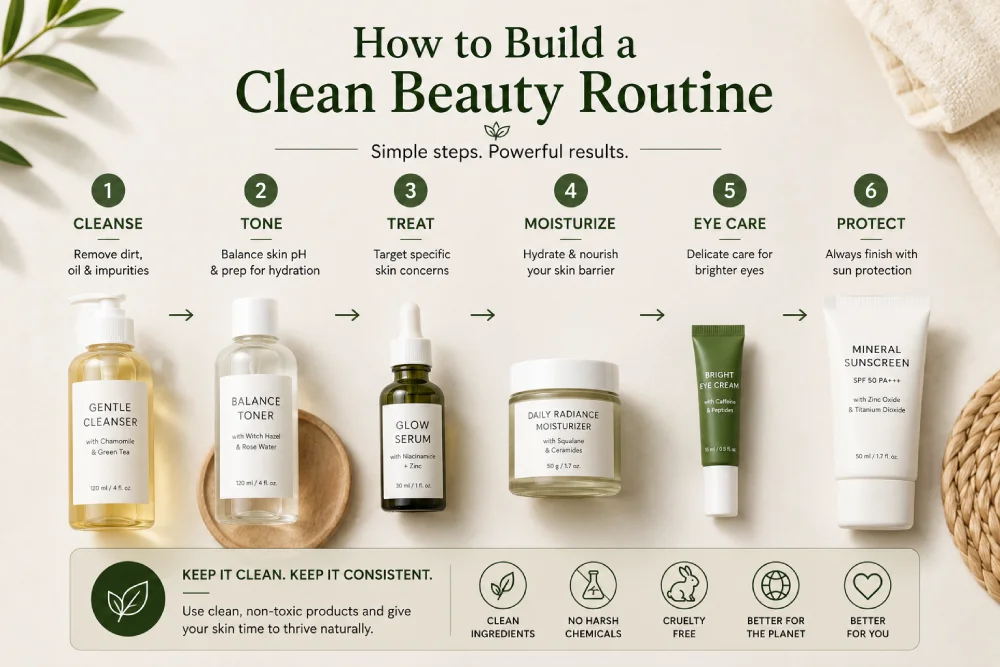
How to Build a Clean Beauty Routine (Without Starting Over)
You are not required to ditch the entire shelf at once; a slow, steady change will be easier on your skin and your wallet.
Step 1. Begin with the leave-on products Serum, moisturizer, sunscreen. These are the products your skin absorbs/retains for the longest time. Replace those first.
Step 2. Use up whatever you have. Wash-off products, such as shampoo and face washes, will have less time on your skin. Use up any still in use before replacing.
Step 3 Simplify your routine. Clean beauty doesn‘t require a 10-Step regimen, but a handful of high-quality products used well.
Step 4: Patch test new products. “Clean” products can and do cause reactions for certain skin types and should always be patch tested.
Common Mistakes to Avoid
Many people jump into clean beauty and make avoidable errors:
- If we take “natural” to automatically mean safe (poison ivy is natural too).
- It‘s so easy to chuck it all away at once and it gets so costly so quickly
- Obtaining a confirmation of no masking fragrance on fragrance free claims.
- Among those not checking the sourcing and testing of a brand‘s ingredients
And a real life example of this would be: A person with oily, acne-prone skin using a ‘clean’ but overly rich moisturizer based in coconut oil might actually suffer more pimples than with a heavier product. Clean is not always light and give into some skin types.
Choosing Clean Beauty Brands in India
When evaluating brands, look beyond marketing buzzwords. Check for:
- Clear ingredients lists (ie- not “natural extracts”)
- Transparency about where sourcing and testing takes place.
- Appropriateness to Indian skin types and climate
- Realistic claims (not ‘miracle cure’ language)
Read More: Natural Beauty and Wellness Tips for a broader look at building a holistic self-care routine, and explore our Main Beauty & Wellness Guide for the complete roadmap.
Final Thoughts
Living clean is a personal experience. It‘s not about following rules and receiving no explanation as to why you are doing certain things. It‘s about feeling empowered to make smart decisions and being educated enough to know you can read the label and pick out what your skin actually responds to because you know it.
FAQs
Q1: is clean beauty the same as natural beauty?
Not quite. Natural beauty emphasizes ingredients derived from plants, whereas clean beauty aims to avoid certain ingredients that are deemed dangerous, irrespective of their origin.
Q2: Do clean beauty items cost more?
Not necessarily. It depends on the line, and while a few high end clean brands are pricier, more inexpensive options are popping up with similarly affordable prices to non-clean alternatives.
Q3. If I have sensitive skin, will I then still be able to switch to clean beauty?
Yes, typically clean beauty is indeed more gentle but don‘t forget to do a patch test first as ‘clean’ isn‘t always suitable for all skin types.
Q4: How can I tell if a product claiming “clean” is truly clean?
Be aware of full disclosure of ingredients, third-party certification if included, and stay away from brands that merely states “pure” or “natural” features.
Q5: Do clean beauty products work just as well as traditional beauty?
Many do, especially in the area of moisture, cleansing and sun protection. But a use like this is largely a matter of formulation quality and not the specific “clean” label.
Q6. Where is the best, most manageable place to begin for a clean beauty lifestyle?
Begin with your daily moisturizer or sunscreen. They are kept on your face the longest and have the most individual impact.