Therapy vs Self Help: Which Actually Works in 2026?
Published: September 3, 2026 Last Updated: September 3, 2026 Pitting therapy vs self help as a binary choice is
Last Updated: September 3, 2026
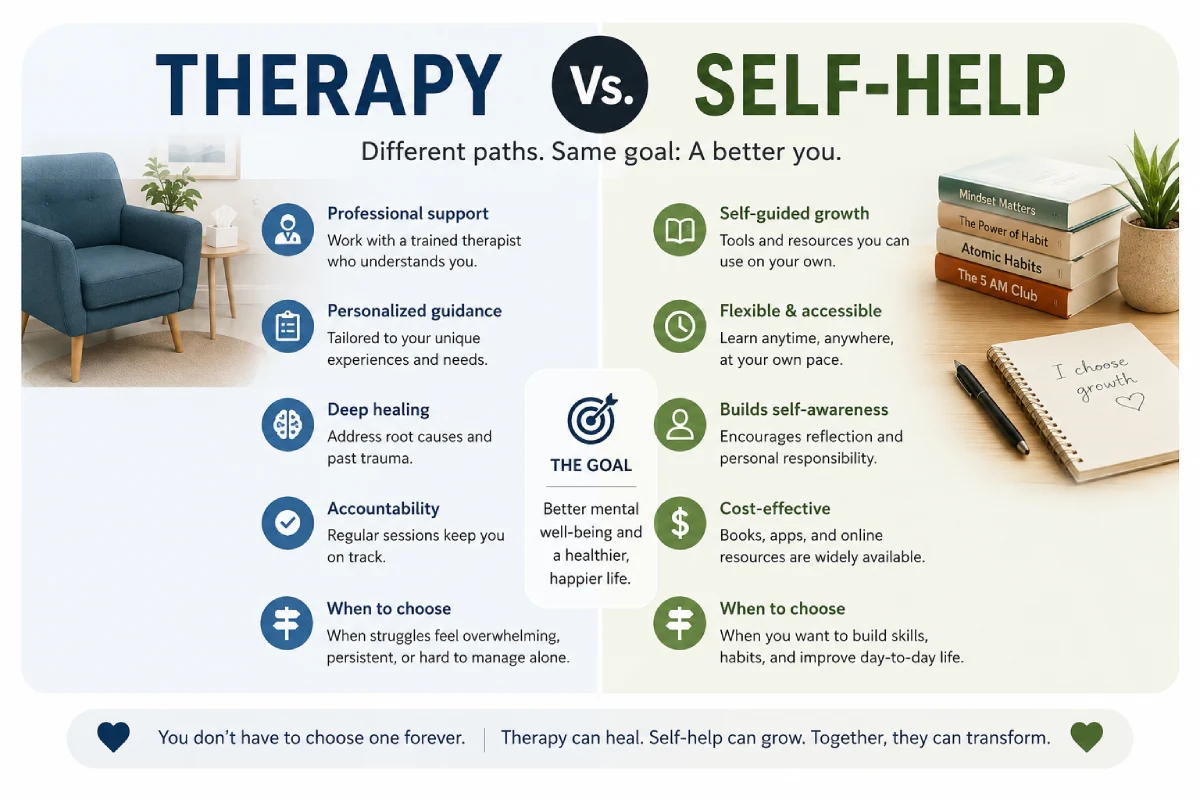
Pitting therapy vs self help as a binary choice is a bit like asking if a bandage or a doctor is “better,” – there really isn‘t an either/or here. Self help is highly useful for the subtle but persistent nuisances of everyday life, for maintaining an edge and for managing brief or chronic stress. Therapy is for issues that aren‘t fully addressable by self help alone: for deeper, more entrenched patterns or unresolved history or symptoms.
What Self-Help Actually Does Well
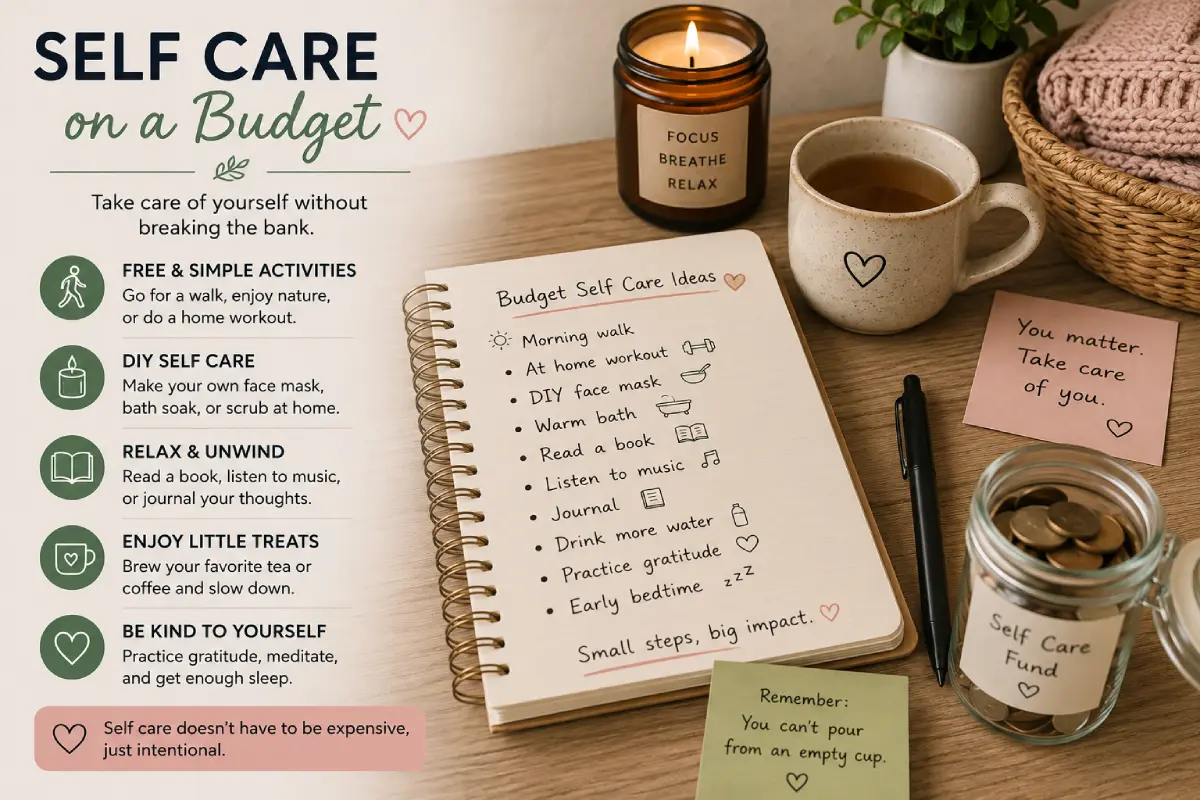
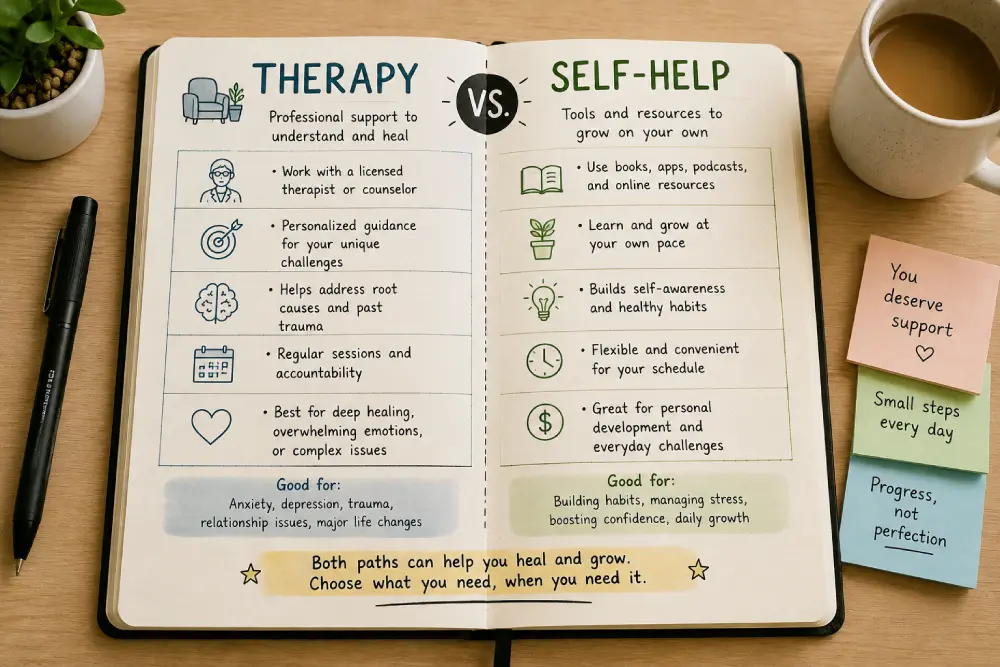
Self-help — journaling, breathing techniques, mindfulness, structured routines — works best for:
- Everyday stress and mild anxiety that doesn’t significantly disrupt daily life
- Building sustainable habits, like better sleep, movement, or emotional check-ins
- Maintaining progress after therapy has already addressed the deeper issue
- Prevention — catching stress before it becomes chronic
Our journaling for mental health guide and mindfulness for beginners guide are both strong starting points if this is where you’re at.
A Real CBT Self-Help Exercise You Can Try
Cognitive Behavioral Therapy (CBT) is the most “self-help friendly” therapy style, because much of it is built around simple, repeatable exercises. Try this thought record the next time an anxious or negative thought shows up:
- Write the thought. “I’m going to mess up this presentation.”
- Rate how much you believe it, 0–100%.
- List the evidence for and against it. Be specific — what actually happened last time?
- Write a more balanced thought. “I’m nervous, but I’ve prepared and handled presentations before.”
- Re-rate your belief in the original thought. It usually drops.
This single exercise is the backbone of CBT self-help, and it works well alongside grounding and breathing techniques from our anxiety management guide.
Where Self-Help Hits Its Limits
Self-help struggles when:
- The same painful pattern keeps repeating across relationships or jobs, and you can’t see why
- Anxiety or low mood is constant, not situational
- Trauma or a specific past event keeps resurfacing
- You’ve tried consistent self-help tools for weeks with no real shift
This isn’t a failure of willpower — it’s simply outside what self-directed tools are designed to untangle alone.
Types of Therapy, Explained Simply
- CBT (Cognitive Behavioral Therapy): Focuses on the link between thoughts, feelings, and behavior. Practical and often short-term.
- DBT (Dialectical Behavior Therapy): Builds skills for managing intense emotions, originally designed for very strong emotional reactivity.
- Psychodynamic therapy: Explores how past experiences, especially early relationships, shape current patterns.
- Talk therapy / counseling: A broader, supportive space to process what’s going on, without a fixed structured method.
- Couples or family therapy: Focused on relationship dynamics rather than one individual alone.
You don’t need to know exactly which type you need before starting — a good therapist will often suggest the right fit after an initial session or two.
When to See a Therapist
Consider therapy, rather than relying on self-help alone, if:
- Anxiety, sadness, or stress shows up most days for more than two weeks
- Sleep, appetite, or energy has noticeably changed and isn’t improving
- You’ve lost interest in things you used to enjoy
- Relationships or work performance keep declining
- You’ve had thoughts of self-harm — this warrants immediate professional support, not self-help alone
If you’re in crisis or having thoughts of self-harm, please contact a crisis helpline or emergency services in your country right away rather than waiting.
Mental Health Apps: Where They Fit
Mental health apps — mood trackers, guided CBT exercises, meditation timers — sit closer to self-help than therapy. They’re useful for:
- Building consistency with journaling, breathing, or mindfulness
- Tracking mood patterns over time to bring into a therapy session
- Learning basic CBT or grounding techniques between sessions
They’re a genuinely useful complement to therapy, not a substitute for it when deeper support is needed.
Myth vs. Fact
| Myth | Fact |
|---|---|
| Self-help means you’re not “sick enough” for therapy | Self-help is simply a different tool, suited to different problems, not a lesser one |
| Therapy is only for major crises | Many people go to therapy for everyday clarity, not just crisis moments |
| Mental health apps can fully replace therapy | Apps support consistency and skill-building, but can’t address deeper or complex patterns |
Online Therapy Options in 2026
Access to therapy has changed significantly, in both the US and India:
- In the US: Teletherapy platforms and employer-provided EAPs (Employee Assistance Programs) have made therapy more affordable and easier to start, often with same-week availability.
- In India: Teletherapy apps and dedicated helplines are growing quickly, and more workplaces now offer EAP-style support. It’s still worth verifying a therapist’s credentials directly, since regulation is less standardized than in the US.
Whichever option you choose, a short introductory call before committing is a reasonable and normal step — it’s fine to “interview” a therapist before starting.

How to Combine Both
So for most folks the true answer to therapy vs self help is really both…at different moments. Self help practices – journaling, breathing, mindfulness, etc keep you held at a stable place on a day to day basis. Therapy is where you go to work on the deeper, more tangled patterns particularly the ones you haven‘t been able to break with self help modalities. People often begin with self help, see where it doesn‘t go, then bring that knowledge into therapy as a jumping off point.
For the full picture of how these pieces — sleep, movement, mindfulness, and emotional care — work together, see our complete mental wellness guide.
FAQs
Is therapy “better” than self-help? Neither is “better” than the other. Self-help approaches handle common, day-to-day issues and the formation of habits effectively, and therapy is designed for chronic, deeply ingrained, or complicated patterns that self-directed methods may not fully tackle.
Can CBT self-help work without a therapist? It can work well with some peoples daily negative thoughts. One very basic thought-record can change the level of belief in an anxious thought significantly. With a therapist it can be taken further and be more effective.
When should I visit a therapist rather than relying on self help? If you experience low mood, anxiety or stress on most days for more than two weeks; if these interfere with your sleep or relationships, or are accompanied by thoughts of self-harm, it is the right time to see someone.
What are the different types of therapy? The commonly used classification is the following types of therapy: CBT (focused on thoughts and behaviors), DBT (focused on building emotional skills), psychodynamic therapy (focused on past patterns), talk therapy in general, couples and family therapy.
Can online therapy be as effective as face–to-face therapy? For many people it can be and technology-based therapy has opened up so many doors by making therapy cheaper and more accessible, especially in the US and in India (where it is expanding rapidly, still check credentials).
Can mental health apps substitute for therapy? Certainly not, but the additional means of practicing journaling, breathing, mood tracking, etc. serve as a helpful augmentation aid to therapy without replacing it.
Final Conclusion
The point is not therapy vs self help it‘s whether you need a hammer or screwdriver, depending on what you have to loosen. Self-help practices will manage common life irritation and therapy is there to gets at those tricky recurring issues which elude them: for most, the best response is to blunder through with both, when needed.