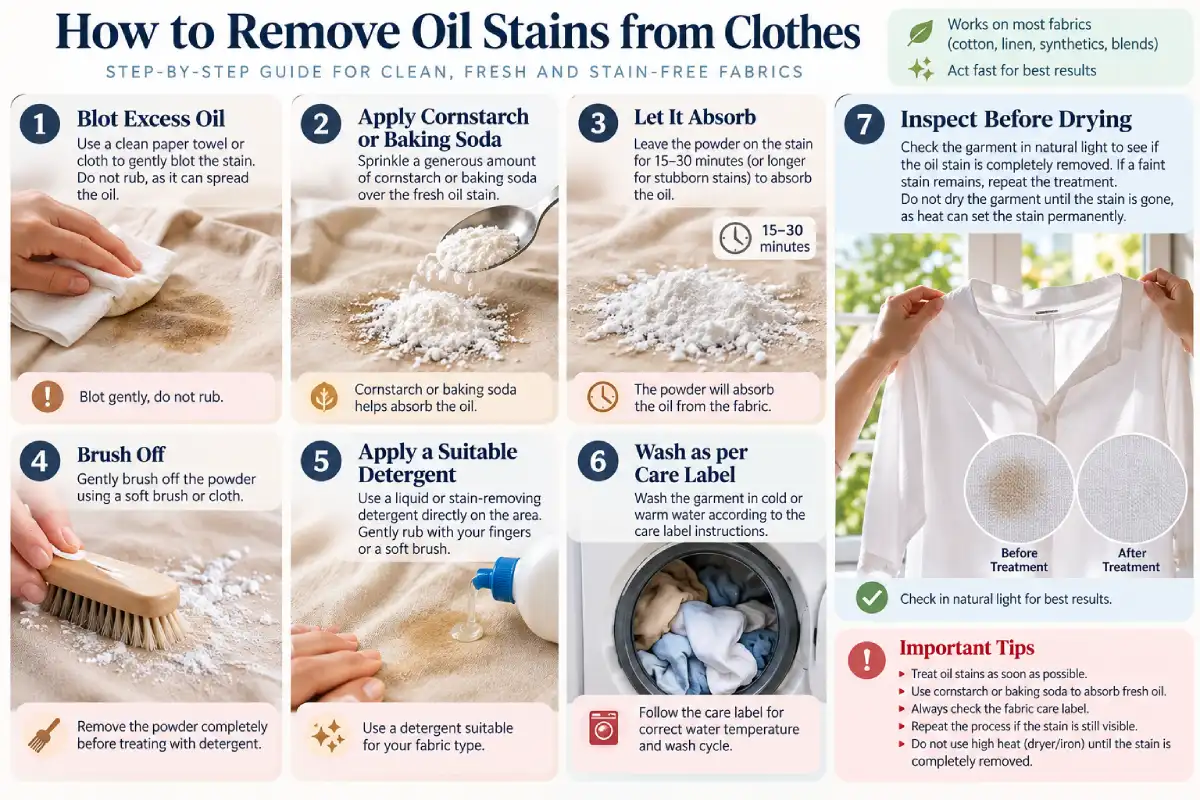
Best Face Masks for Oily Acne-Prone Skin: Complete Guide for India (2026)
Published: July 2, 2026 Last Updated: August 20, 2026 Oily skin AND acne are practically a combo deal in
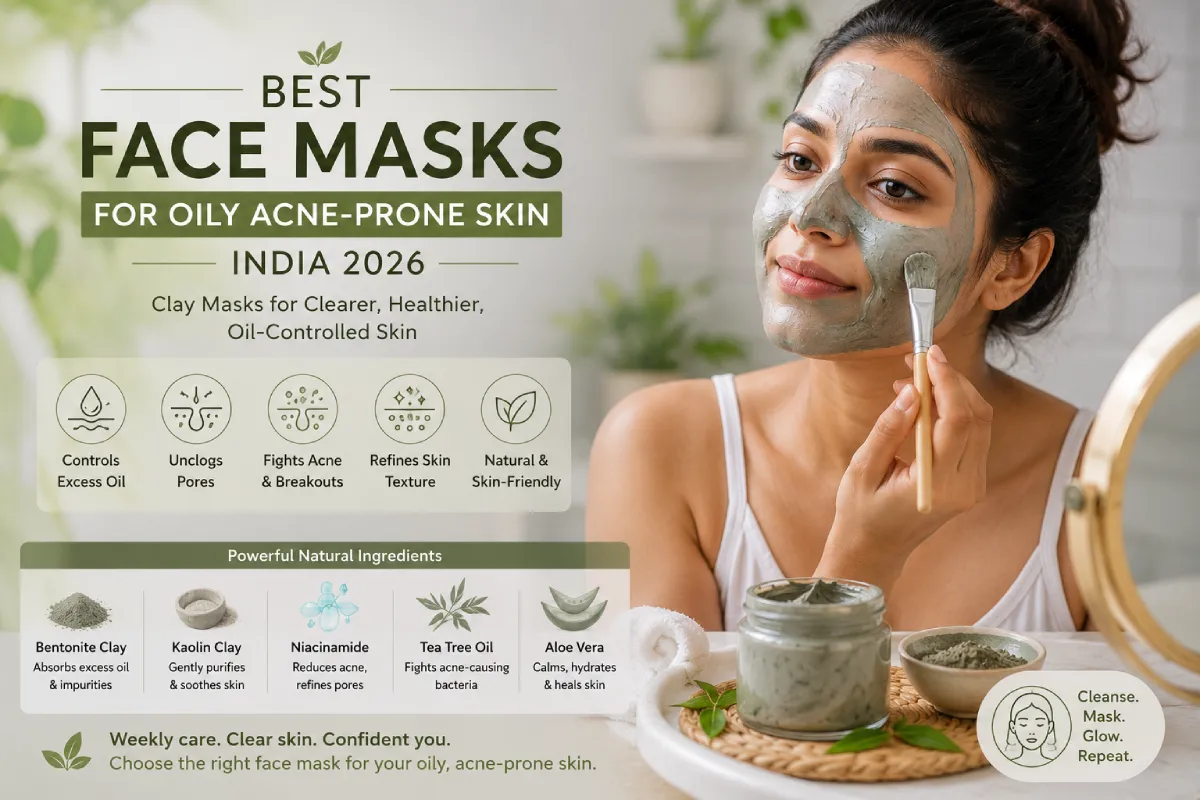
Oily skin AND acne are practically a combo deal in India and there is a very logical biological explanation for this. If your skin seems shiny all the time, your faces feels clogged no matter how much you wash, and your acnes keep coming back before the previous ones have even disappeared, you‘ve got a condition that cannot be dealt with by a standard ‘acne mask’.
The right face masks for oily acne-prone skin actually don‘t just absorb shine at the surface. They become active within the pore extract the plug of dead cells and oil that causes blackheads, inhibit bacteria that convert the plug into an angry pimple, and regulate oil production so the cycle slows down gradually.
A make-up and skincare guide designed just for Indian oily skin which normal ingredients work, an easy to follow weekly routine and mistakes that are probably trapping you in the break out cycle.
Why Oily Skin Is More Prone to Acne
Most of us realize that oily skin can lead to acne, but do not know the reasons behind this relationship. Knowing the cause makes all the difference in choosing skin care products.
This is the simple biology: Sebaceous glands are present beneath each and every pore and secrete a substance called sebum a natural oil that keeps skin lubricated and protected. When these glands produce too much sebum, the skin becomes oily. The excess sebum fuses together with the dead skin cells sitting inside the pore to create a plug. This plug is a whitehead or blackhead. The bacteria, Cutibacterium acnes, may then invade and begin feeding on the excess sebum, causing inflammation, and hence a pimple.
Why this is amplified for Indian skin:
Climate in India itself causes the production of the skin‘s natural oil, sebum, to be higher. Conditions of high humidity (common in Mumbai, Chennai, Kochi and Kolkata) cause a lack of sweat evaporation, maintaining the skin‘s warmth while simultaneously stimulating the production of more oil by the sebaceous glands. In the large metro cities of Delhi, Bengaluru and Pune, pollution introduces a presence of particles when in contact with sebum which blocks open pores3.
Diet are typically underestimated but play a bigger part than people think. For example, the high-glycaemic foods frequently present in many Indian diets white rice, snack foods made from refined flour and sugary drinks lead to insulin levels surging, which in turn, directly and significantly, up-regulates the endocrine-driven increase in sebum secretion. It is also proven that dairy consumption tends to be associated with the hormonal acne along the jawline and chin, which is seen very commonly in Indian women in their 20s and 30s.
Other India-specific triggers:
- Repeated switches from cool, air-conditioned rooms to humid outdoors . Qneutrols sebum production continually and abruptly.
- Many towns and Tier 2 cities like Delhi have hard water(comes with high mineral content):this settles and causes p H ,losses on the skin.
- Reckless use of harsh foaming sulphate cleansers that strip all oil causes a rebound oil rush, and exacerbates the oiliness in a matter of hours.
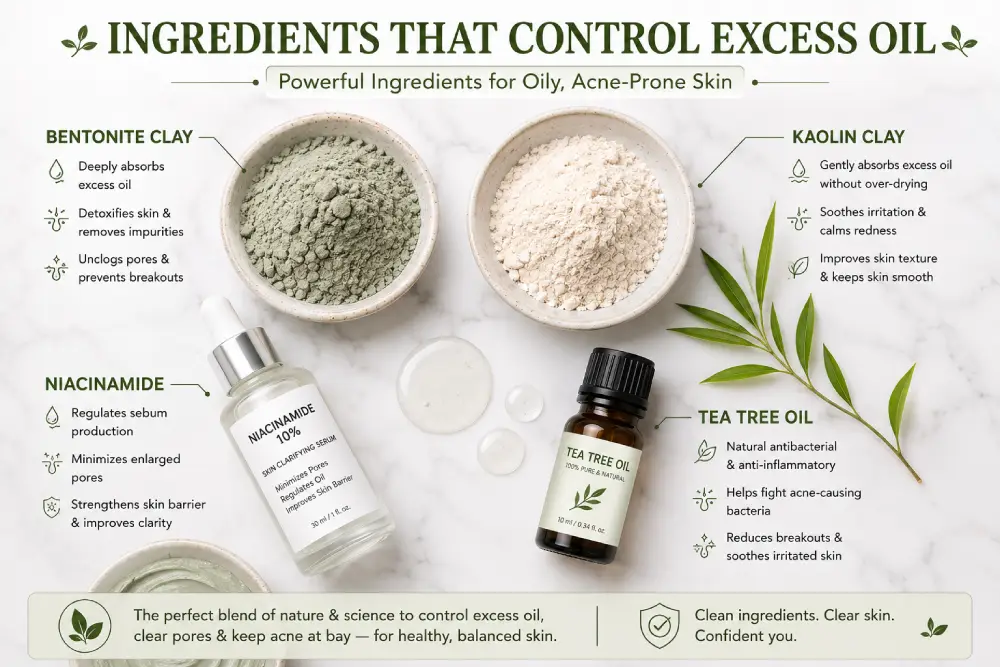
Ingredients That Control Excess Oil
Any face mask for oily and acne-prone skin is only as good as it‘s active ingredients. This is the list of those with real evidence and what they actually do at the pore level.
Bentonite Clay
The strongest oil absorbing clay. Bentonite is negatively charged, so it pulls positively charged toxins, impurities and excess sebum from the depths of the pore. Diminishes pore size and blackhead number on a daily use basis. Ideal for extremely oily skin and congested pores.
Note:Feels tight and drying if used too often. One can begin to feel a little drying if used on a daily basis. Always take it off just as it begins to be slightly damp : never wait until it has cracked.
Kaolin Clay
A smoother, milder clay that吸水 oil and吸收 impurities without removing moisture from the skin as aggressively as the bentonite. Can be used on oily-combination or reactive-oily skin. Suitable for use in the T-zone just about daily over the peak months of Indian summer.
Salicylic Acid (BHA): 1–2%
The ingredient that is most specifically targeted for congested skin with excess oil. Since it is oil-soluble BHA can travel through the oil in the pore to reach into the pore not just stimulate the surface. DISSOLVES the dead cell/ sebum plug skin that causes blackheads/whiteheads.41.
Best used: once weekly as a mask (oily, acne-prone skin). Not necessarily every mask session in fact, too often results in over-exfoliation.
Niacinamide (Vitamin B3) 5–10%
Works upstream reduces the amount of sebum produced over time rather than just absorbing excess sebum. Also tightens the skin, making pores less visible, lightens post-inflammatory hyperpigmentation (a huge problem for Indian skin) and soothes the redness that makes a breakout so much more unsightly. Would make a great addition to a clay mask.
Tea Tree Oil at 2–5%
Clinically proven to combat C. acnes as effectively as 5% benzoyl peroxide without the razor-sharp dryness. In a mask formulation (was never used straight), it is excellent at treating Mild-Moderate inflammatory breakouts. Tolerates Indian skin well when formulated correctly.
Activated Charcoal
Attracts surface impurities, pollution particles and sebum sitting on top of openings of pores. It is especially suitable for Indian oily skin stuck in high-pollution city atmospheres. Should be used as a weekly indulgence on top of a clay mask and not instead of one.
Zinc
Controls sebum output, anti-inflammatory and mildly anti-bacterial. Present in many Indian OTC masks and spot treatments. Works well specifically for hormonal-type breakouts clustered across the lower face (jowl line, chin and cheeks) often experienced by Indian women with PCOS or regular hormonal cycles.
💡 For a full side-by-side breakdown of clay vs charcoal vs salicylic acid masks across all acne-prone skin types, read our main guide to the best face masks for acne.
Best Weekly Masking Routine for Oily Skin
Structure delivers. Casual, indiscriminate masking when your skin “feels congested” doesn‘t. This is a weekly masking schedule designed specifically for oily to combination skin in the Indian climate, with seasonal customization for variation.
Standard Routine (October–March: Cooler, Drier Months)
Lessons 1 Monday (Damp Clean): Combination of Bentonite clay or salicylic face mask on full face or concentrate on only T-zone for 12-15 minutes. When finish, rinse it while still a little moist.
Session 2 Thursday (Regulate + Calm): Kaolin clay + niacinamide mask not so strong, midweek controlling of oil without stripping too much. 10-12min.
Total: 2 sessions a week would be best frequency for oily skin during the cooler months in India.
Adjusted Routine (April–September: Monsoon and Summer Months)
In India a particularly hot and humid treatment climate (eg Monsoon and summer heat) causes substanitally increased levels of sebum production. Most types of oily skin require an extra session during the following:
Monday- Bentonite or charcoal (deep pore clear) Wednesday- Salicylic acid mask (pore interior exfoliation) Saturday- Niacinamide based calming mask (regulate + fade PIH)
Critical rule: Do not put on a bentonite clay mask and a salicylic acid mask during the same treatment or on consecutive days. Both are aggressively stripping and together they will cause barrier damage that results in increased oiliness and breakouts.
Step-by-Step Application Guide
- Double cleanse is advised if skin requires it. An oil based cleansers to lift surface dirt, sunscreen, and surface sebum, followed by a gel or foaming based cleanser.
- Use on dry skin unless indicated on product label
- T-zone masking for combination skin Apply a bentonite or charcoal mask to the forehead, nose and chin only. Use a lighter hydrating or niacinamide moisturiser mask on the cheeks if they are prone to dryness.
- Set an alarm no more than 10 to 15 minutes. Wash off the moment the mask has been removed before it dries and begins to crack. Cracks in masks don‘t indicate that they are dry, but that they are actually drawing moisture out from beneath their surface.
- Rinse with warm water. Hot water increases production of sebaceous secretion; do not use it.
-
Apply niacinamide toner or serum immediately on still-damp skin for maximum absorption.
- Always conclude with a light non-comedogenic moisturiser. No ifs or buts-anything heavier is a strict no-go. (Myth or Fact below)
Face Masks That Help Unclog Pores
Oily, acne-prone skin: Clogged pores are the problem. These masks are designed to address that problem directly:
Clay + BHA Combination masks One of the strongest layers for deep pore clearing. The clay goes to work on the surface absorbing the sebums sitting in and around the pore; however the BHA salicylic acid penetrates inside and dissolves the plug. Together this is more than the sum of its parts. Use once a week it‘s powerful enough to over-strip when used more often.
Indian options to try: Plum Green Tea Pore Cleansing Face Mask (1% BHA + kaolin), The Body Shop Himalayan Charcoal Purifying Glow Mask (clay + charcoal), Dot & Key Volcano Rage Clay Mask.
Kaolin+Niacinamide Masks Ideal for. Most Indian oilcombination skind is a good alternative to dry and strip as the bentonite masks. More useful for daily T-zone targeted masks as there is no stripping effect immediately. On the Indian front, MCaffeine Naked Detox Green Tea Mud Mask is popular as a readily available mask with kaolin and caffeine.
AHA Masks (Glycolic or Lactic Acid) Alpha hydroxy acids exfoliate the surface of the skin removing the buildup of dead cells that lay on the outer surface of the skin and cause the barrier to block pores. Less penetrative than salicylic acid (they don‘t go into the pore), they are great for general skin texture and luminosity and to prevent blackhead buildup. Use at night only- AHAs increase photosensitivity. Must be followed by SPF the next day without fail.
What not actually ‘unclog’ pores: Peel-off charcoal masks that boast about being able to “remove” blackheads merely do so to the tip of the blackhead everything below this point still remains. The blackhead refills itself after a couple of days. Continuous use causes micro-tears in the surface layers of the skin and broken capillaries, both equally hazardous for Indian skin (which is predisposed to PIH). The reduction in black head size is cosmetic, not actually clearing the pore.
Skincare Tips for Oily Acne-Prone Skin
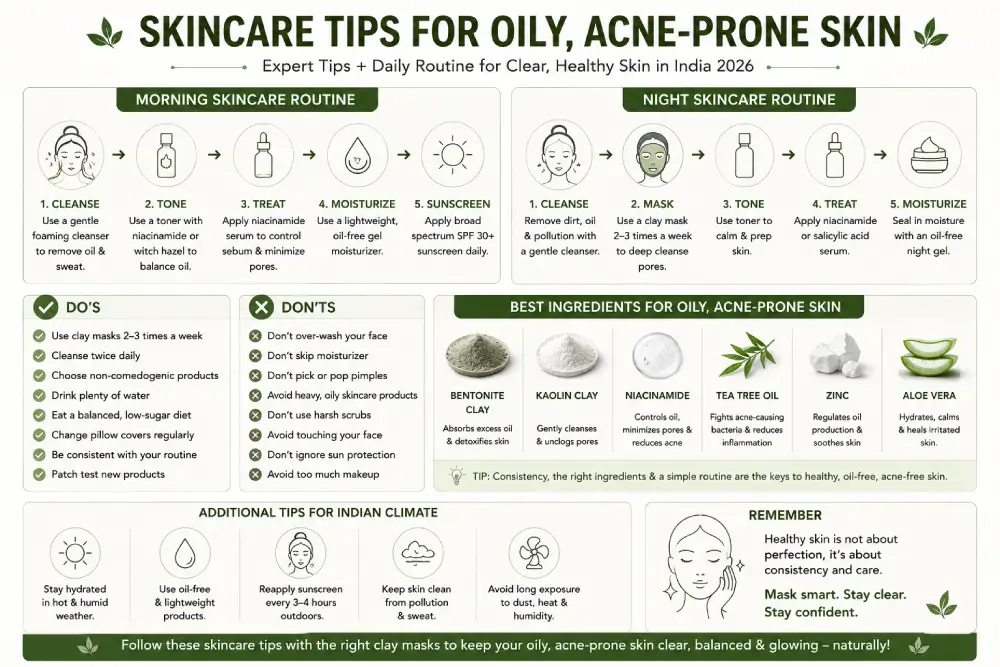
A routine of always masking is less effective than a routine that includes regular breaks from masking. The effects of being unmasked over the course of a typical day impact the progress of the intervention:
Apply a gel or a foam cleanser morning and evening – not a cream cleanser. Cream cleansers are too emollient for oily skins and a leave a residue that traps the sebum. Use a sulphate free foam that removes oil without causing the rebound oil response that a sulphate heavy foam can often trigger.
A must is to consistently moisturize even if you have oily skin. Dehydrated skin (a skin lacking water not oil) produces even more sebum to make up for the absent moisture. Use a light, water based, non-comedogenic moistursing every morning and night to level sebum production. Not doing so, especially after a clay mask, causes oiliness to increase!
Daily niacinamide serum on dry skin between masks. A 10% niacinamide serum used daily on dry skin after cleansing controls the oil at the gland level and lightens post acne hyperpigmentation gradually between mask days. The perfect product to use daily with an oily masking regimen.
Apply SPF 40-50 PA+++ daily work no matter; the SPF protects the work your masking routine has done to improve pigmentation and prevents it from coming back faster than you can use the mask. The sun‘s impact on pigmentation is much increased in Indian skinned patients. Use a gel or a matte finished SPF, water resistant during the rainy seasons.
Change your pillowcases at least 2x a week. Your pillowcase absorbs sebum, bacteria, and dead skin cells from your hair and facial skin every night. With oily, breakouty skin in India‘s hot climate, especially in the summer this is a truly underrated habit.
Stop touching your face. Urban India is littered with pollution, particulate matter, and bacteria on our hands. By touching faces every pore is opened and the bacteria complete their journey into oily congested skin.
Conclusion
The best face masks for oily acne-prone skin are not necessarily the most expensive or on trend on Instagram. They are about finding the right ingredients for the right problem bentonite or kaolin for absorbing excess oil, salicylic acid for deep pore cleansing, niacinamide for balancing excess sebum and sticking with them long enough for your skin to react. Two to three regular treatments per week always followed up with a moisturiser lathered with daily niacinamide serum and SPF that‘s the kind of routine that will actually change images of oily breakout-prone Indian skin.