Allergic Skin Rash Treatment: Causes, Remedies and Prevention
Published: June 30, 2026 Last Updated: June 30, 2026 A sudden itchy, red patch on the skin is one
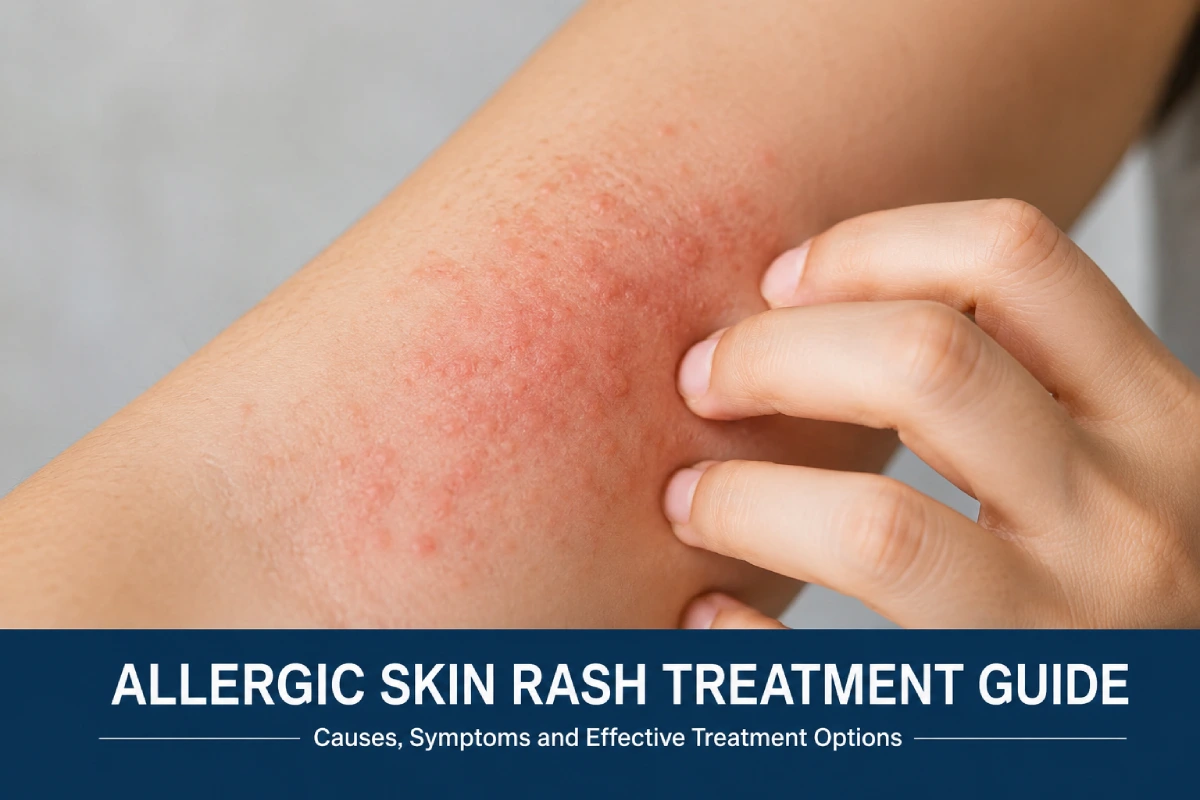
A sudden itchy, red patch on the skin is one of the most common reasons why people look for allergic skin rash treatment. While this can be confused for a heat rash or even fungal infection, an allergy-related rash it is just your immune system reacting to something it thinks is dangerous a food, fabric, medicine or even jewellery. However, it is quite easy to treat most allergy rashes quickly once you know what they are.
This leaflet will take you through what causes allergic rashes, how to identify the signs and symptoms, which treatments work, and how to find your own trigger so it doesn‘t keep happening.
What Causes an Allergic Skin Rash?
An allergic skin rash occurs when your body‘s immune system identifies a harmless substance as a threat and responds by releasing a hormone called histamine. This release causes the redness, swelling and itching experienced.
In India, a few triggers show up again and again:
- Foods allergens common ones include shell fish, peanuts, milk and spices, and can cause rashes within a few hours.
- Medications Penicillin (and antibiotics in general), NSAIDs and anticonvulsants are all common causes of drug eruptions
- Contact allergens for example, necklace nickel, chemicals used in hair dye, dyes used to dye synthetic fabric and certain detergent powders.
- Insect bites and stings especially bee, wasp and ant bites, which may cause local or systemic hypersensitivity reactions
- Cosmetics and fragrances– preservatives/synthetic notes in perfume or skin care products.
Rashes may be a few minutes or several hours before they start, when it comes to most food and drug triggers. Contact allergies are often an exception to this rule. It‘s the reason why identifying the cause usually necessitates a little detective work.
Common Symptoms of Allergic Skin Reactions
Allergic rashes don‘t all look the same, but a few patterns are typical:
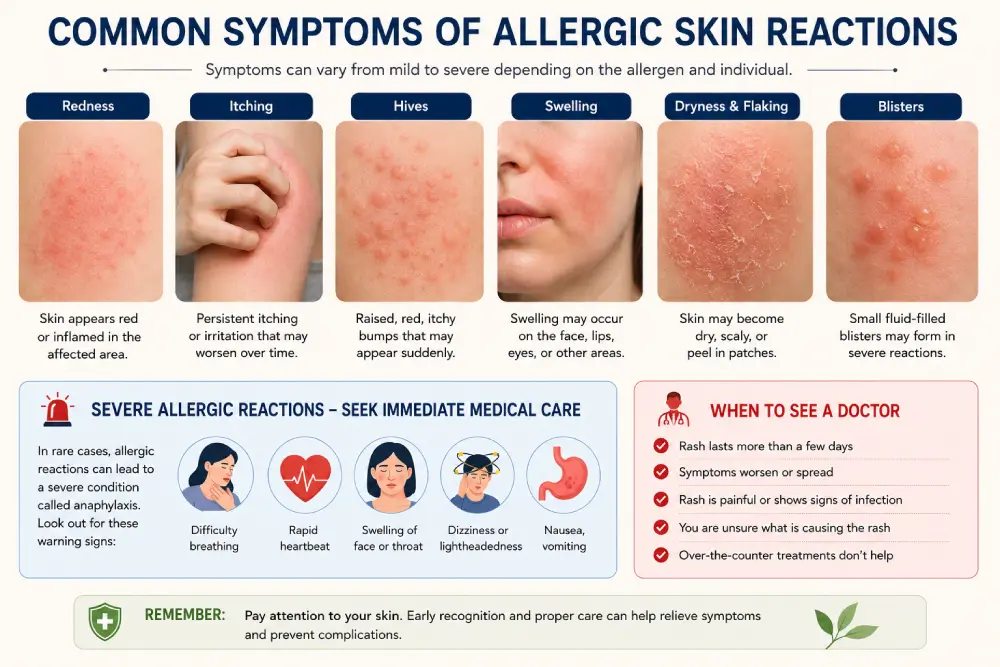
- Hives (urticaria) multiple discs-shaped, pale red elevations which may shift in shape and move to different sites within a few hours.
- Itching and burning usually the first and most noticeable symptom
- Swelling slight puffiness around the rash or more severe swelling around the eyes, lips or throat
- Localised redness particularly with contact allergies, which occurs upon exactly skin coming into contact with the trigger
Timing can be very helpful in distinguishing an allergic rash from other presentations. Metal allergy caused by jewellery, for example, will only occur where the skin was in contact with the metal. This contrasts with the widespread distribution of a hive response following ingestion of a food allergen, within a few hours.
If the swelling moves on to the face, lips or throat or the person feels that they have difficulty breathing, this is a medical emergency and should not be dealt with in the home setting.
Best Treatments for Allergic Skin Rashes
Treatment varies according to the severity of the reaction. Most benign allergic rashes respond to treatment with simple measures.
For mild to moderate rashes:
- The oral antihistamines cetirizine or fexofenadine are effective within hours to reduce the itching and swelling. They are available ‘over the counter’ in any Indian pharmacy.
- Calamine lotion or a cold compress will help soothe the itching and the inflamed skin without medication.
- Apply hydrocortisone 1% topical to localised non broken skin to relieve redness and swelling
- Cut down on hot water showers and tight synthetic clothing to avoid further aggravating the site as it heals.
For more severe or widespread rashes, your doctor might recommend using a stronger antihistamine or taking a course of steroids for the skin such as a topical steroid. Most allergic rashes clear up within a few hours to a couple of days after taking the antihistamine and stopping the cause.
An allergic rash will not be treated in the same way as an infection; so a True allergic rash will not get better if you use an anti-fungal or anti-bacterial cream and may cause the skin to become irritated.
How to Identify and Avoid Triggers
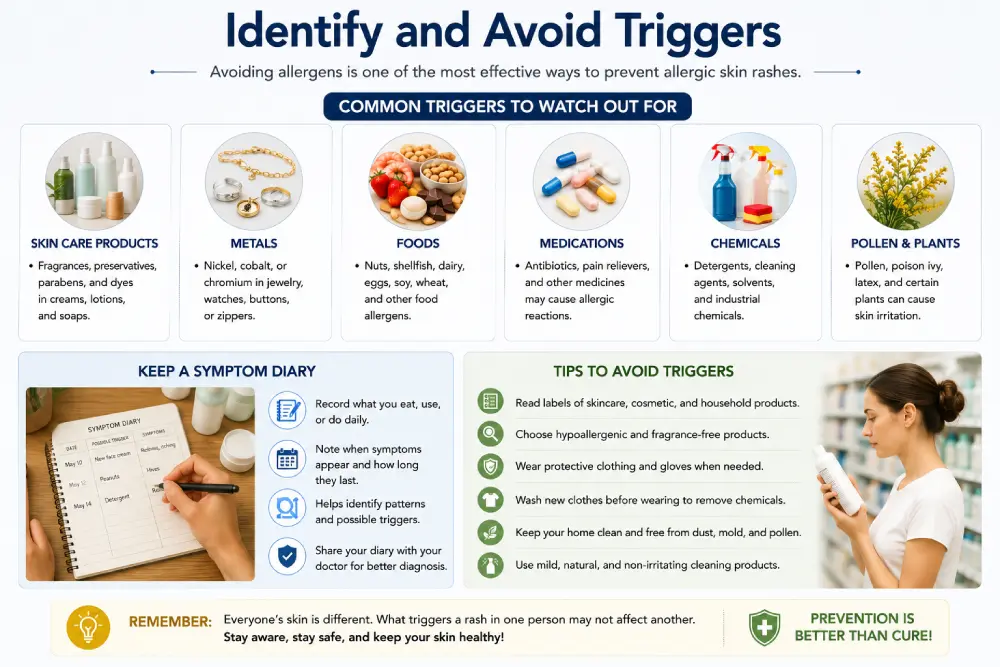
Pinpointing the precise cause of the allergic rash is often the most annoying job in managing a patient with allergic rashes, but it can be easier with a step-wise approach.
- Follow the history. Be very specific about when exactly the rash started and what you ate, wore or touched for the 24-72 hours prior to its appearance.
- Look for a pattern. Contact allergy is likely if the rash occurs in the same area each time you wear a particular ring or watch. Food is the likely cause if it is extensive and coincides with eating.
- Remove one item at a time. Take a suspected product or food for one week for a period of time, and observe that if the rash decreases.
- Keep a basic Rash Diary. Keep track of dates, foods, products used, and rashes over a period of weeks. Patterns may be more obvious after the fact and not at the time.
Lacking a cure, the most effective preventative measure is simply to avoid the identified trigger, by reading ingredient lists, using nickel free jewellery, or switching to fragrance free toiletries.
When Allergy Testing May Be Needed
When rashes are happening again and again, and you can‘t really figure out what might be causing it, you‘ll want to look into allergy testing. A dermatologist or allergist may be able to run:
- Allergic skin prick tests to common environmental as well as food allergens
-
Patch tests to contact allergens such as metals, perfumes and cosmetic ingredients.
- Blood tests (IgE testing) ( only if skin testing is not appropriate or if confirming results).
It is especially advisable to have allergy testing if you have rashes often or severely, if they interfere with your daily routine, or if you have ever had swelling around your face or problems breathing, which suggest a more serious immune response that must be identified.
Final Conclusion
Allergic skin rash treatment begins by establishing the cause. Mild cases are controlled easily with antihistamines, calamine and hydrocortisone but a record of possible trigger factors such as a diary can often prevent the rash from recur. Persistent, idiopathic rashes are best examined by allergy testing which is far more conclusive than ‘trial and error’.
For a complete breakdown of every rash type and treatment option, head back to our full guide on skin rash treatments.