Stress Management for Mental Wellness: Proven Ways to Reduce Stress in 2026
Published: June 10, 2026 Last Updated: June 16, 2026 Stress management for mental wellness involves recognizing your stress triggers,
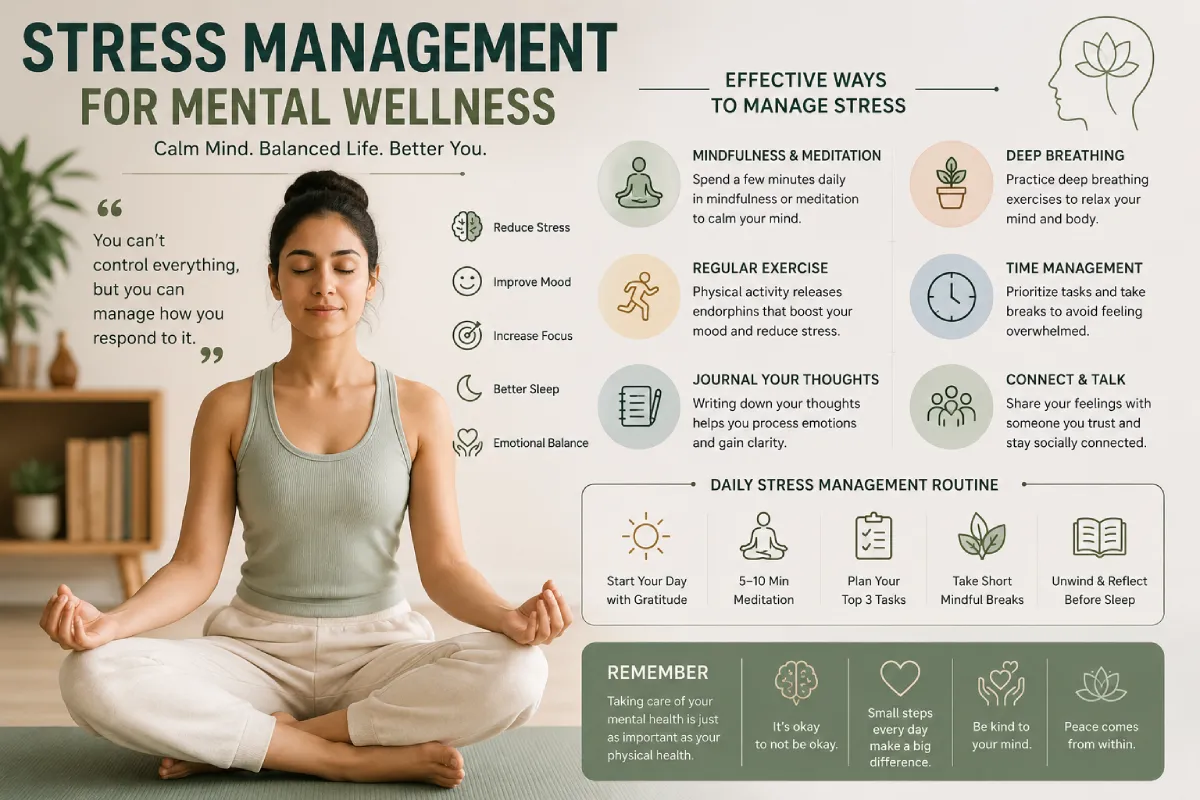
Stress management for mental wellness involves recognizing your stress triggers, using evidence-based techniques like breathwork, mindfulness, and regular movement, and setting healthy digital and social boundaries. Chronic unmanaged stress raises cortisol, contributing to anxiety, depression, and burnout. Daily practices such as box breathing, 5-minute meditation, and gratitude journaling build long-term resilience. When stress significantly disrupts sleep, relationships, or work, professional support from a therapist is recommended.
Stress is not going to tell you it‘s there. It will occur when you forgot to submit a paper, when you sit on the train or bus jammed up next to a thousand other people, or when you have a hundred things on your plate. Running unchecked, it will quietly chip away at your mental wellness when you sleep, your attitude, and at your auto-immune system. The upside? You can learn how to do stress management for mental wellness with just a few easy modifications to how you run your life.
Here‘s all you need to know.
What Causes Stress in Daily Life?
Stress is a totally natural phenomenon that occurs when your body is under pressure. Today, however, your sources of stress could be any number of things, wherever you are, whether it‘s a high-powered job in New York or expectations from family in Mumbai.
Common everyday stressors include:
- Too much work assigned especially when additional tasks keep piling up. Facing extremely near deadlines.
- Financial pressure and insecure jobs
- Relationship conflicts or loneliness
- Health issues (yours or a family member‘s)
- Too much information/information overload on social media
- Commuting and urban noise [especially in Indian metros]
In both the USA and India, as many studies show, work stress and financial worries come first. Noticing what upsets you is the first step to dealing with it.
How Stress Affects Mental Health
Surprisingly, short episodes of stress make you more attentive. Chronic stress? Well…
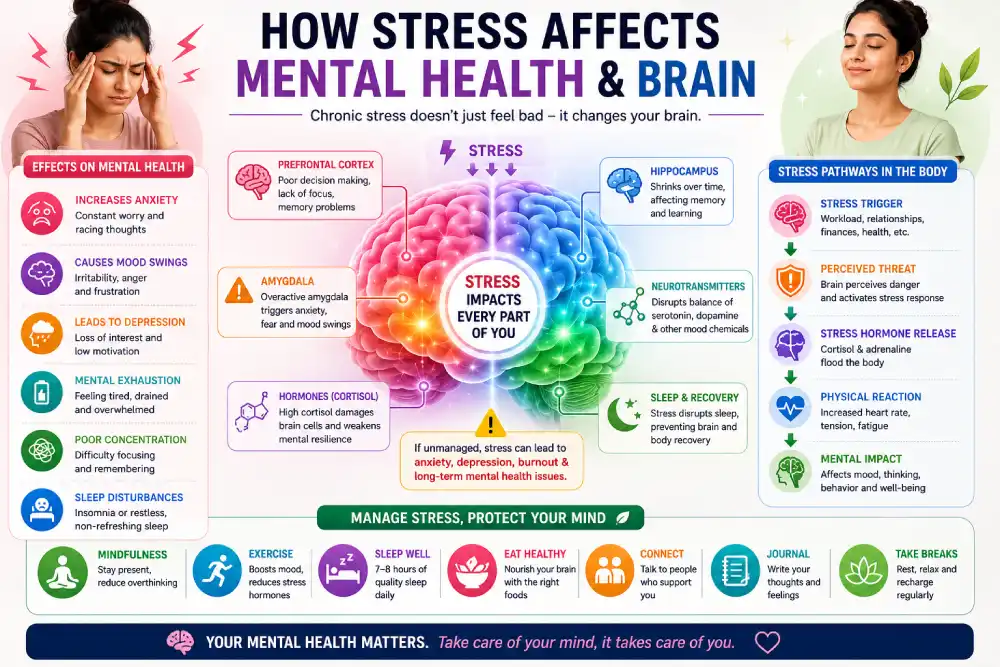
And when you‘re in this state for extended periods it means your body is overwhelmed by cortisol, the stress hormone. Persistently high cortisol levels are associated with:
- Anxiety and depression
- Memory problems and brain fog
- Sleep disorders and insomnia
- Emotional exhaustion and burnout
For most Indians, they say, the shame around mental health means that stress normally isn‘t dealt with until it reaches something severe. In the US, burnout culture allows for normalization of stress as a symbol of achievement. Neither of these are sustainable.
The mind-body connection does exist and your mental health truly does rely on how effectively you handle stress.
Best Stress Management Techniques That Actually Work
No luxury getaway or hiatus from work required. The techniques substantiated by research can be incorporated into your everyday routine even on your most hectic days.
1. Breathwork: The Fastest Reset Button
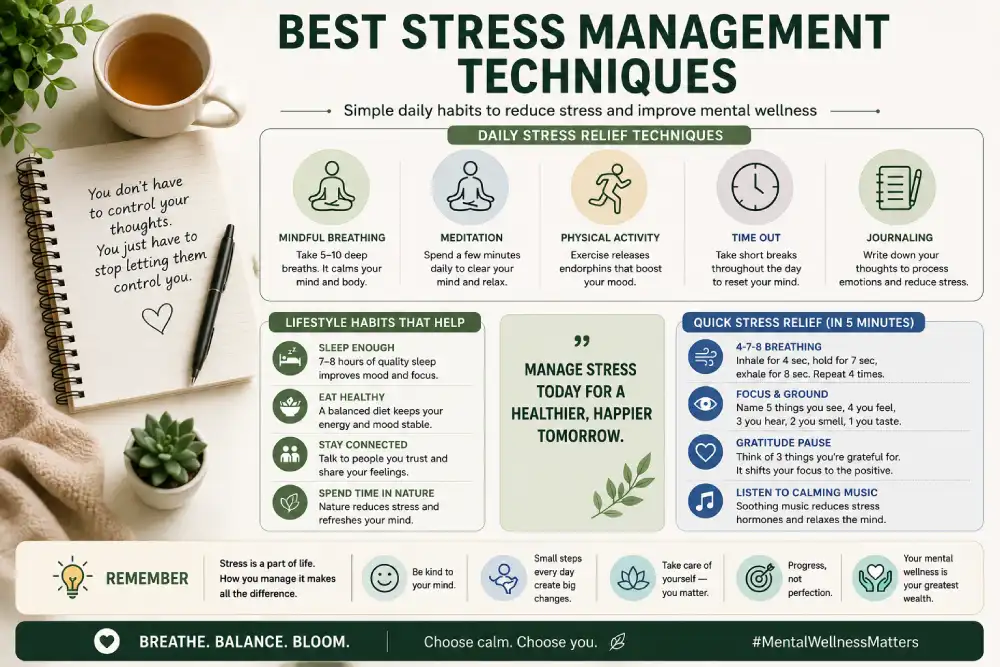
Slow, deliberate breathing activates your parasympathetic nervous system. The one that makes you feel relaxed. Try box breathing: breathe in for 4, hold for 4, breathe out for 4, hold for 4. Repeat 4–5 times. Takes under 2 minutes.
2. Mindfulness Exercises for Stress Relief
Mindfulness is not turning your mind off. It is becoming aware of whatever is happening. The key is non-judging. Begin with a mere 5 minutes each day:
- Guided meditation body scan, focus on each part of the body from head to toe
- Mindful eating atone meal each day no phone.
- 5-4-3-2-1 grounding name five things you see, four you can touch, three you hear, two you smell, one you taste.
These practices are accessible from the comfort of your home, with the use of various apps such as Calm, Headspace (more popular in USA) and Insight Timer (common in India).
3. Move Your Body Even a Little
Exercise is one of the most well-proven stress-busters bolster your body by heading out for a 20-minute walk, doing a yoga pranayam, or even dancing around your kitchen for 10 minutes to crush those cortisol levels and raise your endorphin levels. Indians are already familiar with 20 minutes of yoga in the morning or a walk before dinner in the neighborhood park capitalize on those habits!
4. Set Digital Boundaries
Non-stop alerts lurk at the edge of your nervous system. Implement a buffer period of 30 minutes, no screens, before bed and when waking up. There is a quantifiable impact on your perception of stress.
5. Talk About It
Expressing your feelings with a good listener such as a close friend, relative or therapist lightens your load tremendously. Don‘t undervalue this one.
Mindfulness Exercises for Stress Relief: A Quick Daily Routine
Here‘s a realistic 10-minute morning practice to ground your day:
| Time | Activity |
|---|---|
| 2 minutes | Box breathing |
| 5 minutes | Body scan or guided meditation |
| 3 minutes | Express 3 items you‘re thankful for |
Regularity is more important than length of time. Small doses (e.g. 5 minutes per day) will work better than intermittent very large doses (e.g. 1 hour every now and then).
When to Seek Professional Support
Absolutely, stress relief techniques are powerful. They are, however, no substitute when you really require trained care.
Consider reaching out to a therapist or counselor if:
- Stress is interfering with your sleep on most nights
- Ever feels anxious or very low?
- You are depending on alcohol, food, drugs.
- Ends of study or relationships are severely affected.
Accessible online therapy is available in the USA through the likes of BetterHelp and Talkspace. In India culturally sensitive support is given by iCall, YourDOST and Vandrevala Foundation (many run at a low-cost or free of charge).
To ask for help is not a weakness. It is one of the smartest stress management decisions you can make.
Conclusion
Stress management for mental wellness isn’t about eliminating stress entirely — that’s not realistic or even desirable. It’s about building the tools to respond to stress without letting it take over your life. Start with one technique this week. Notice the difference. Then build from there.
Your mental health is a good investment.
📖 Deepen Your Understanding: Mental Health and Wellness Hub | Complete Health & Wellness Guide
FAQs
Q1: What is the quickest way to relieve stress in the moment?
Box breathing or 5-4-3-2-1 grounding will take down your stress response within 2–5 mins, clearing your head and settling your nervous system. These work just about anywhere, at your desk, in a meeting, on the train….
Q2: How does stress affect mental health long-term?
Continuously elevated stress increases cortisol production, which may cause or exacerbate anxiety, depression, memory problems, and burnout. Sustaining a healthy stress level over time is one of your most significant steps you can take toward good mental health in the long run.
Q3: Are mindfulness exercises effective for stress relief?
Yes. Several clinical trials have demonstrated that even short daily sessions of mindfulness-over as few as five-minutes-will significantly lower perceived stress levels and promote emotional regulation.
Q4: What causes the most stress in daily life?
Work stress, money deficiency, fights with spouse and health problems are the general causes of stress in all the countries. In India, other reasons are family pressures and competition for career excellence.
Q5: When should I see a doctor or therapist for stress?
If stress keeps interfering with your sleep, your mood, your relationships, your work, then you should seek professional help. It is a medical issue, not a clinical one.