Sleep Health and Recovery: The Wellness Habit You’re Probably Underestimating
Published: June 5, 2026 Last Updated: June 16, 2026 That‘s it. Keep eating well and exercising. Take your vitamins.
That‘s it. Keep eating well and exercising. Take your vitamins. But if your sleep health and recovery are off, the rest of your health regimen is running at half power.
And it isn‘t only about feeling good. Sleep is the time when your body repairs itself mends muscles and balances hormones, flushes waste from your brain and gives your face a new lease of life. If it don‘t get enough sleep, everything suffers.The best part? There‘s no need for hi-tech sleep monitors or radical lifestyle changes. The here and now changes will have the most impact. Begin here:
Why Sleep Is the Foundation of Recovery and Wellness
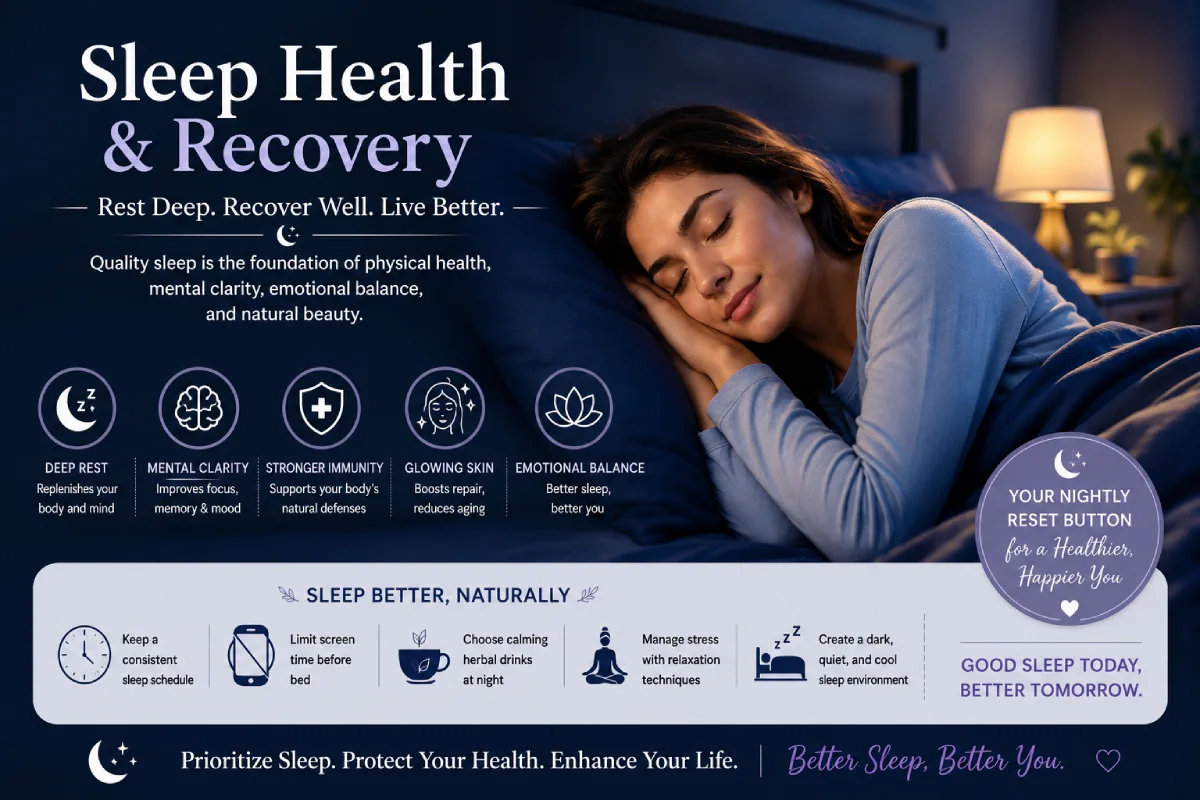
Sleep is like the night shift for your body. While you‘re sleeping, your tissues are repairing themselves; your immune system is strengthening; and your growth hormones — the same hormone that aids muscle recovery and skin renewal — is at its highest.
If you‘re after better health, better skin or better performance recovery and wellness really all start at bedtime.
Here‘s what consistent, quality sleep does for you:
- Rebuilds muscle tissues following a workout
- Balances cortisol (your stress hormone)
- Ideally; Supports smoother, clearer skin and less puffy eyes.
- Sharpens memory and focus
- Control hunger hormones (i.e. yes, lack of sleep increases your craving for more junk food)
- Strengthens your immune response
Miss out on just one night of good sleep and you‘ll notice the consequences quickly in your mood, your skin, and your energy.
Getting the optimal amount of sleep for you!
Adult humans generally require 7 to 9 hours of sleep per day. However, how much sleep you require also depends on the quality of your sleep. If your sleep cycles are disrupted you can still spend 9 hours lying in bed without feeling functional.
One cycle of sleep lasts about 90 minutes, and repeats around 4–5 times during a typical night. The stages of sleep that are REALLY restorative deeper sleep and REM sleep are mostly stacked in the second half of the sleep cycle. That‘s why reducing your sleep duration even just an hour robs you of valuable restorative sleep.
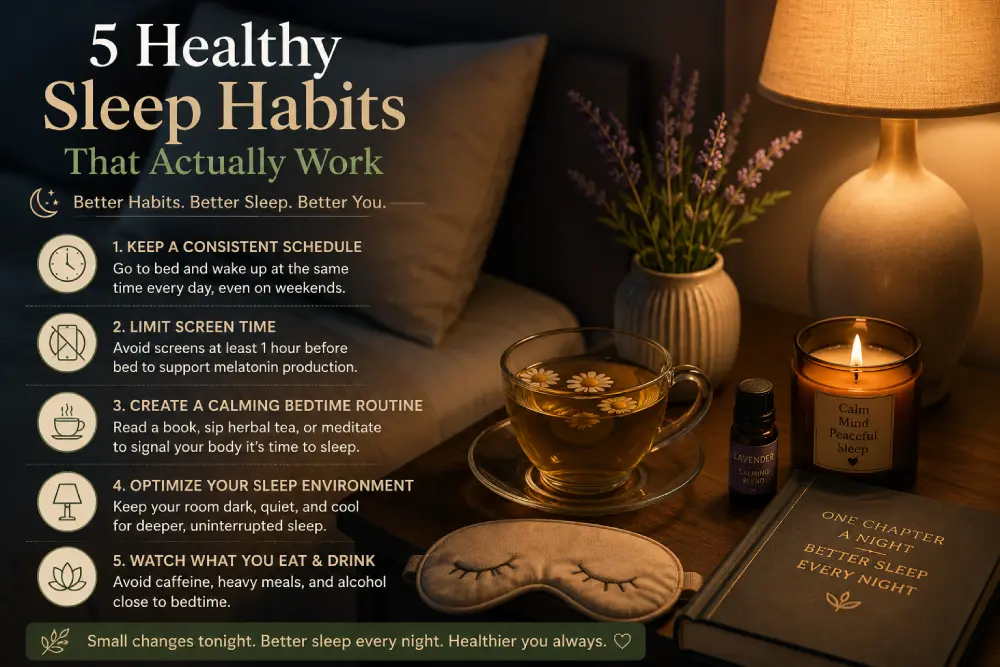
5 Healthy Sleep Habits That Actually Work
The sleep tips are easy; they are just consistent.
1. Lock in a sleep schedule Go to bed and wake up at the same time every day — yes, even on weekends. This trains your circadian rhythm, making it easier to fall asleep and wake up naturally. It’s one of the most researched and effective healthy sleep habits out there.
2. Establish a wind-down routine Your brain needs to know that it‘s time to close up shop. Doing something relaxing for a bit (a few minutes to a half hour) before bed reading a book, doing a bit of stretching, writing in a journal, taking a hot shower decreases the production of cortisol and relaxes your nervous system.
3. Transform your bedroom into a sleep haven Keep your bedroom temperature on the cool side (roughly 65–68°F / 18–20°C), as well as dark and devoid of noise. Between the darkness, quiet, and cool temps, your body will think it is time for deep sleep. Use blackout curtain, white noise apps, and a comfortable pillow.
4. Cut screens an hour before bed. The blue light produced by our phones and laptops actually stops the release of melatonin in our brains one of the hormone that makes us sleepy. Turning off screens for just 30 minutes gives a very significant boost in sleep latency and sleep depth.
5. Be careful with caffeine and alcohol timing Caffeine has a half-life of 5-6 hours. That chai in the afternoon or cup of coffee at 4 pm? It‘s still in your system at 10 pm. Alcohol is complicated as well – it may make you sleepy but it will interfere with your REM cycles and leave you feeling sluggish the next morning.
Common Sleep Mistakes People Don‘t Realize They‘re Making
You could be doing almost all of the sleep tips and still not be sleeping well. Here is why:
Napping too late or for too long A 20-minute nap before 3 PM is fine. But a 90-minute nap at 6 PM may delay your bedtime and break up your night sleep. Do not rest for long or late.
Remain in bed when you are unable to fall asleep – This condition your brain to tie your bed to wakefulness and tension. If you have been in bed for more than 20 minutes, get out and engage in relaxing activity in dim light until you are sleepy.
Mixed-up weekends Sleeping in ‘til noon on Saturday feels like fun, not a problem, until you realize that what‘s happening is that you are adjusting your biological clock – a condition known as ‘social jet lag.’ This may make you feel sluggish on Monday mornings.
Exercising too close to bedtime High-intensity workouts raise your core body temperature and cortisol. Give yourself at least 2 hours between an intense workout and bedtime for your system to wind down.
Myth vs. Fact: Sleep Edition
Myth: You can make up for lack of sleep by sleeping in on weekends. Fact: Sleeping in on the weekend is beneficial, but it cannot replace the sleep and lost hormones.
Myth: Everybody gets by on 8 hours. fact: Sleep requirements differ with age, genetics, and lifestyle. While some actually need 7 hours others require 9. Even if you‘re being ‘harsh’ on yourself, your ideal sleep duration isn‘t likely to be a round number.
Myth: Instant sleep when you lay your head on your pillow is a good indicator of sound sleep. Fact: In fact it is an indicator of sleep deprivation. Someone who is well rested will usually fall asleep within 10–20 minutes.
Myth: Helps you sleep. Fact: Yes, it speeds up the process. No, it suppresses REM sleep the most restorative stage. You wake up more tired.
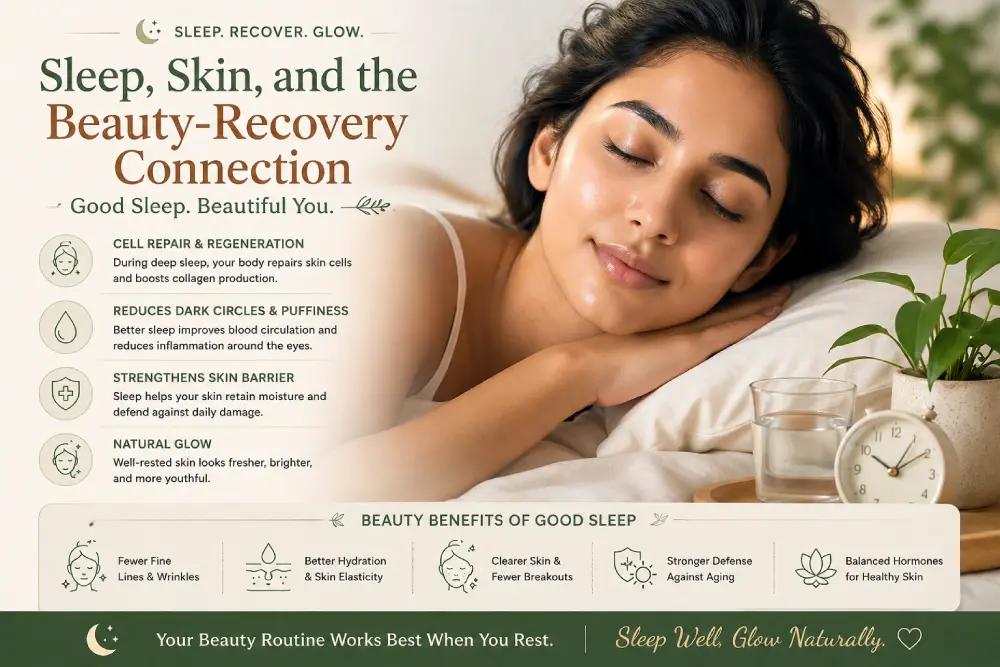
Sleep, Skin, and the Beauty-Recovery Connection
This one is for everyone who‘s concerned with their skin. Your skin repairs itself mainly at night. Collagen synthesis increases. Blood flow to the skin increases. Cell renewal speeds up.
But deficiencies in sleep increase cortisol that degrades collagen, amplifies inflammation, and decelerates wound healing. It manifests as lackluster texture, puffiness, circles, and eruptions.
This is why a good Sleep Wellness Guide always links sleep & skin. Your overnight skin regimen is only as good as your Sleep. Use good products & good Sleep for results!
Your Sleep Health Action Plan (Start Tonight)
You don‘t have to take all of this at once. Just choose one or two from the list and try to stick to them for the week and then add to it each week.
- Choose an alarm time which you always wake up at, whatever time of the night you go to bed, then make no changes for at least two weeks.
- Charge your cell phone outside the bedroom tonight.
- Try five minutes of deep breathing or visualizing the body in relaxation before sleeping.
- Bring your evening last coffee earlier than 2 pm.
- Lower the temperature of the bedroomby 2 degrees
- Add to your evening meal foods high in magnesium (dark chocolate, pumpkin seeds, almonds)
Small variations, consistently exercised, transform your sleep and yourself.
Conclusion
Sleep health and recovery aren’t passive things that just “happen.” They’re habits you build intentionally. Whether you’re in the US or India, juggling work deadlines and screen time or managing an active lifestyle, the foundation is the same — protect your sleep like the health asset it is.
Better sleep is better skin, better mood, better recovery, better everything. Start tonight.
For more on building a complete wellness routine, explore our pillar guide to Health and Wellness on Cultones.