Yoga for Fitness & Flexibility: 2026 Beginner’s Roadmap
Published: September 2, 2026 Last Updated: September 2, 2026 Yoga often gets dismissed as the “gentle” part of a
Last Updated: September 2, 2026
Yoga often gets dismissed as the “gentle” part of a fitness routine — something you do when you’re not really working out. But yoga for fitness deserves a proper look: done consistently, it builds genuine strength, flexibility, and balance, and it protects your body from the wear and tear that strength training and cardio create over time.
This guide gives you a realistic starting point, whether you want a quick morning routine or a proper flexibility practice after workouts.
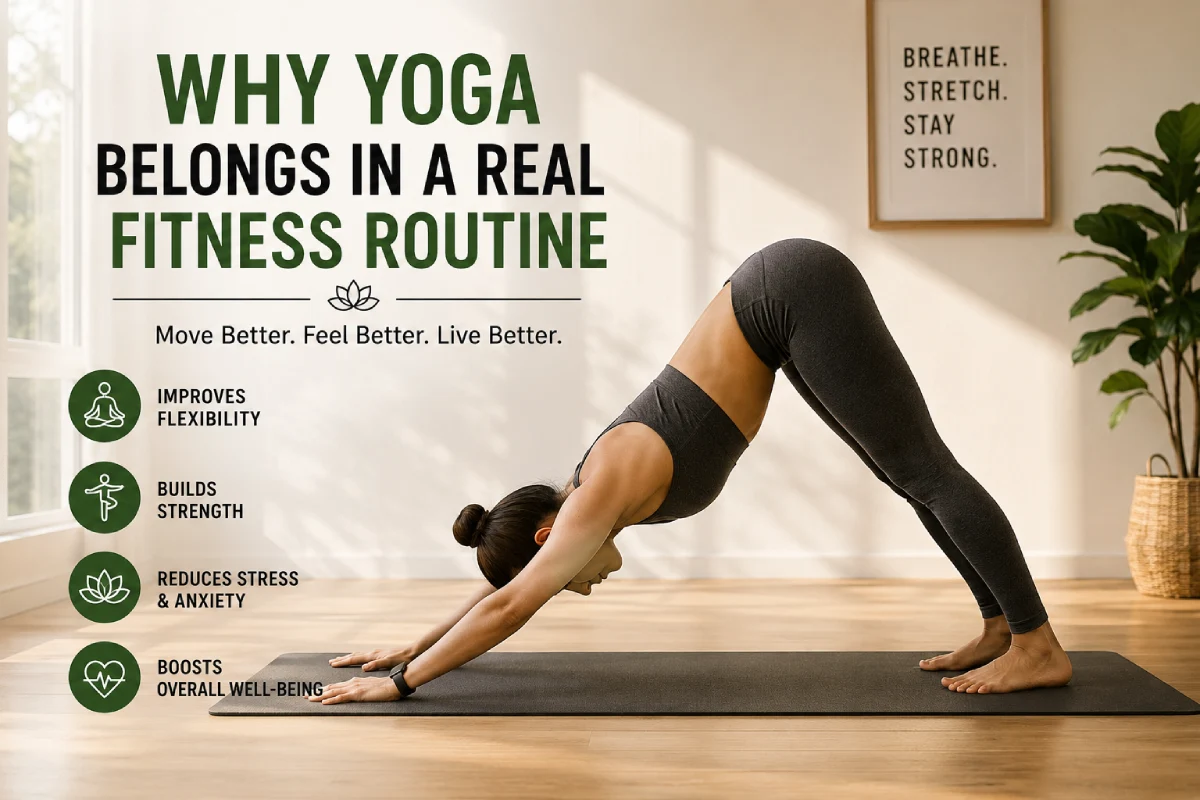
Why Yoga Belongs in a Real Fitness Routine
Yoga isn’t a replacement for strength training or cardio — it’s the piece that keeps both sustainable. Tight hips, stiff shoulders, and a tense lower back from sitting or lifting all get addressed through consistent yoga practice.
What yoga adds to a fitness routine:
- Improves joint mobility, reducing injury risk during strength and cardio training
- Builds core and full-body strength through sustained holds and controlled movement
- Lowers stress hormones through breath-focused practice, aiding recovery
- Improves posture, especially useful for people who sit most of the day
Myth vs. Fact: Yoga as Exercise
| Myth | Fact |
|---|---|
| “Yoga isn’t a real workout.” | Yoga builds genuine strength, flexibility, and balance, and reduces injury risk in other training. |
| “You need to be flexible already to start yoga.” | Flexibility is the result of consistent practice, not a prerequisite to begin. |
| “Yoga alone can replace strength training.” | Yoga complements strength and cardio well but doesn’t fully replace the muscle-building benefits of resistance training. |
| “Yoga is only for relaxation, not fitness goals.” | Certain styles, like power yoga, are genuinely demanding and build real strength and endurance. |
Yoga Poses for Beginners
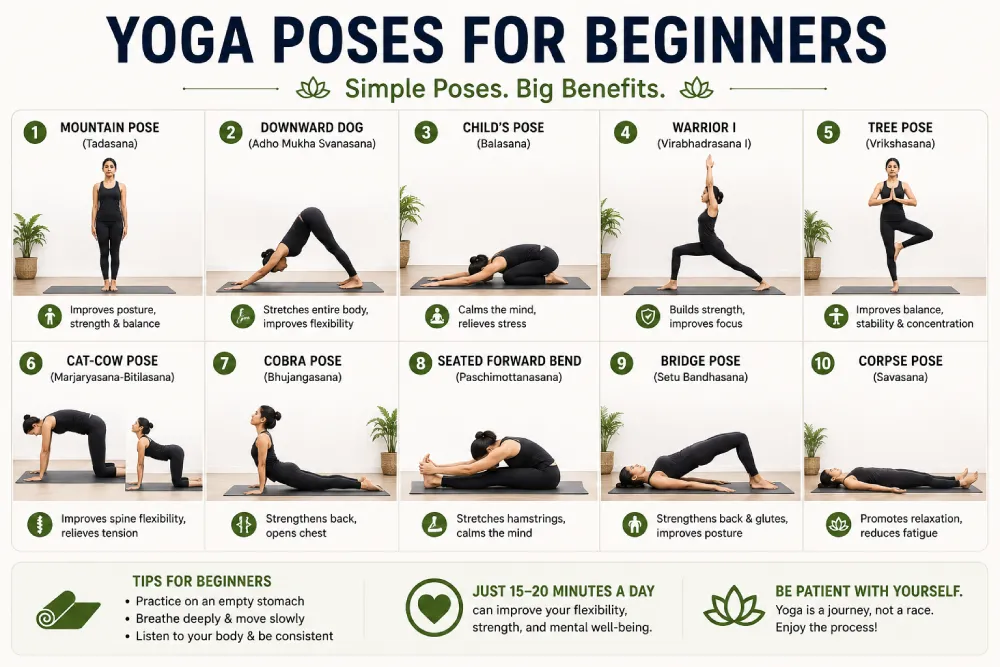
These yoga poses for beginners form a simple, low-barrier starting sequence — no experience or special flexibility required:
- Child’s Pose — gentle rest pose, opens the lower back and hips
- Cat-Cow — warms up the spine, great for morning stiffness
- Downward Dog — stretches hamstrings, shoulders, and calves
- Forward Fold — releases the lower back and hamstrings
- Warrior I or II — builds leg strength and balance
- Seated Forward Bend — deep hamstring and lower back stretch
Hold each pose for 20–30 seconds, breathing steadily, rather than rushing through the sequence.
A Simple Morning Yoga Routine
A short morning yoga routine works well before the day gets busy — no mat space larger than a towel is really needed.
10-minute morning sequence:
- Cat-Cow — 8–10 slow repetitions
- Downward Dog — hold 20–30 seconds
- Forward Fold — hold 20–30 seconds
- Low Lunge (each side) — hold 20 seconds
- Seated Forward Bend — hold 30 seconds
- Child’s Pose — hold 30 seconds, focus on breath
This sequence loosens up overnight stiffness and takes less time than making a cup of coffee.
A Flexibility Yoga Sequence for After Workouts
A flexibility yoga sequence done after strength training or cardio addresses the specific areas those workouts tighten up.
Post-workout sequence (10–15 minutes):
- Hamstrings: Forward Fold, held 30 seconds
- Hip flexors: Low Lunge, each side, held 20–30 seconds
- Shoulders: Thread the Needle, each side, held 20 seconds
- Lower back: Child’s Pose, held 30–40 seconds
- Full body: Standing Forward Fold to Mountain Pose, 5 slow transitions
Pairing this with your strength or cardio sessions two to three times a week noticeably reduces stiffness and injury risk over time.
What Power Yoga Adds
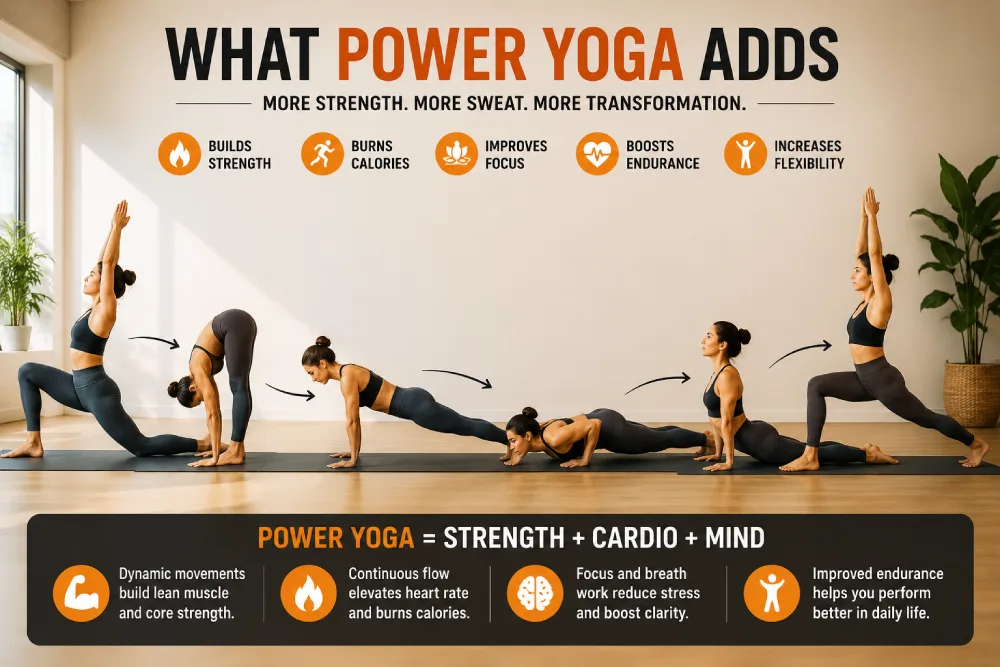
Power yoga is a faster-paced, more physically demanding style than typical beginner yoga — closer to a workout than a stretch session. It moves through poses more quickly, holds strength-based positions longer, and raises your heart rate meaningfully.
When power yoga makes sense:
- You’re comfortable with basic poses and want more intensity
- You want a workout that combines strength, balance, and cardio in one session
- You’re looking for a lower-impact alternative to HIIT that still challenges your body
Beginners can ease into power yoga after a few weeks of standard practice, rather than starting there directly.
The Truth About Yoga for Weight Loss
Yoga for weight loss is a popular search, but the honest picture is nuanced. Gentle, restorative yoga burns relatively few calories compared to cardio or strength training. More vigorous styles, like power yoga, burn meaningfully more and can support a calorie deficit.
Where yoga genuinely helps with weight loss:
- Reduces stress, which can otherwise drive overeating or poor sleep
- Improves sleep quality, which affects appetite regulation
- Builds body awareness, often improving eating habits indirectly
- Power yoga specifically can contribute real calorie burn as part of a broader routine
Yoga works best as a supporting piece of a weight loss plan — alongside strength training, cardio, and nutrition — not as the primary driver of fat loss.
How Often Should You Practice Yoga
For most people building yoga for fitness into an existing routine, 3–4 sessions a week works well — a mix of short morning routines and longer post-workout flexibility sequences.
| Day | Focus |
|---|---|
| Monday | Morning yoga (10 min) |
| Tuesday | Post-workout flexibility sequence |
| Wednesday | Morning yoga (10 min) |
| Thursday | Post-workout flexibility sequence |
| Friday | Optional power yoga session |
| Saturday | Rest or light stretching |
| Sunday | Longer flexibility sequence (20 min) |
Common Mistakes to Avoid
- Forcing flexibility. Pushing into pain rather than gentle stretch increases injury risk rather than building flexibility faster.
- Skipping breath work. Breath-focused practice is a core part of yoga’s stress-reducing and recovery benefits, not an optional extra.
- Doing only advanced sequences too soon. Building a base with beginner poses prevents strain and builds proper form for later intensity.
- Treating yoga as pure relaxation only. For those wanting fitness benefits too, styles like power yoga add real physical challenge.
- Inconsistent practice. A short daily or near-daily sequence builds flexibility far faster than occasional long sessions.
Yoga for fitness earns its place in a real routine — not as decoration, but as the piece that protects your joints, supports recovery, and builds genuine strength and flexibility over time. Start with the beginner poses and morning routine above, and let intensity build naturally from there.
FAQs
Is yoga a real workout or just stretching? Yoga builds genuine strength, flexibility, and balance, and it reduces injury risk in other training — it’s more than just stretching, especially with more vigorous styles like power yoga.
What are the best yoga poses for beginners? Child’s Pose, Cat-Cow, Downward Dog, Forward Fold, and Warrior I or II form a simple, effective starting sequence for beginners.
Can yoga help with weight loss? Gentle yoga burns relatively few calories, but more vigorous styles like power yoga can support a calorie deficit, and yoga overall helps indirectly through stress and sleep improvements.
How long should a morning yoga routine be? A 10-minute sequence covering a few key poses is enough to loosen up stiffness and start the day, especially for beginners.
What is power yoga and how is it different? Power yoga is a faster-paced, more physically demanding style that raises heart rate and builds strength, compared to slower, more relaxed beginner yoga.
How often should I practice yoga for real results? 3–4 sessions a week, mixing short routines and longer flexibility sequences, is typically enough to see noticeable improvement.
Final Conclusion
Yoga for fitness isn’t a side activity — it’s the pillar that protects everything else in your routine, from joint health to recovery to stress management. Start with the beginner poses and morning routine above, layer in a post-workout flexibility sequence, and add power yoga once the basics feel natural. Consistency, not intensity, is what actually builds flexibility over time.