Natural Anti Aging Cream: Best Ingredients for Youthful Skin
Published: July 2, 2026 Last Updated: July 2, 2026 However, in Indian skincare there is an increasing shift towards
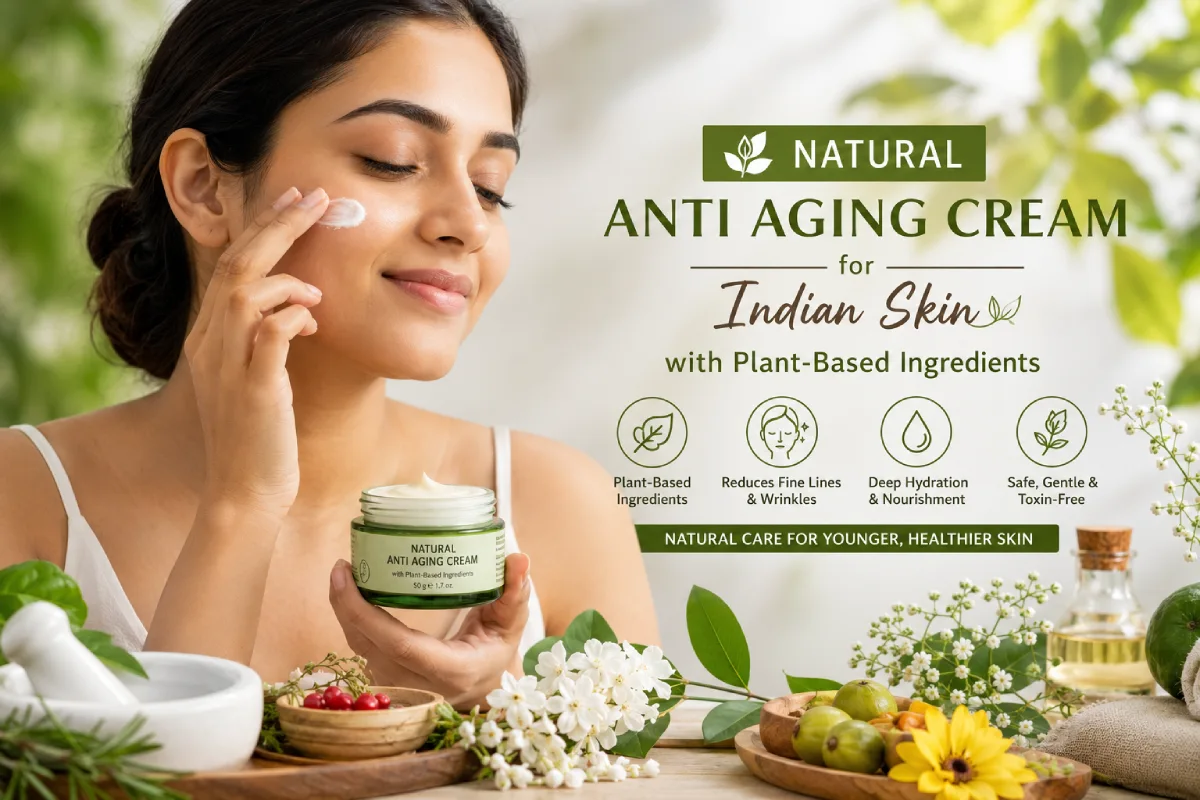
However, in Indian skincare there is an increasing shift towards stocking more clean, herbal formulations and discerning whether a natural anti aging cream can truly substitute their existing chemical retinol or vitamin C serum.
The truthful reply: certain natural elements do work spectacularly. Others are more hype than reality. And a handful are truly irritating even though they‘re “natural.” The key is in distinguishing the effective from the false.
This guide will reveal the ingredients you should (and shouldn‘t) be spending on, what plant-based skincare will (and won‘t) do for aging skin, and how it compares to synthetics (all tailored to Indian skin).
Why Choose Natural Anti Aging Products?
Natural anti aging products are not just another beauty fad for the majority of skin types, especially sensitive and reactive Indian skin, they really work.
Here‘s why people are making the switch:
- Easier on reactive skin. Indian skin particularly darker skin may experience irritation, redness, and Post-Inflammatory Hyperpigmentation (PIH) from the more aggressive synthetic actives such as high-strength retinol or glycolic acid. Naturally derived options such as bakuchiol and rosehip oil can provide similar results without the high likelihood of irritation.
- More appropriate for India‘s climate. Heavy, lab-dense formulations can clog in the humid Indian cities. Top of the line natural plant oils and botanical extracts are lightweight, non-comedogenic and work with the skin rather than push for a chemical reaction.
- Less controversial ingredients. For skin sensitivity or certain ingredient sensitivities, having no parabens, synthetic fragrance, mineral oil and PEGs in the product is a valid choice.
- Ingredient transparency. As a result of the clean beauty movement, brands are now more transparent in their ingredient labels, so Indian consumers who are educated now can read and understand what they are actually putting on their skin.
However, one point to make is that ‘Natural’ on a label is not defined in any way in India (and, as usual, are no rules on what it can or can‘t say). So a ‘Natural’ cream could still have varying quantities of fillers and preservatives and just tiny quantities of the plant extracts. It is the ingredients list, the bottom of the jar or tub, that gives you the most information.
Natural Ingredients That Fight Skin Aging
There is most evidence for these ingredients combining clinical studies and hundreds of years of traditional use in India.
Bakuchiol (Babchi)
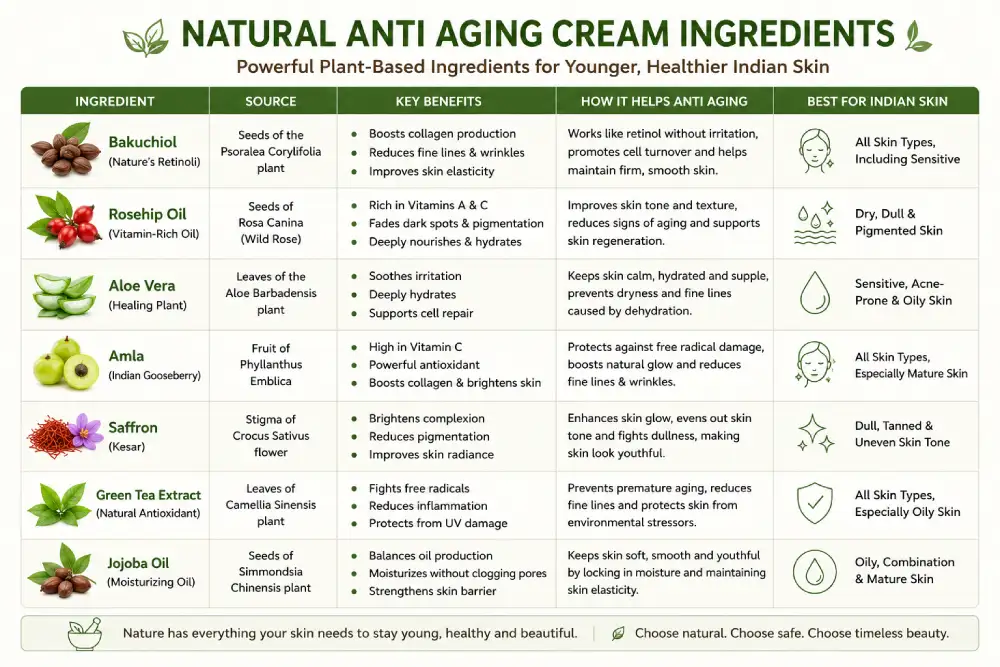
The best natural alternative to retinol. Bakuchiol is derived from the Babcha seed, a plant native to India, which has been used in the traditional medicine, Ayurveda, for thousands of years. A recent clinical study, published in the British Journal of Dermatology, demonstrated that it was equally as effective as retinol in improving lines and wrinkles and skin elasticity; but with much less peeling, dryness and photosensitivity.
Best for: Fine lines, pigmentation, collagen support. Safe for sensitive skin and daytime use. What to look for: 0.5–1% concentration in the ingredient list.
Rosehip Seed Oil
The oil found in the rosehip is one of the best natural sources of trans-retinoic acid (vitamin A naturally present in the oil) and vitamin C. Will brighten pigmentation, encourage cell renewal and increase skin elasticity over continued use. Light enough for all skins including oily and combination skins.
Best for: Post-acne marks, dullness, early signs of fine lines, uneven skin tone – very common problems amongst Indian skin. How: 2-3 drops, at night, pressed into skin over a water-based serum.
Amla (Indian Gooseberry)
One of the most underrated anti aging ingredients used in India and one of the highest natural sources of vitamin C in the world. Amla has potent antioxidant activity which protects against free radicals caused by UV exposure and pollution. Supports collagen production and evens skin tone. Used in many traditional ayurvedic formulas for centuries, now popping up more frequently as a modern hybrid skincare ingredient.
Best for: Brightening, protection, pigmentation (Sun damage in Indian skin).—132\3 (3) Brightening effect. Consistent brightening from the use of oils with anti-oxidants effects. [1]The treatment of pigmentation has been linked with anti-oxidant activity in the oils.
Green Tea Extract (EGCG)
Is rich in EGCG (epigallocatechin gallate), one of the best researched plant antioxidants for the skin. It protects the skin from free radical damage induced by UV light, helps to reduce inflammation, and has slight oil-control effects, making it appropriate for oily/combi Indian skin types.
Best for: Pollution and UV protection, oily-acne-prone ageing skin, anti-inflammatory support.
Saffron (Kesar)
In Indian skincare rituals, saffron has been used for centuries. It contains crocin and crocetin antioxidants known for shining the skin bright, preventing melanin formation and giving a glow. Now tested in present day formulas. Better as part of a suite of actives than as a single hero ingredient.
Best for: Brightening, dullness, pigmentation. Best used in standardized extracts rather than raw saffron powder.
Vitamin E (Tocopherol)
A fat-soluble antioxidant that safeguards the skin barrier, reduces inflammation and aids repair. Synergistic with vitamin C – the two together are many times more effective than either alone. Often used as a carrier or booster in natural formulations.
Best for: Drier, more mature, and/or environmentally debilitated skin (may be harsh in high concentration on very oily and/or acne-prone skin)
Hyaluronic Acid (Plant-Derived)
From plant fermentation, naturally derived hyaluronic acid (from plants) behave the same way on skin as their laboratory synthesized counterpart; plumping fine lines with its incredible ability to attract moisture and strengthening the resilience of the skin. It is one of the few ingredients that has universal use in all Indian climates and across all skin types.
Best for: wet look, focusing on hydration to keep skin squishy and plumping fine lines; layer under any cream or oil.
Benefits of Plant-Based Skincare
Apart from benefits from individual ingredients, adopting a properly formulated plant-based anti aging regime yields the following additional benefits:
Less irritation for delicate skin. Bakuchiol will not trigger the purging, peeling or sun sensitivity often caused by synthetic retinol (which is critical in Indian skin, where irritation can lead to PIH).
Safe for year-round daytime use. Many natural actives — bakuchiol, amla, rosehip oil — can be used morning and night without increasing photosensitivity. Synthetic retinol must be used only at night and always followed with SPF.
Recommended if using while pregnant or breastfeeding. Bakuchiol and most of the botanical actives are safe for use in pregnancy unlike synthetic retinol. Suitable for an Indian Woman in her mid to late 20s 30s however, is managing early signs of aging and planning a family.
Layering flexibility Natural ingredients generally don‘t conflict too much. Bakuchiol + vitamin C + rosehip oil makes for a gentle but effective evening regimen. The synthetic equivalent (retinol + L-ascorbic acid) involves patience to build up tolerance.
Natural vs Chemical Anti Aging Creams
Neither is universally better. The honest comparison:
| Factor | Natural Anti Aging Cream | Chemical / Synthetic Anti Aging Cream |
|---|---|---|
| Efficacy for wrinkles | Liked in particular a few products with bakuchiol, rosehip, amla | Fantastic retinol has been proven to be effective over 40 years of clinical use. |
| Speed of results | 6–12 weeks before showed any signs of visible change | 4–8 weeks for fine lines with retinol |
| Irritation risk | Low mild for reactive/sensitive skin. | Greater retinol, AHAs result in purging and issues sensitivity |
| Suitability for Indian skin | High less PIH risk from irritation | Moderate needs very cautious usage at low strengths |
| Safe in pregnancy | Are most ( check individual ingredients) | Retinol: no. Niacinamide, HA: yes. |
| Daytime use | Yes (most natural actives are photostable) | Retinol: no. VitC: yes with SPF. |
| India product availability | Growing Plum, Juicy Chemistry, Forest Essentials | Excellent Minimalist, The Derma Co., L‘Oreal, Neutrogena |
| Price range (India) | ₹400–₹3,000 | ₹400–₹5,000+ |
| Best for | Reactive, first time anti-aging users with sensitive skin conditions | The Set wrinkles by 3 years Larger pores, more predictable tendencies. Aging up to 6.5 years and established wrinkles. Oily prone to acne more sensitive skin/oriental skin. |
The verdict: If beginning with anti aging skincare at 20-something or plan to use it with sensitive skin then a naturalist approach would be best. If already have visible, more mature lines in 30-something plus, then a natural ingredients based regime would be more effective if combined with known synthetics such as retina or niacinamide.
💡 Looking for expert-curated products including both natural and synthetic options at every budget? See our complete guide to the best anti aging cream in India for recommendations across all price points.
Best Natural Anti Aging Cream Options
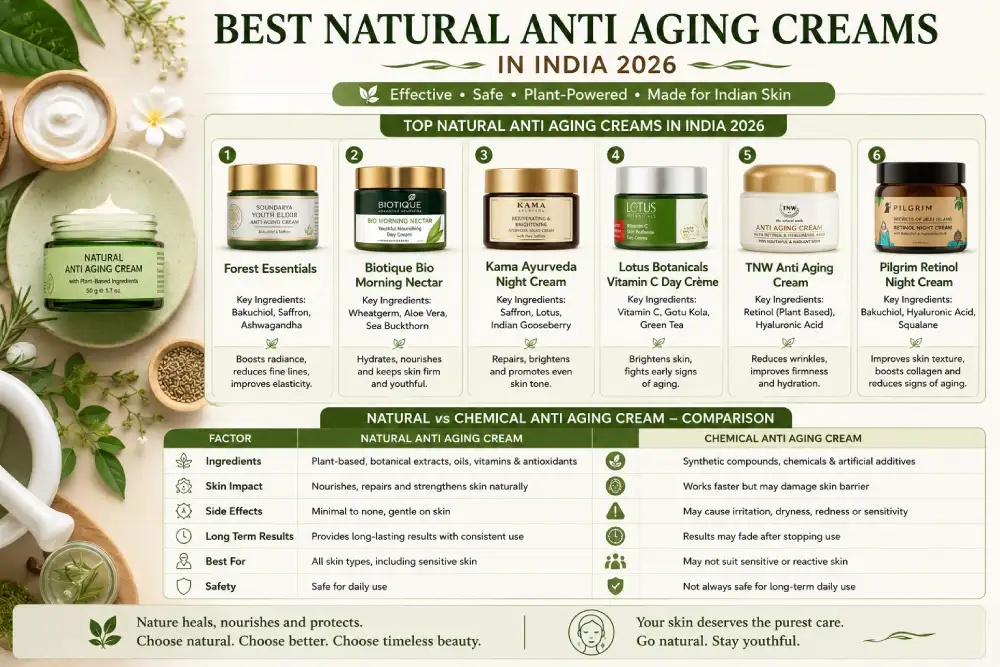
What to look for when choosing a natural anti aging cream in India:
Check the ingredient list, not the front label. “Natural,” “herbal,” and “botanical” on packaging mean nothing without checking that the active ingredient (bakuchiol, rosehip, amla extract) actually appears in the top half of the ingredient list.
Look for standardised concentrations. Bakuchiol at 0.5% or above delivers results. A product with a trace amount of babchi extract listed near the bottom adds no meaningful benefit.
Hybrid formulas often outperform pure natural ones. Creams combining bakuchiol with niacinamide, or rosehip oil with hyaluronic acid, deliver broader benefits than any single natural ingredient alone.
India brands worth looking at for natural anti aging:
- Juicy Chemistry — organic, cold-pressed formulations; ECOCERT certified; rosehip and bakuchiol range
- Plum — plant-based actives with good India-specific formulation; Bright Years range uses resveratrol and vitamin C
- Forest Essentials — Ayurvedic luxury with saffron, amla, and kumkumadi; higher price point
- Minimalist — not strictly “natural” but bakuchiol 0.5% serum is an excellent entry point at ₹599
- Lotus Botanicals — bakuchiol-based anti aging products at mid-range price points
Routine for a natural anti aging approach (India):
Morning: Gentle cleanser → amla or vitamin C serum → plant-derived hyaluronic acid → SPF 30–50 PA+++
Evening: Oil cleanser → bakuchiol cream or rosehip seed oil → lightweight barrier moisturiser
Give any natural anti aging routine 8–12 weeks before evaluating results. Natural ingredients support your skin’s own renewal processes — they don’t override them. Consistency is non-negotiable.
Choosing a natural anti aging cream is a smart, evidence-backed decision for many Indian skin types — particularly those prone to sensitivity, PIH, or retinol intolerance. Bakuchiol, rosehip oil, amla, and green tea extract are the plant-based ingredients with the strongest results. Pair them with mineral SPF daily and give your routine time to work. For deeper or more established wrinkles, consider a hybrid routine that combines the gentleness of natural actives with the proven power of low-strength retinol.