Best Skin Rash Creams and Medications for Fast Relief
Published: July 2, 2026 Last Updated: July 2, 2026 Entering an Indian pharmacy with a rash. There are dozens
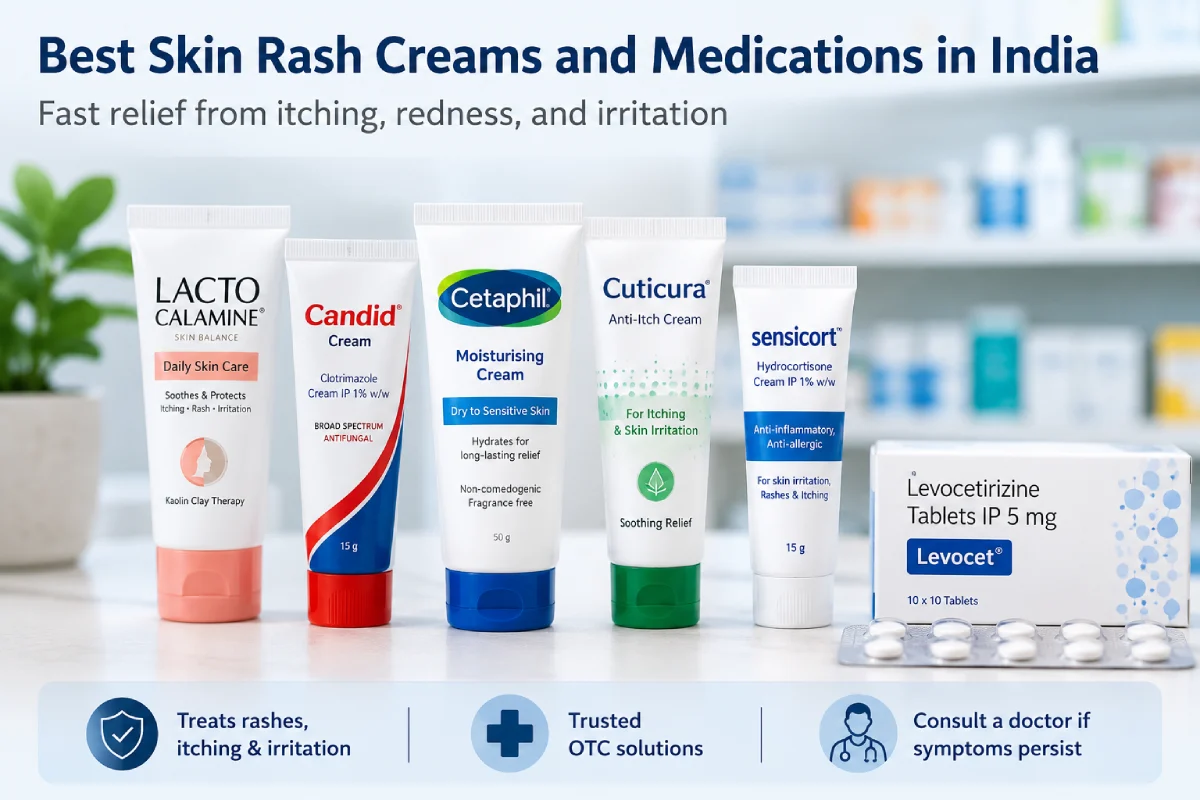
Entering an Indian pharmacy with a rash. There are dozens of creams on the shelf – antifungal, antihistamine, steroid, antibiotic, all of the above. The pharmacist gives you something. You‘re not sure whether it is correct. You use it. It doesn‘t work- or it worsens.
It‘s not the medication. It‘s the diagnosis. Skin Rash creams and medications only work when they are given for the correct cause. You can put a steroid cream on a fungal rash and just feed the infection. Give an antifungal on an allergic rash and it does nothing. Know which one is which and you‘ve done the single most important thing in treatment.
With this guide, you are clear about the confusion – how does each type work, what is OTC in India, when do you need prescription and where to look for side effects.
How Skin Rash Creams Work
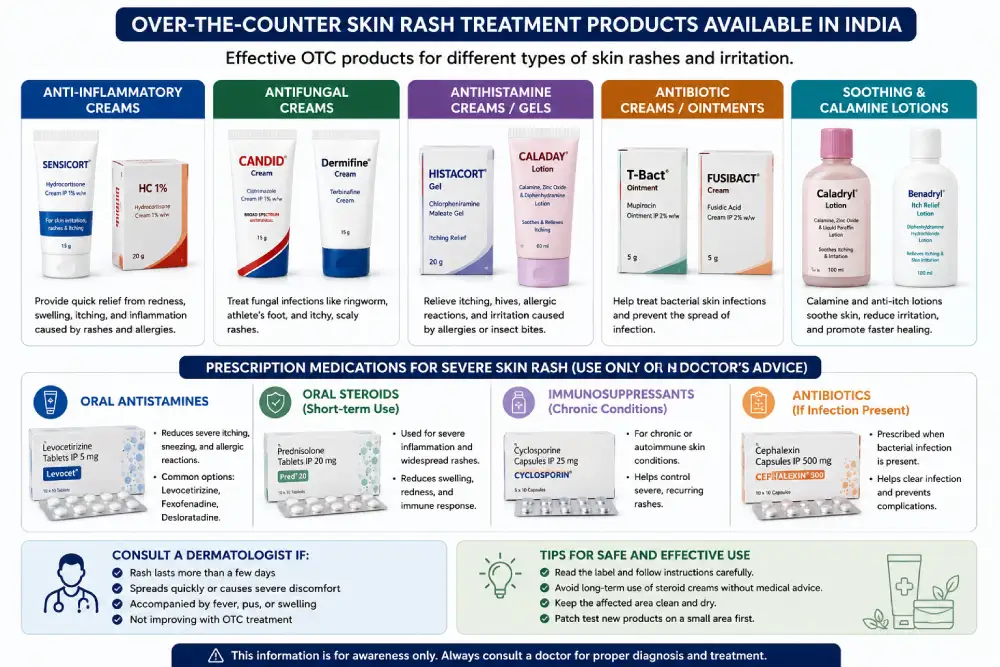
Rash creams do not all work in the same way. There are four main groups, as they all counter a different problem:
Topical corticosteroids (Steroid Creams). These work by reducing inflammation by reducing the immune response in the skin. They can rapidly stop redness, itch and swelling. They do not kill infections. If used correctly for the correct rash (eczema, contact dermatitis, allergic rashes), then they are very effective. Used on the wrong rash (fungal or bacterial) then they can cause immune suppression and allow the infection to spread.
Topical Antihistamines / Calamine Lotion Antihistamines work to block or break the histamine response leading to itching in allergic reactions. Calamine lotion (a mixture of zinc oxide and iron oxide) is one of the most frequently used and popular topical applications in India, soothing, drying blistery rashes and reducing itching without any major effects.
Antifungal Creams These kill or stall fungi, which cause ringworm, jock itch, athlete‘s foot or yeast rashes. Usually contain the following active ingredients: ketoconazole, terbinafine, clotrimazole. Does not work with allergic or inflammatory rashes.
Creams containing antibiotics Used for bacterial infections of the skin. For infected rashes, small wounds or impetigo. Usually mupirocin (Bactroban) or framycetin (Soframycin) in India. Do not use for viral or fungal rashes.
Oral Antihistamines (Tablets) Effect systemically (all over the body) blocking histamine to prevent allergic reactions, hives and generalised itching. Quicker than a topical treatment for the generalised rash. OTC OTC OTC and No prescription needed in India.
Over-the-Counter Treatments for Skin Rashes
Most mild-moderate rashes in India are treatable OTC – without prescription. Practical reference matched to rash type:
| Rash Type | Best OTC Option | Active Ingredient | Indian Brand Examples | Approx. Cost |
|---|---|---|---|---|
| Heat rash / prickly heat | Powder for prickly heat/calamine. | Zinc oxide + talc | Nycil, Shower to Shower, Lacto Calamine | ₹60–₹150 |
| Hives / widespread itch | Oral antihistamine tablet | Cetirizine 10mg | Cetzine, Alerid, Zyrtec India | ₹15–₹40/strip |
| Eczema / skin reaction with mild allergic rash | Hydrocortisone 1% cream | Hydrocortisone | Cortef cream, generic hydrocortisone | ₹80–₹180 |
| Fungal rash(Tinea corporis,ace,rash) | Antifungal cream | Clotrimazole 1% | Candid cream, Canesten, Clotrin | ₹80–₹200 |
| Fungal rash (stubborn / athlete‘s foot) | Antifungal cream | Terbinafine 1% | Terbicip, Lamisil cream | ₹120–₹280 |
| Insect bites / chicken pox itchy | Calamine lotion | Zinc oxide | Lacto Calamine, plain calamine | ₹80–₹200 |
| Seborrhoeic dermatitis (scalp) | Medicated shampoo | Ketoconazole 2% | Nizoral shampoo | ₹200–₹350 |
| Minor infected rash | Topical antibiotic | Framycetin | Soframycin cream | ₹80–₹150 |
| Fast itch relief (non-drowsy) | Oral antihistamine tablet | Fexofenadine 120mg | Allegra, Fexova | ₹30–₹80/strip |
Cream vs Ointment vs Lotion Which Format to Choose:
This is more important than most people would think. Same active ingredients are not equivalant:
- Cream (water + oil base): quickly absorbed, less greasy, ideal for weeping or moist rashes and for skin folds. The most common preparation.
- Ointment (more oil-based): More occlusive and moisturising. Suitable for thick, dry or scaly rashes such as psoriasis or cracked eczema. Longer-lasting.
- Lotion (water-heavy, thin): this is the easiest to apply to larger areas or hairy skin. Therefore, less moisturising than cream or ointment.
- Powder: Intake moisture so suitable for heat rash and intertrigo (covering fold rashes) where dryness is more important.
💡 For a complete overview of rash types, causes, and which treatment tier to start with, read our main guide on skin rash treatments.
Prescription Medications for Severe Rashes
For OTC options just aren‘t cutting it – or if the rash is big and bad, covering large areas of the body, or is induced by a systemic condition prescription meds are needed, and they can be aggressive. Such medications include:
Stronger Topical Corticosteroids OTC hydrocortisone is 1% strength — mild enough for OTC use and safe for short periods. Prescription steroids go much higher: betamethasone, mometasone, clobetasol. These are used for severe eczema, psoriasis, and treatment-resistant contact dermatitis. They work faster and more powerfully — but carry greater risk of side effects if used long-term or on sensitive areas.
Oral Steroids (Prednisolone) For severe allergic reactions, drug rashes or generalised flares, a course of oral prednisolone gives the quickest relief by “driving down” inflammation everywhere throughout the body. Prescribed and supervised by a doctor. Not for long term use.
Oral Antifungals (Fluconazole / Itraconazole) When fungal infection involves the scalp, nails, or extensive surface area of skin, topical antifingals are inadequate for deep penetration. Oral antifingals are used for 2-6 weeks depending on severity. In India Fluconazole (Zocon, Forcan, Candifral), Itraconazole.
Immunomodulators (Tacrolimus / Pimecrolimus). Non-steroidal prescription creams for eczema and seborrhoeic dermatitis. Most effective as a long term management option on the face, neck and skin folds where there is greatest risk of steroid associated thinning. Protopic (tacrolimus) and Elidel (pimecrolimus) in India.
Prescription Antihistamines For chronic Hives lasting longer than 6 weeks, or severe allergic rashes prescription anti-histamines are possible. These include higher doses of Fexofenadine, and Hydroxyzine. These have even stronger ‘drowsy’ side effects and need to be prescribed and monitored under the guidance of a doctor.
Choosing the Right Treatment for Your Rash
Use this decision framework before buying anything:
Step 1 Figure out what type of rash it is first. Is it itchy and inflamed (allergic/eczema)? round and spreading (fungal)? Blistery and localised (contact or viral)? Treatment is entirely determined by this answer.
Step 2 Match medication to cause:
- Inflamed / allergic rash — hydrocortisone cream + antihistamine tablet
- If fungal rash→ clotrimazole or terbinafine (without steroid)
- Heat rash→ calamine lotion + prickly heat powder, keep the area cool and dry
- Insect bite = calarmine + oral antihistamine
- Infected rash visit a doctor; do not treat bacterial infections with authoritarian treatment at home
3 Select the appropriate vehicle. Weeping/wet rash – cream/lotion. Thick, dry, scaly rash – ointment. Skin folds or areas of excess moisture – powder or gel.
Step 4 Be patient. Eczema hydrocortisone creams can be 3-5 days. Anti fungal creams can be 2-4 weeks. Orally will do 1-2 hours. After 2 days of the new treatment the skin is that there.
Step 5–Get stronger product. For OTC OTC., if no response after 5-7 days of regular use, see a dermatologist. Do not select a stronger cream of your own.
The Most Dangerous OTC Mistake in India
In addition there are many combination creams available in Indian pharmacies that contains steroid + antifungal + antibiotic in one tube. Some of the commonly available combination creams are Candid B (clotrimazole + betamethasone), Panderm+ and Betnovate-C.
Extremely common in misuse, they are often used as all-purpose skin creams. The truth is that the steroid is relatively weak and will therefore suppress at a local level, while the antifungal ingredient is unable to cope with the flare up that results. Long-term use causes steroid tissue atrophy, striae, acne and paradoxically worsens the fungal infection for which they are prescribed. Never use these combination creams longer than 7–10 days without medical supervision. Not for use on the face.
Side Effects and Safety Considerations
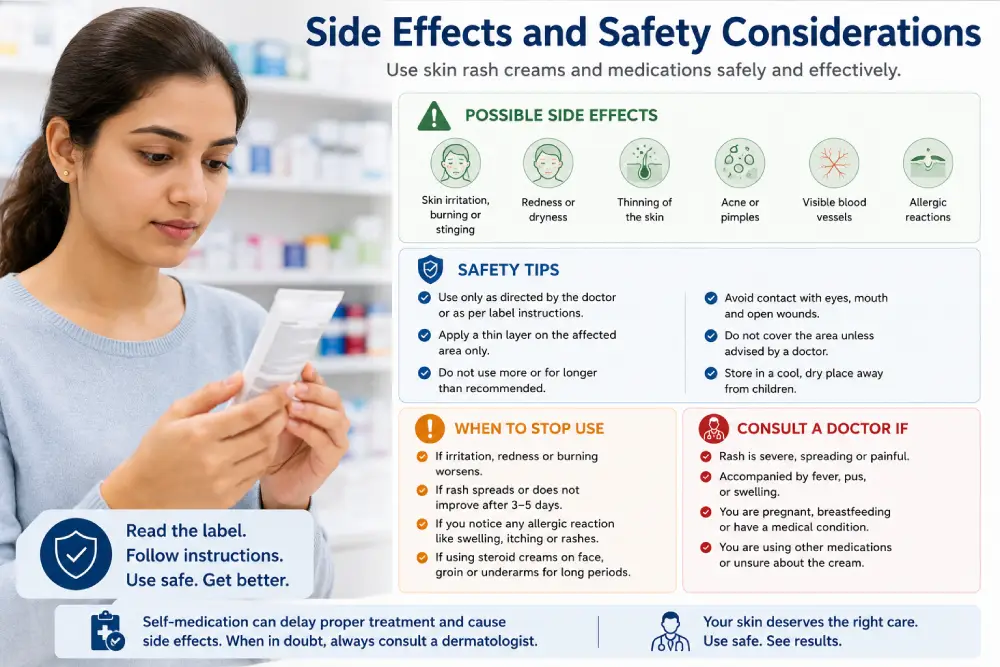
Every medication carries risk. Here‘s what to know before applying:
Topical Steroids
- Short term (less than 2 weeks): safe for most adultsthe number of patients who have died is uncertain
- Long-term risks: skin thinning [atrophy], stretch marks, infection, steroid rosacea, acne, perioral dermatitis.
- Never put strong steroids on the face, genital area or under occlusion (covered up or bandaged) without medical advice
- Young children, including infants, and those with thinner or compromised skin, will absorb topical steroids more than adults. Use mildest preparation available and only use under paediatric advice
Antifungal Creams
- Very safe topically; occasional skin irritation or burning at application site
- Oral anti-fungals (fluconazole, itraconazole) may interact with other drugs tell your doctor about all current drugs.
Oral Antihistamines
- Cetirizine and loratadine: drowsiness rare, tolerated well.
- Older antihistamines( chlorphenamsne/ avil): Drowinness- do not drive or operate machinery.
- Safe for all (adults); paediatric dosingmustbebe checked in children
Calamine Lotion
- As one of the safest agents a topical; the least chance of reaction; child and pregnancy safe;)
Combination Steroid Creams
- High misuse risk in India (see above)
- Avoid face, skin folds, and kids with no script advice
- Maximum use: 7–10 days as needed
When OTC Side Effects Need Attention
See a doctor if:
- Skin is significantly thinner, takes on a discoloured appearance or begins to develop stretch marks following steroid cream use
- Rash is worse after start of treatment (may indicate wrong type of medication)
- You experience new symptoms — fever, swelling, or trouble breathing — after starting a pill
- Sporanox and Diflucan (these antifungals) may cause nausea, jaundice, or tenderness of the liver.
Conclusion
Selecting skin rash creams and medications is simple. What type of rash are you receiving treatment for? Hydrocortisone for inflammation. Antifungals for fungal rashes. Calamine for itch. Antihistamines for allergic reactions. When possible, utilize OTC products for mild rashes. Select the form of the product to your condition and allow it adequate time to be effective. Refer to a dermatologist if no results are visual within a week.