Sustainable Fashion in 2026: Ethical Brands & Smart Choices
Published: August 11, 2026 Last Updated: August 11, 2026 What is sustainable fashion? It is shopping for clothing in
Last Updated: August 11, 2026
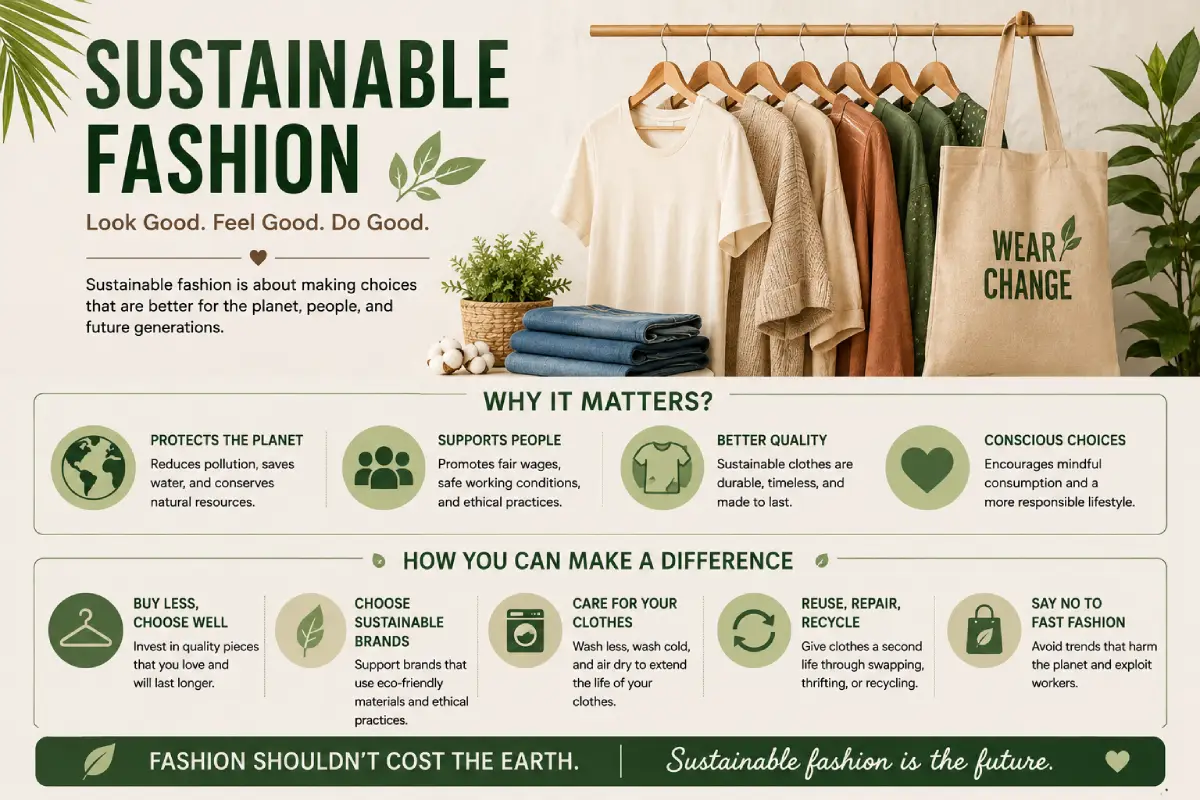
What is sustainable fashion? It is shopping for clothing in a way that is ethical both to the environment and the people making and selling it such as recycled textiles, paying employees fairly, and slow fashion over disposable fashion drops. As we look to the year 2026, the US and India are approaching an undeniable shift towards ethical apparel brands, thrifting, and capsule closets. Here‘s a brief rundown of the trends and then solid advice for how you can begin building a wardrobe that you will enjoy for many years to come.
Sustainable fashion is no longer a conscious corner of the market, but the stated future of more and more consumers in the U.S and India who are fed up with their clothes washing out after a handful of wears. If you‘ve ever questioned whether a commitment to ethically produced apparel is a burden or a privilege, here you find out what the evidence says.
What Is Sustainable Fashion, Really?
In essence, sustainable fashion is the way garments are sourced, manufactured, and distributed with as little impact on society and the environment as possible. This means using recycled and organic fabrics, reducing greenhouse gases during manufacturing, and ensuring operators are paid a living wage. It is the antitheses of fast fashion, where cheap and trendy clothes are produced rapidly and disposed of rapidly.
Demand is genuine. The worldwide market for a more sustainable fashion is set to increase almost 2-fold by early 2030s and in the US alone the resale market is forecasted to hit the $60 billion mark in 2026, as an increasing number of consumers enter secondhand or circular shopping.
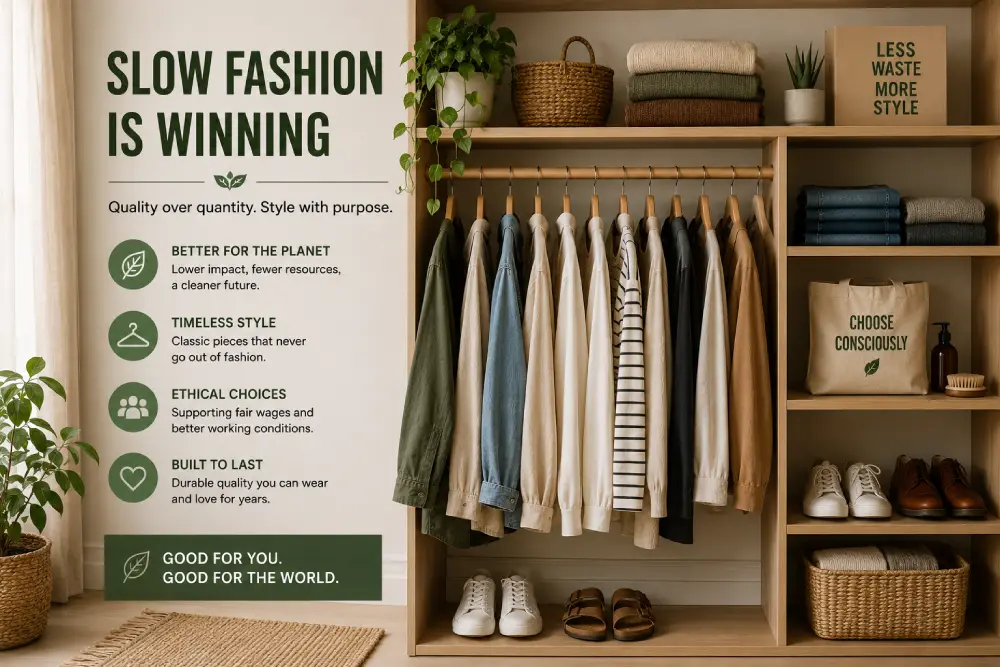
Why Slow Fashion Is Winning Right Now
Slow fashion turns the system of buy more, buy cheap on its head. If you‘re not slavishly following every micro-trend, you spend your money on fewer items that are better constructed and will endure for years, not months. An increasing proportion of US consumers claim to be in actively favor slow fashion over disposables, and in India, slow-shopping supporting brands that work with handloom weaving, natural dyes and made-to-order manufacturing are starting to see widespread movement.
Why it matters:
- Less buying equals less textile waste sent to the dump
- Higher quality fabrics maintain their shape and colour more effectively
- You expend less by years end, even though the inital cost may be more.
Myth vs Fact: Ethical Clothing Brands
Myth: Sustainable fashion will cost you more. Fact: In the long run, the ‘cost-per-wear’ can be way lower, as better quality clothes last so much longer.
Myth: You need to completely ditch your wardrobe. Fact: Small changes one thrifted essential, one recycled- cotton jacket add up quickly.
Myth: Secondhand clothes are of inferior quality. Fact: Time for a reality check: Secondhand clothes come from brands designed to function effectively in the first place.
Common Mistakes People Make
- Getting suckered by greenwashing The underlyings of some fuzzy terms such as “eco-friendly” haven‘t earned any respect without the likes of GOTS, Fair Trade, or WRAP.
- Purchasing “sustainable” items they will never wear a capsule wardrobe is only sustainable if every item is justified.
- Not caring for fabric levels of consumption soon catch up, even for sustainable fashion) not looking after your clothes Ethical fashion will also wear out more quickly if the wash is not suitable.
- Viewing the act of thrifting as a fad instead of part of a normal routine.
Practical Tips to Build a Capsule Wardrobe
- Utilisez entre 20 et 30 pièces (de vêtements)le tout étant très adaptable (portez-les différemment pour des occasions différentes).
- Use natural or recycled fabrics organic cotton, linen, Tencel, recycled polyester.
- Select neutral bases then insert 3–4 statement items for character
- Needs repairing before replacing; nothing beats a quick tailor‘s fix than buying a new one.
- Adopt a ‘one in, one out’ policy to help your wardrobe stay focused
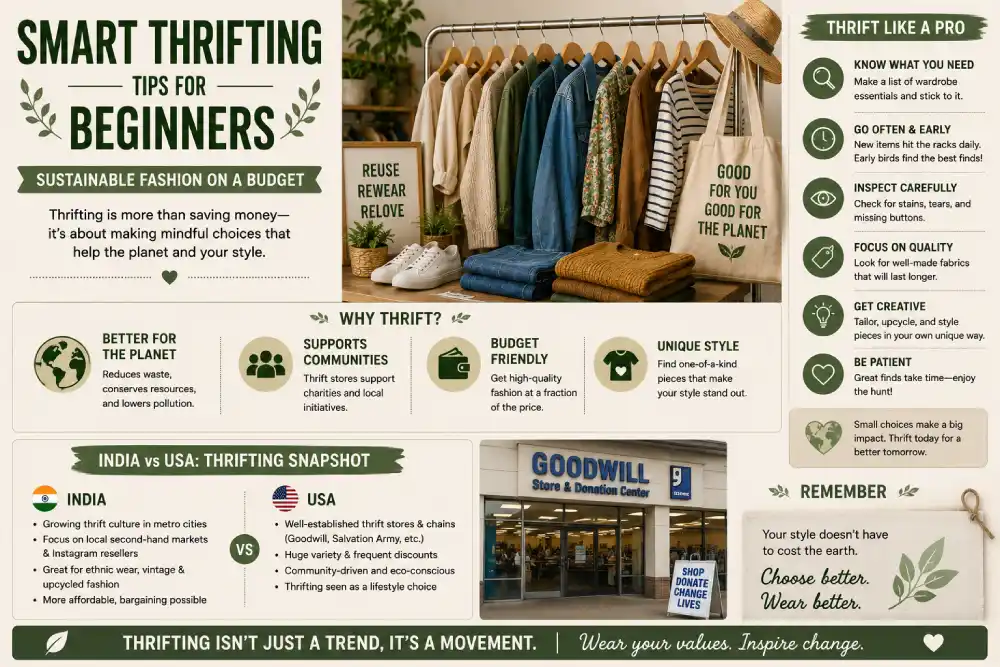
Smart Thrifting Tips for Beginners
- Shop with a list, that way you won‘t be faced with temptation by everything
- Check the seams, zips and fabric quality before purchasing.
- Wash and air secondhand articles before wear.
- Visit the same thrift stores on a regular basis they change stock often
- Try resale apps for specific brands you are already familiar with
India & USA: Regional Snapshot
India is witnessing a revival of artisanship in the form of handloom textiles, natural dyes, and regional embroidery, driven by newerbrandsthat are working alongside large campaigns focused on lower emission textiles. In the US,Gen Z and millennial consumersare escalating the demand for a resale ecosystem, circular fashion and certified ethical products, along with increasing regulation on fast fashion firms.
Action Steps to Start Today
- Audit your wardrobe donate or redistribute the items you don‘t wear
- Choose one category(denim, basics, outerwear) to become sustainable first.
- Budget 2–3 ethical brands that are certified in your budget.
- Go thrift shopping in your local thrift stores before your next “new clothes” buying spree.
- Create your capsule wardrobe list and use it for a season.
The idea of sustainable fashion isn’t that you have to be perfect, its that the next purchase should be a little better than the rest, more often. For anyone interested in slow fashion for the environmental benefits, the cost, or the quality, the transition is easier to make than most realize.
FAQs
Q: What is a good starting point for sustainable fashion? A: Do a closet audit and then substitute one category (such as basics, dresses, jeans, or whatever you wear most of) with ethical or recycled fabric items before purchasing new.
Q: Is it actually more environmentally friendly to thrift than it is to buy ‘eco’ clothing newly? A: In the majority of cases, yes. By acquiring a second-hand piece, the life of an already existing item of clothing is prolonged, saving the resources that would be required to create a new piece from raw materials even if that item is being presented as eco-friendly.
Q: How can I tell if a clothing brand really is ethical? A: Check for third-party accreditation such as GOTS, Fair Trade or WRAP and see if the brand actually publishes actual supply chain information rather than just glib brush-offs.
Q: Which fabrics are considered sustainable or recycled? A: Organic cotton, linen, hemp, Tencel, re-cycled polyester, nylon & other textiles are the lesser-impact fabric options.
Q: Is it costly to set up a capsule wardrobe? A:Not really– ithere are plenty of ways to gradually build a wardrobe with inexpensive second hand items supplemented by a small number of good quality essentials.
Final Conclusion
When we talk about ‘Sustainable Fashion in 2026’, we‘re not envisioning the entire wardrobe being replaced overnight; Instead it‘s replacing fast and disposable habits with slow and mindful practices. Whether it‘s finding your next essential in a thrift store, selecting fabrics made from recycled fibers or creating a capsule wardrobe that actually stays in your closet, each small step has a significant effect for you and the environment.